
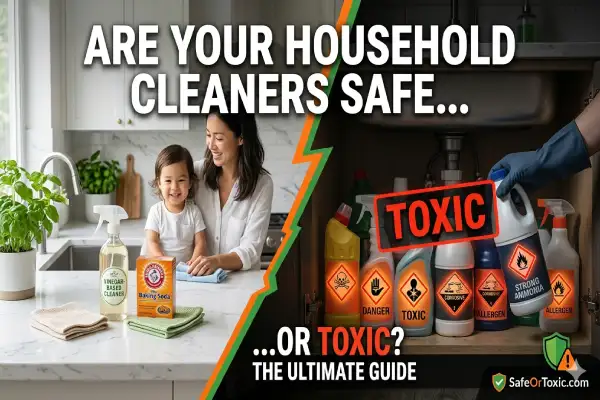
Are Household Cleaning Products Safe or Toxic – Many common household cleaning products contain chemicals that can be toxic if inhaled, ingested, or absorbed through the skin. While they are effective at disinfecting, ingredients like ammonia, bleach, and phthalates can cause respiratory issues, skin allergies, and long-term health risks. To stay safe, always check labels for hazardous warnings, ensure proper ventilation, and consider non-toxic alternatives.
Are Household Cleaning Products Safe or Toxic
As a Master of Pharmacy (MPharm), I’ve spent years studying how chemical substances interact with human biology. One of the most common questions I get isn’t about prescription drugs, but about what we keep under our kitchen sinks. We assume that if a product is on a supermarket shelf, it’s 100% safe. However, the reality is more complex. My goal with SafeOrToxic is to help you decode these labels and understand what is truly happening when you clean your home.
The Hidden Reality of Household Chemicals
Most cleaning products are mixtures of surfactants, solvents, and fragrances. While they achieve a “clean” look, they often leave behind a chemical trail. According to the Environmental Protection Agency (EPA), the air inside our homes can be 2 to 5 times more polluted than outdoor air, largely due to household cleaners.
Top 5 Toxic Ingredients to Watch For
[Image Recommendation: A close-up of a chemical ingredient label with a magnifying glass.] Alt Text: Pharmacist analyzing chemical ingredients on a cleaning product label.
As a pharmacist, I categorize the risks into several key groups:
1. Phthalates (The Fragrance Trap)
Found in “scented” products like air fresheners and dish soaps. They are known endocrine disruptors.
- Internal Link: [Learn more about Fragrance Sensitivities]
2. Ammonia (The Respiratory Irritant)
Common in window cleaners. It’s highly volatile and can trigger asthma or chronic bronchitis.
3. Sodium Hypochlorite (Bleach)
A powerful disinfectant, but highly corrosive to the skin and lungs. Warning: Never mix with ammonia or vinegar.
- Internal Link: [Is Bleach Safe for Laundry? A Toxicological Perspective]
4. 2-Butoxyethanol
Found in many “all-purpose” sprays. It can cause sore throats and, in high doses, contributes to liver and kidney damage.
5. Quaternary Ammonium Compounds (“Quats”)
Found in fabric softeners and antibacterial cleaners. They are a leading cause of contact dermatitis.
How Household Toxins Affect Your Health
Exposure isn’t always immediate. It can be:
- Acute: Immediate rashes, dizziness, or stinging eyes.
- Chronic: Long-term exposure leading to hormone imbalance or chronic respiratory issues.
Pharmacist’s Tip: If you develop a headache every time you clean the bathroom, your body is giving you a signal. This is often the first sign of VOC (Volatile Organic Compound) sensitivity.
Cleaning Safely Around Vulnerable Groups
Babies and Children
Children breathe faster and have thinner skin than adults. Chemicals like formaldehyde (often a byproduct) are particularly dangerous for their developing systems.
- Internal Link: [Cleaning Safely Around Babies: A Guide for New Parents]
Pets
Cats and dogs live on the floor. They absorb floor cleaners through their paws and lick them off.
- Internal Link: [Pet-Safe Cleaning: Protecting Your Dogs and Cats]
3 Steps to a Non-Toxic Home
- Read the Labels: Look for “Danger,” “Warning,” or “Caution.” As a rule of thumb, if you can’t pronounce it, research it here on SafeOrToxic.
- Ventilate: Always open windows when using strong cleaners.
- Switch to Green Chemistry: Use products with the “EPA Safer Choice” label or stick to basics like white vinegar and baking soda.
Frequently Asked Questions (FAQ) – Are Household Cleaning Products Safe or Toxic
Is “Green” or “Natural” always safe?
Not necessarily. Some natural ingredients, like d-limonene (from citrus), can still trigger allergies or be toxic to cats. Always check the specific ingredients.
Can I mix different cleaning products for better results?
Absolutely not. Mixing chemicals can create lethal gases (like chlorine gas). Stick to one product at a time.
What is the safest way to store cleaning chemicals?
Keep them in their original containers, in a cool, dry place, and strictly out of reach of children—ideally in a locked cabinet.
Sources and References – Are Household Cleaning Products Safe or Toxic
To ensure the highest accuracy, this guide relies on data from:
- The CDC – Agency for Toxic Substances and Disease Registry
- National Institutes of Health (NIH) – Household Products Database
- Journal of Occupational and Environmental Medicine – Chemical Exposure Reports.
Final Verdict: Safe or Toxic?
Verdict: POTENTIALLY TOXIC. Most household cleaners are safe only when used in strict accordance with safety protocols. However, for those with allergies or young families, the cumulative “toxic load” is a real concern.
All images for the article are generated with AI – Are Household Cleaning Products Safe or Toxic
Pingback: Is Persil Safe for Babies #1 Guide - Safeortoxic