Are Laundry Detergent Chemicals Safe?
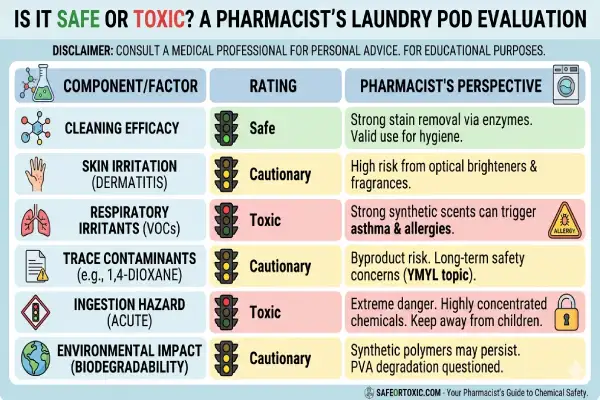
While modern laundry detergents are effective, many contain synthetic chemicals that can be highly toxic if ingested, inhaled, or left on the skin. Ingredients like surfactants (SLS), synthetic fragrances, and optical brighteners are common triggers for chronic allergies, contact dermatitis, and respiratory issues. To ensure safety, look for fragrance-free, plant-based detergents and always rinse clothes thoroughly.
In my pharmacy practice, I’ve seen countless cases of unexplained skin rashes, eczema flare-ups, and respiratory problems. The source isn’t always pollen or pollution; frequently, it’s the very clothes we wear. As a Master of Pharmacy (MPharm), I know that laundry detergents are complex chemical cocktails designed to remove stains, not to be gentle on human biology. This guide will help you understand what’s really happening in your washing machine and how to choose what’s safe for your family.
Are Laundry Detergent Chemicals Safe?
Decoding the Chemical Cocktail: What’s in Your Detergent?
Most consumers select a detergent based on smell or advertising, rarely analyzing the back label. Let’s break down the 4 key chemical categories found in almost all commercial detergents:
1. Surfactants (The Cleaning Agents)
This is the core ingredient that lifts dirt.
- Common Examples: Sodium Lauryl Sulfate (SLS), Sodium Laureth Sulfate (SLES).
- Pharmacist’s View: These are highly effective but are also known skin irritants. SLS can strip natural oils from your skin, leading to chronic dryness and sensitivity.
- Internal Link: [Day 86 Guide: SLS Explained – Is It Dangerous?]
2. Optical Brighteners (The “Whitening” Illusion)
These chemicals don’t clean; they simply coat the fabric to make it look brighter by reflecting blue light.
- Pharmacist’s View: These chemicals are designed to remain on the clothes, meaning they are in direct contact with your skin 24/7. They are significant triggers for contact dermatitis.
3. Synthetic Fragrances (The Endocrine Trap)
The biggest allergy trigger. A single “fragrance” label can mask hundreds of unlisted chemicals.
- Pharmacist’s View: Many synthetic fragrances contain phthalates, which are documented endocrine disruptors. They can alter hormone balance over time.
4. “Builders” and Water Softeners
These adjust the water pH to help the surfactants work better. While less irritating to the skin, they can be harmful if ingested.
High-Risk Detergent Forms: Pods vs. Liquid vs. Powder
As a pharmacology expert, I categorize the risk not just by what the chemical is, but by how it’s presented.
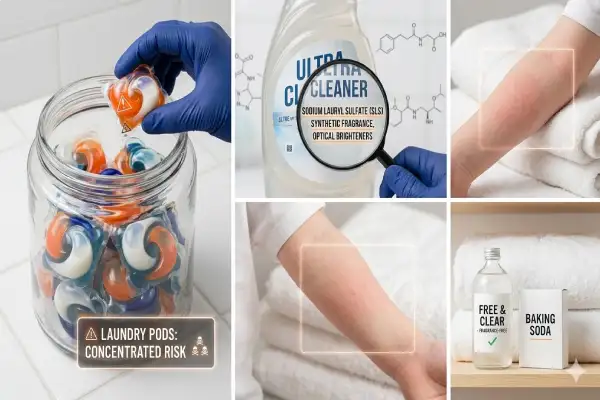
- Laundry Pods: The HIGHEST risk. They contain highly concentrated, colorful liquid chemicals that appeal to children. Ingestion can lead to severe poisoning, chemical burns, and respiratory distress.
- Liquid Detergent: High risk of skin irritation if not rinsed properly. Easier to overdose.
- Powder Detergent: Lower skin irritation risk, but can create airborne dust that irritates the lungs if not handled carefully.
Symptoms of Laundry Detergent Allergy (Contact Dermatitis)

How do you know if your detergent is the problem? Look for these signs, especially in areas with tight-fitting clothes (waistband, collar, elastic):
- Red, itchy rash that appears shortly after wearing fresh clothes.
- Dry, scaly patches of skin (eczema).
- Hives or raised bumps.
- Respiratory issues (coughing, wheezing) when smelling fresh laundry.
Pharmacist’s Tip: If your child has eczema that gets worse with “clean” sheets, the detergent fragrance is likely the trigger.
A Pharmacist’s 3 Rules for Safe Laundry
- Choose Fragrance-Free: Skip the “scent” entirely. Fragrances provide zero cleaning power but massive allergy risk.
- Go “Clear”: Use detergents labeled “Free & Clear,” which are free of both fragrances and dyes.
- Always Double-Rinse: A second rinse cycle is the most effective way to remove chemical residues, especially for baby clothes and people with sensitive skin.
Internal Link: [Day 28 Guide: How to Safely Remove Detergent Residues]
Frequently Asked Questions (FAQ) – Are Laundry Detergent Chemicals Safe
Can I overdose my detergent?
Using too much creates excessive suds that don’t rinse out. This leaves chemical residue on your clothes and can harbor bacteria.
Are “Eco-friendly” detergents truly non-toxic?
Not always. “Green” is a marketing term. Some eco-brands still use SLS or essential oils that can be strong allergens. Always check the ingredient list for specific chemicals.
Is fabric softener necessary?
Absolutely not. Fabric softeners work by coating your clothes in synthetic chemicals (Quats) that prevent them from absorbing water efficiently. They are major allergy triggers.
Sources and References – Are Laundry Detergent Chemicals Safe
This guide is based on scientific data from:
- EPA Safer Choice Standard and Ingredient Criteria
- National Institutes of Health (NIH) – Eczema and Detergent Irritation
- Toxicological Sciences – Studies on Endocrine Disruptors in Household Products.
Final Verdict: Safe or Toxic?
Verdict: POTENTIALLY TOXIC (depending on usage and form). Laundry detergent is a necessity, but traditional commercial brands are packed with unnecessary, high-risk chemicals. By switching to fragrance-free, plant-based options and ensuring proper rinsing, you can significantly reduce your toxic load.
Images are created with AI – Are Laundry Detergent Chemicals Safe – read more article