Is Gain Detergent Safe for Sensitive Skin?
Generally, no. While Gain is effective for stain removal and famous for its long-lasting scents, it is considered one of the most problematic mainstream detergents for sensitive skin. The high concentration of synthetic fragrances, optical brighteners, and isothiazolinone preservatives makes Gain a frequent trigger for contact dermatitis, eczema flare-ups, and respiratory irritation. For those with sensitive skin, Gain’s formula lacks the “Free & Clear” standards required to ensure safety against chemical rashes.
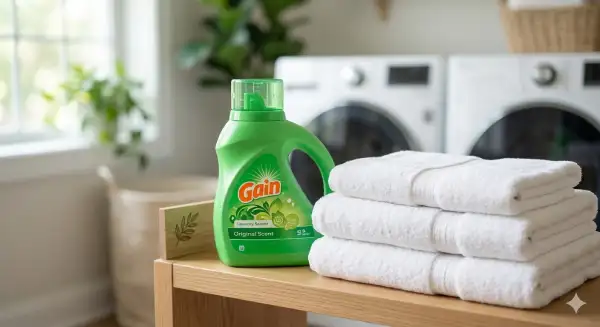
If you’ve ever pulled a fresh towel from the dryer, inhaled that iconic “Original Scent,” and then noticed a persistent itch or red rash later that day, you aren’t alone. Gain is the second-most popular laundry brand in the US, but it is also one of the most frequently cited by dermatologists as a trigger for laundry-induced contact dermatitis.
As we build out our [Ultimate Guide to Household Cleaning Safety (PILLAR LINK)], it is vital to look at how specific brands like Gain interact with the human skin barrier. In this article, we break down why that “fresh smell” might be your skin’s worst enemy.
1. The Anatomy of the “Gain Glow”
Gain’s marketing revolves around “the scent.” However, from a chemical safety perspective, scent is often synonymous with irritation. To keep clothes smelling like a “Spring Meadow” for up to six weeks, the formula must utilize heavy chemical fixatives.
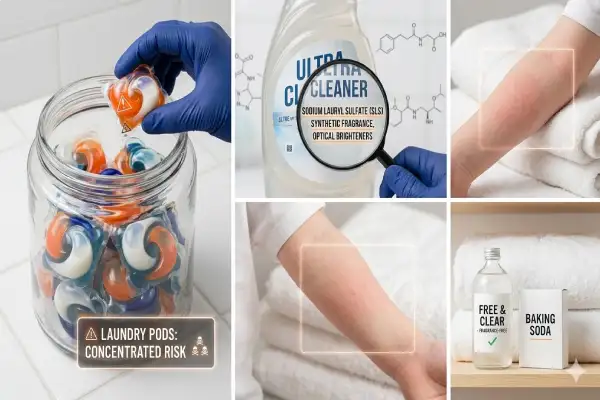
Read all about Are Laundry Detergent Chemicals Safe?: A Pharmacist’s Guide to Safe Washing
The Problem with Fragrance (Parfum)
In the world of household toxins, “Fragrance” is a catch-all term that can hide over 3,000 different chemicals. Many of these are Phthalates, which are used to make the scent stick to the fabric.
- The Sensitivity Issue: Phthalates are known endocrine disruptors, but on a more immediate level, they are volatile organic compounds (VOCs) that can irritate the skin and the respiratory system.
Is Gain Detergent Safe for Sensitive Skin?
2. Key Ingredients That Trigger Rashes
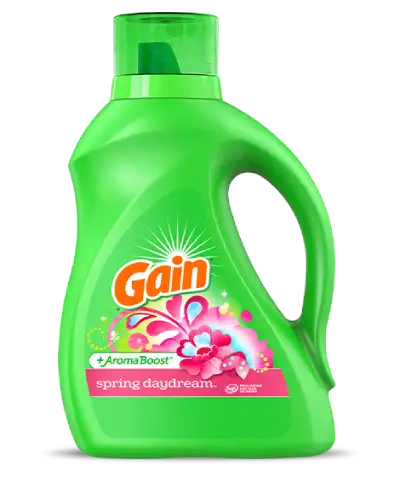
Beyond the smell, Gain contains several surfactants and additives that are harsh on the epidermis.
Linear Alkylbenzene Sulfonate (LAS)
This is Gain’s heavy lifter for removing dirt. While effective, LAS is a known skin irritant. If your washing machine does not perform a perfect rinse, residual LAS stays in the fibers of your underwear, socks, and shirts, leading to “friction rashes” where the clothes rub most against your body.Is Gain Detergent Safe for Sensitive Skin
Optical Brighteners (Fluorescent Whitening Agents)
Gain uses chemicals like Disodium Distyrylbiphenyl Disulfonate to make whites look whiter. These chemicals don’t clean; they simply reflect light.
- The Catch: These molecules are designed not to wash away. They are engineered to stay on the fabric. For someone with eczema or atopic dermatitis, having a layer of fluorescent chemicals constantly touching the skin can lead to chronic inflammation.Is Gain Detergent Safe for Sensitive Skin
3. Comparison Tables: Safety vs. Performance
Gain Safety Profile for Sensitive Groups
| Group | Safety Rating | Primary Concern |
| Newborns/Infants | High Risk | Immature skin barrier; high risk of “Cradle Cap” or body rashes. |
| Eczema Sufferers | High Risk | Fragrance and brighteners trigger immediate flare-ups. |
| Asthmatics | Moderate | Strong VOC emissions can trigger scent-based asthma. |
| Healthy Adults | Safe | Generally fine unless a specific allergy develops. |
Ingredient “Red Flags” in Gain
| Ingredient | Function | Health/Toxic Concern |
| Methylisothiazolinone | Preservative | Known “allergen of the year”; causes severe contact dermatitis. |
| Sodium Laureth Sulfate | Surfactant | Potential 1,4-Dioxane contamination (carcinogen byproduct). |
| Synthetic Dyes | Aesthetics | Unnecessary petroleum-based dyes that can irritate skin. |
4. Why “Gain Botanicals” Might Still Be Problematic
Many users with sensitive skin switch to Gain Botanicals, thinking it’s a non-toxic alternative.
- The Reality: While it is 65% plant-based, it still contains synthetic fragrances. In the world of skin sensitivity, “natural” doesn’t always mean safe. Essential oils and botanical extracts can be just as allergenic as synthetic ones for someone with a compromised skin barrier.Is Gain Detergent Safe for Sensitive Skin
5. How to Tell if Gain is Causing Your Rash
If you suspect Gain is the culprit, look for these specific symptoms of Laundry Detergent Allergy:
- The “Tight Areas” Test: Is the rash worse under your armpits, around your waistline, or in the crotch area? These are places where clothes are tight and sweat “re-activates” the detergent residue.
- Delayed Reaction: Contact dermatitis doesn’t always happen instantly. It can take 24–48 hours after wearing a clean shirt for the red, itchy patches to appear.
- Redness without Bumps: Often, it looks like a dry, scaly patch of skin rather than a hive or a pimple.
6. The “Safe” Gain Strategy (If You Refuse to Switch)
If you love the cleaning power of Gain but want to protect your skin, follow these clinical steps:
- The Double Rinse: Always select the “Extra Rinse” option on your washer. This helps strip away the surplus optical brighteners.
- Dilute the Dose: Most people use 2x more detergent than needed. Use the smallest amount possible to get the job done.
- Skip the Dryer Sheets: Gain dryer sheets are essentially a “wax coating” of fragrance. They are much more toxic for sensitive skin than the liquid detergent itself.
7. Better Alternatives for Sensitive Skin
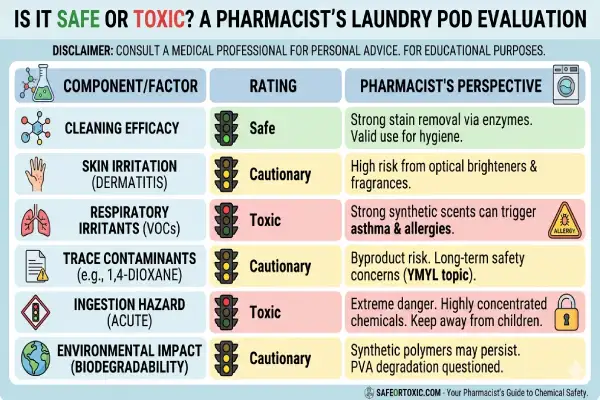
If you realize Gain is too toxic for your skin type, consider these swaps read all about Is Tide Pods Toxic? A Pharmacist’s Safety & Ingredients Breakdown
- Tide Free & Gentle: No dyes, no perfumes.
- Molly’s Suds: A truly “clean” powder with minimal ingredients.
- White Vinegar: Use 1/2 cup in the softener dispenser instead of Gain fabric softener.
FAQ: Frequently Asked Questions – Is Gain Detergent Safe for Sensitive Skin
Does Gain contain 1,4-Dioxane?
Like many detergents using ethoxylated surfactants (SLES), Gain may contain trace amounts of 1,4-Dioxane. While within legal limits, it is a byproduct that many non-toxic advocates prefer to avoid.
Is Gain “Natural”?
No. Gain is a synthetic, petroleum-based detergent. Even their “Botanicals” line contains significant synthetic components.
Can I use Gain for my dog’s bedding?
Use caution. Dogs have sensitive skin and a much stronger sense of smell. The heavy fragrance can be overwhelming and lead to “hot spots” or skin irritation on their paws and belly.
📚 Sources & Scientific References
- Environmental Working Group (EWG): Cleaning Product Review: Gain Liquid Detergent (Rating: F).
- Journal of the American Academy of Dermatology: Common allergens in laundry detergents and their impact on eczema.
- P&G Safety Data Sheets: Composition and ingredient safety disclosure for Gain Original.
- Toxicology Communications: Impact of synthetic fragrances on respiratory health in indoor environments.
All images are created with Ai – Is Gain Detergent Safe for Sensitive Skin