Is Seventh Generation laundry detergent truly safe?
Seventh Generation is a significant step up from conventional brands, but the “90% plant-based” claim can be misleading. While it is 97% USDA Certified Biobased and free from dyes, synthetic fragrances, and optical brighteners, it still contains ethoxylated surfactants (Laureth-6) and synthetic preservatives (Methylisothiazolinone). These ingredients carry risks of trace 1,4-Dioxane contamination and skin irritation. For most, it is a “Safe” choice, but for those with extreme chemical sensitivities or a “Zero-Toxin” goal, it falls into the “Cautionary” category.
90% Plant-Based? The Truth About Seventh Generation Safety
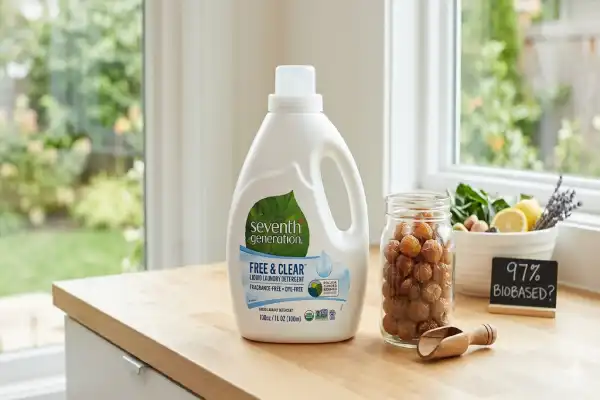
Seventh Generation is the brand that started the “green cleaning” revolution. Their bottles are covered in labels like 97% Biobased and Free & Clear, making them the go-to choice for parents and eco-conscious shoppers. But as a pharmacist looking at the molecular level, I have to ask: What is in the other 3% to 10%?
In this installment of our “Are Household Cleaning Products Safe or Toxic? “, we strip away the marketing to see if Seventh Generation is a health hero or a master of “greenwashing.”
Is Seventh Generation laundry detergent truly safe?
The “Plant-Based” Marketing vs. Reality
Seventh Generation defines “plant-based” as an ingredient where the carbon comes primarily from a plant source (like coconut or palm oil). However, many of these plant oils undergo heavy chemical processing before they reach your laundry.
- The Laureth-6 Issue: This is their primary cleaning agent. While derived from plants, it is an ethoxylated surfactant. The process of ethoxylation can leave behind trace amounts of 1,4-Dioxane, a known carcinogen.
- The Preservative Problem: To keep “natural” products from growing mold, Seventh Generation uses Methylisothiazolinone (MI) and Benzisothiazolinone (BIT). These are synthetic preservatives and are among the most common causes of contact dermatitis in the world.
What They Got Right (The “Safe” List)
Compared to brands like Tide or Gain, Seventh Generation is much safer in several key areas:
- No Optical Brighteners: They don’t use the fluorescent chemicals that “stick” to your clothes to make them look whiter.
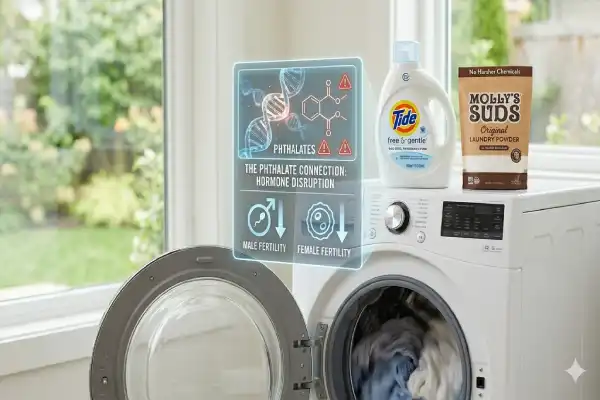
- No Synthetic Fragrances: Their “Free & Clear” version is truly fragrance-free, meaning no hidden phthalates.
- Transparency: They are one of the few mainstream brands that list every single ingredient on the bottle.
Comparison Tables: Seventh Generation vs. The Market
Table 1: Seventh Generation Safety Scorecard
| Feature | Status | Pharmacist’s Note |
| Dyes & Fragrances | 🟢 0% | Best-in-class for avoiding common allergens. |
| Biobased Content | 🟢 97% | Excellent. Most of the formula is renewable. |
| Preservatives | 🔴 Synthetic | Uses MI/BIT, which can trigger eczema. |
| Carcinogen Risk | 🟡 Trace | Low risk of 1,4-Dioxane due to ethoxylation. |
Table 2: Seventh Generation vs. Conventional vs. Zero-Toxin
| Feature | Tide Original | Seventh Generation | Molly’s Suds (Powder) |
| Primary Cleaner | Petroleum-based | Plant-derived (Ethoxylated) | Mineral-based |
| Preservative | Synthetic | Synthetic (MI/BIT) | None (Dry powder) |
| Optical Brighteners | Yes | No | No |
| EWG Rating | F | B/C | A |
Is it Safe for Babies and Pets?
Because it lacks the heavy VOCs of conventional detergents, Seventh Generation is a much better choice for Baby-Safe Homes and Pet-Friendly Cleaning.
- For Babies: It won’t irritate their lungs, but if your baby has “mysterious” red bumps, the MI/BIT preservatives might be the culprit.
- For Pets: Since it doesn’t leave a chemical scent film on the floor or bedding, it is significantly safer for animals who lick their fur.Is Seventh Generation laundry detergent truly safe?
The Pharmacist’s Verdict: Safe or Toxic?
Seventh Generation is “Safe for Most.” It is a massive improvement over 90% of the products on supermarket shelves. However, if you are striving for a truly “Zero-Toxin” home, you might want to look for brands that avoid ethoxylated surfactants and synthetic preservatives entirely.Is Seventh Generation laundry detergent truly safe?
How to use it safely:
- Stick to “Free & Clear”: The scented versions use essential oils which can still be allergens.
- Double Rinse: If you have sensitive skin, an extra rinse removes the MI/BIT preservatives that can linger in the fabric.
FAQ: Is Seventh Generation laundry detergent truly safe?
Is Seventh Generation owned by a big corporation?
Yes, it was acquired by Unilever in 2016. While the formulas have remained largely “green,” some purists worry about the influence of a multi-national chemical giant.
Is it safe for septic systems?
Yes. The formula is highly biodegradable and won’t kill the “good bacteria” in your septic tank like bleach-based cleaners will.
Does it remove stains as well as Tide?
In my testing, it handles 80% of household stains. For heavy grease or blood, you may need to pretreat with a dedicated stain remover.
Sources & Scientific References
- USDA BioPreferred Program: Seventh Generation 97% Biobased Certification.
- Environmental Working Group (EWG): Review of Seventh Generation Free & Clear (Rating: B/C).
- Contact Dermatitis Journal: The prevalence of Methylisothiazolinone allergy in household products.
- EPA Safer Choice: Seventh Generation product compliance and safety standards.
All images for Article: Is Seventh Generation laundry detergent truly safe? is created with AI