Are laundry sheets safer than liquid
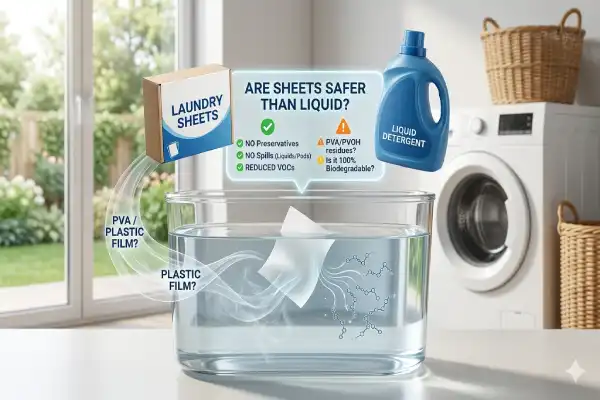
Laundry sheets are praised for being plastic-free, but they aren’t always “non-toxic.” Most sheets are made of Polyvinyl Alcohol (PVA/PVOH), a plastic film that may not fully biodegrade in wastewater. While they eliminate the risk of heavy VOC inhalation from liquid spills and pods, many brands still use ethoxylated alcohols and synthetic fragrances. For most families, they are a “Safer” alternative to conventional liquids, but “Zero-Toxin” seekers should look for PVA-free, mineral-based powders instead.
Laundry sheets are the latest “eco-miracle” taking over social media. They promise to replace those heavy plastic jugs with a simple, biodegradable strip of paper. But as we’ve learned in our [Are Household Cleaning Products Safe or Toxic? The Ultimate Guide], “eco-friendly” doesn’t always mean “human-safe.”
Today, we go beyond the cardboard packaging to see if these sheets are actually better for your health—or just better at marketing.
The PVA Problem: Is it Really Plastic-Free?
Almost every laundry sheet on the market relies on Polyvinyl Alcohol (PVA or PVOH) to hold the ingredients together in a solid strip.
- The Claim: Companies say PVA is “biodegradable” and dissolves completely in water.
- The Reality: While it dissolves, recent studies in 2025 and 2024 suggest that PVA requires very specific conditions (specific bacteria and temperature) to fully break down. In many municipal water systems, it simply stays in the water as a dissolved plastic.
- The Safety Risk: While PVA is considered safe for skin contact, the long-term environmental impact of “liquid plastic” returning to our water supply is a growing concern for those building a [Sustainable & Non-Toxic Home].
Are laundry sheets safer than liquid detergent?
Chemical Comparison: Sheets vs. Liquid
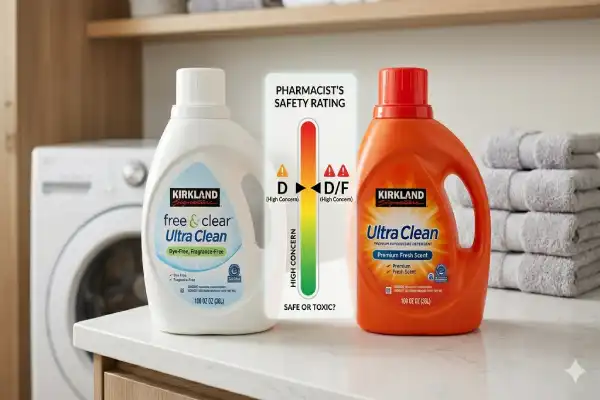
Because laundry sheets are dehydrated, they don’t need the heavy synthetic preservatives (like the MI/BIT we found in [Kirkland Laundry Detergent]) that liquid detergents require to prevent mold.
Table 1: Laundry Sheets Safety Scorecard
| Feature | Laundry Sheets | Liquid Detergent |
| Plastic Waste | 🟢 Zero (Cardboard) | 🔴 High (Plastic Jugs) |
| Preservatives | 🟢 Minimal to None | 🔴 High (Synthetic) |
| Microplastic Risk | 🟡 Potential (PVA) | 🟢 None (usually) |
| Dioxane Risk | 🟡 Moderate | 🔴 High (Ethoxylates) |
Performance vs. Health: The Trade-off
Are sheets as effective as the “big brands”?
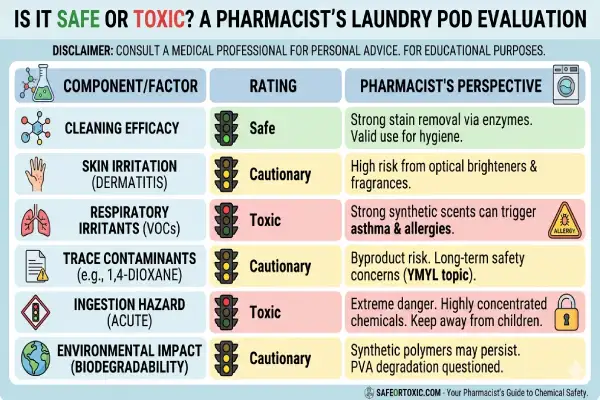
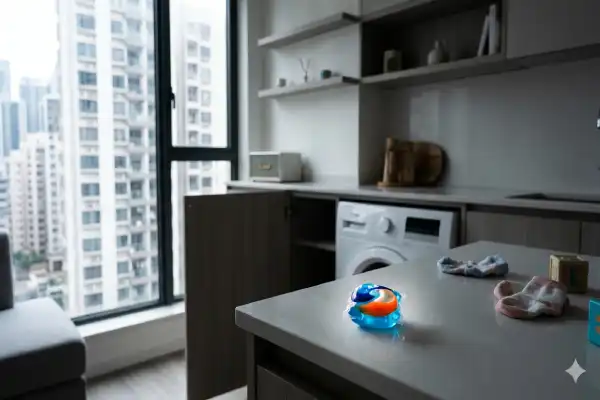
- The Good: Sheets are excellent for travel and small apartments—similar to what we discussed in [The Hidden Dangers of Laundry Pods in Small Apartments], they reduce the risk of accidental ingestion or spills.
- The Bad: In cold water, some sheets don’t dissolve fully, leaving a “gummy” residue on clothes. This residue can trap bacteria and skin irritants against your body.
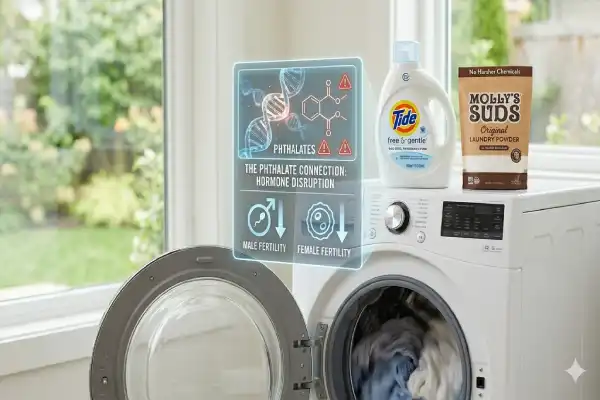
- The Best: If you have sensitive skin, look for Fragrance-Free sheets to avoid the fertility-disrupting chemicals discussed in our [Infertility & Phthalates] guide.
Top 3 Sheets Evaluated by a Pharmacist
- Tru Earth (Fragrance-Free): Generally high marks for ingredient transparency, though they do use PVA.
- Earth Breeze: Very popular, but contains ethoxylated alcohols which carry a small risk of 1,4-Dioxane.
- Kind Laundry: Often rated higher for sensitive skin as they use fewer synthetic binders.
The Pharmacist’s Verdict: Safe or Toxic?
Laundry sheets are “A Step in the Right Direction.” They are significantly safer than conventional “Blue” liquid detergents because they eliminate the need for harsh liquid preservatives and massive plastic waste. Are laundry sheets safer than liquid detergent?
Who should use them:
- Travelers & Apartment Dwellers: For convenience and space-saving.
- The Eco-Conscious: If reducing plastic jugs is your #1 priority.
Who should avoid them:
- The “Zero-Plastic” Purist: Because of the dissolved PVA.
- Extreme Eczema Sufferers: A mineral powder like Molly’s Suds is still a safer choice than a sheet with synthetic binders.
FAQ: Are laundry sheets safer than liquid detergent?
Do laundry sheets contain 1,4-Dioxane?
Many do. If the ingredients list includes “Sodium Laureth Sulfate” or “C12-15 Alcohols Ethoxylated,” there is a risk of trace contamination.
Are they safe for HE (High Efficiency) machines?
Yes, but always place the sheet directly into the drum with the clothes, not in the detergent drawer, to ensure it dissolves properly.
Can I use them for baby clothes?
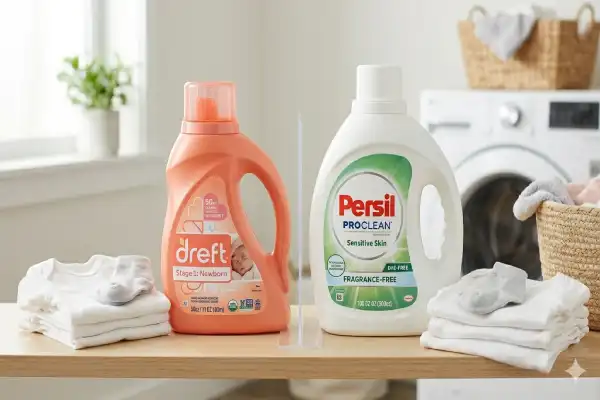
Yes, as long as they are “Fragrance-Free.” However, they may struggle with the heavy protein stains (poop/formula) we discussed in [Dreft vs. Persil for Newborns].
Sources & Scientific References
- Plastic Oceans International: The Truth About PVA and Laundry Sheets.
- International Journal of Environmental Research: Persistence of Polyvinyl Alcohol in Wastewater Treatment.
- EWG Healthy Living App: Rating the Top 10 Laundry Sheet Brands.
All images are created with AI – Are laundry sheets safer than liquid detergent?