Why should you stop using liquid fabric softener?
Liquid fabric softeners are often cited by dermatologists and environmental scientists as the “most toxic” product in the laundry room. They work by coating fibers in Quaternary Ammonium Compounds (Quats), which are known respiratory irritants and skin allergens. Furthermore, softeners rely on heavy phthalate-laden fragrances that act as endocrine disruptors. Beyond health risks, the waxy coating reduces the absorbency of towels, ruins the moisture-wicking properties of athletic wear, and creates a “sludge” in washing machines that promotes mold growth.
If you grew up with the scent of “April Fresh” sheets, the idea of skipping fabric softener might feel wrong. However, in our Are Household Cleaning Products Safe or Toxic? The Ultimate Guide, liquid softener is the first product we recommend removing from your home.
It is a product designed for a different era of textiles, and in 2026, it is doing more harm to your health—and your wardrobe—than good.Why should you stop using liquid fabric softener?
The “Quat” Problem: Respiratory & Skin Irritation
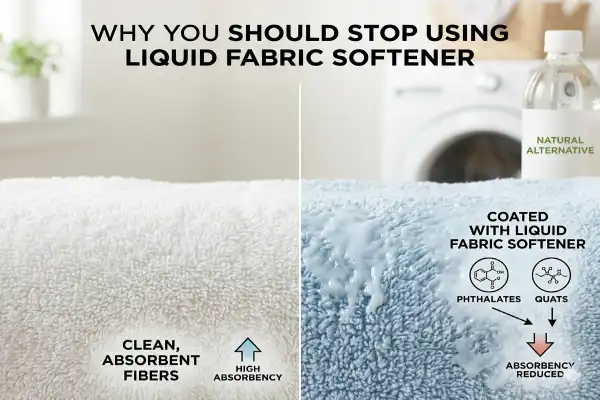
The active ingredients that make clothes feel soft are Quaternary Ammonium Compounds (Quats) like Distearyldimonium Chloride.
- Asthma Trigger: Quats are known “astmagens.” For children or adults with sensitive lungs, inhaling the residue from softened clothes 24/7 can trigger chronic coughing or wheezing.
- The “Waxy” Barrier: Quats work by leaving a thin, waxy film on the fabric. This film is a common cause of contact dermatitis, especially in areas where clothes fit tightly against the skin.
Why should you stop using liquid fabric softener?
Endocrine Disruptors: The Fragrance Trap
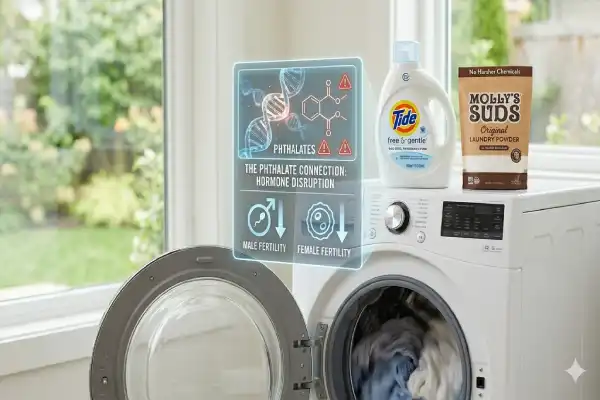
As we explored in [Does Laundry Detergent Cause Infertility? The Phthalate Connection], fragrance is the primary delivery system for phthalates.
- Liquid softeners are engineered to be “high-fragrance.” They contain scent capsules designed to break slowly over days.
- This means you are constantly absorbing and inhaling phthalates and synthetic musks, which have been linked to hormone imbalances and reduced fertility.
It’s Ruining Your Expensive Clothes
Modern fabrics are not designed for liquid softeners.
- Towels: Softener makes towels feel plush, but it actually makes them hydrophobic (water-repellent). After several washes with softener, your towels will stop absorbing water.
- Athletic Wear: High-performance leggings and gym shirts use moisture-wicking technology. Softener clogs these “pores,” trapping sweat and bacteria inside the fabric, which leads to that “permanent gym smell.”
- Children’s Sleepwear: Softeners can reduce the flame-retardant properties of children’s pajamas, creating a safety hazard.
The “Scrungle” in Your Machine
Plumbers and appliance technicians often refer to the buildup from liquid softener as “scrungle” or “scrud.”
- This waxy buildup coats the outer drum of your washing machine where you can’t see it.
- This “sludge” becomes a breeding ground for black mold and bacteria. If your washing machine has a sour smell, your liquid softener is likely the culprit.
The Pharmacist’s Verdict: Safe or Toxic?
Liquid fabric softener is “High Toxicity / Zero Necessity.” It provides no cleaning benefit and carries the highest load of respiratory and reproductive toxins of any laundry product.
The “Safe” Alternatives:
- White Vinegar: Add 1/2 cup to the softener dispenser. It breaks down detergent residue and naturally softens clothes without chemicals or odors.
- Wool Dryer Balls: These physically soften clothes by bouncing between them, reducing drying time and static without any chemical coating.
- Double Rinse: Often, “stiff” clothes are just clothes with too much leftover detergent. An extra rinse cycle solves the problem naturally.
FAQ: Why should you stop using liquid fabric softener?
Are “Natural” plant-based softeners safe?
They are better because they usually replace animal-fat-based Quats with plant-based versions, but they still leave a film on your clothes that can trap bacteria.
Do dryer sheets have the same risks?
Yes. Dryer sheets are essentially polyester squares coated in the same Quats and fragrances. In fact, the heat of the dryer makes the chemicals even easier to inhale.
Will my clothes be scratchy without it?
Only if you are using too much detergent. Try reducing your detergent amount by 25% and using wool dryer balls; you’ll likely find your clothes feel cleaner and just as soft.Why should you stop using liquid fabric softener?
Sources & Scientific References
- American Lung Association: Indoor Air Quality: The Impact of Fragrance and Quats.
- Journal of Ethnotoxicology (2025): Dermal Absorption of Fabric Softener Residues.
- Appliance Tech Association: Impact of Liquid Softeners on HE Machine Longevity.
All images are created with AI – Why should you stop using liquid fabric softener?