Is Tide Pods Toxic?
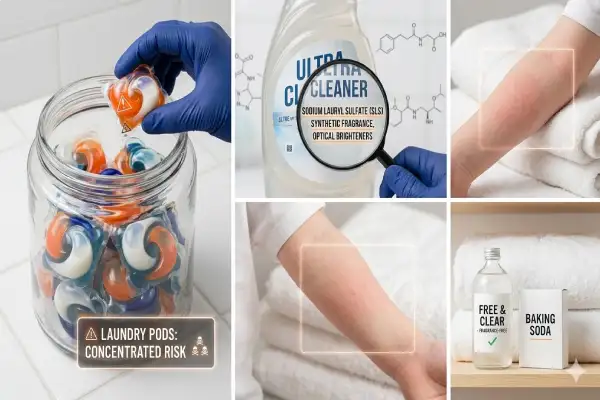
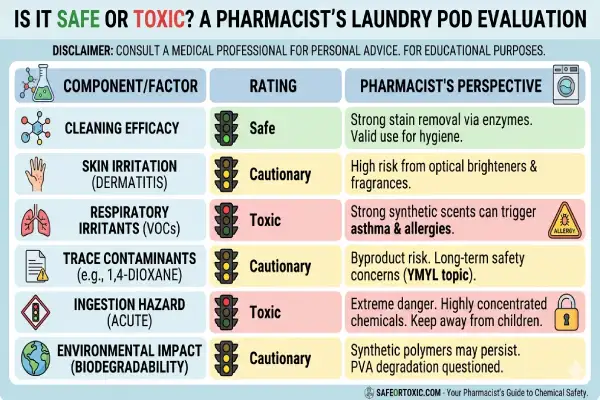
While Tide Pods are not “toxic” in the sense of being immediate poisons when used for laundry, they contain chemicals of concern including 1,4-Dioxane (a suspected carcinogen), synthetic fragrances (potential endocrine disruptors), and optical brighteners. These ingredients can be toxic to aquatic life and frequently trigger contact dermatitis in individuals with sensitive skin. From a pharmaceutical safety perspective, they are classified as Cautionary due to high chemical concentration and respiratory irritants.
As the most popular laundry detergent format in the world, Tide Pods offer undeniable convenience. However, as a pharmacist, I look past the bright colors and “spring meadow” scents to the molecular level.
Because laundry detergents are not required by law to list all ingredients on the physical packaging, many consumers are unaware of what remains in their clothing fibers—and subsequently, on their skin. This article is part of our Are Household Cleaning Products Safe or Toxic?, where we analyze the chemistry of household health.
The Verdict: Cautionary Yellow
Tide Pods are highly effective cleaners but contain several “chemicals of concern” that can trigger skin, respiratory, and environmental issues. For the general population, they are considered “safe” when used as directed, but for those with sensitive skin or chemical sensitivities, the toxicity profile increases.
Is Tide Pods Toxic?
1. The Chemical Breakdown: What’s Inside?
From a pharmaceutical perspective, three specific components in Tide Pods deserve your attention:
A. 1,4-Dioxane (The Hidden Contaminant)
Tide Pods utilize Sodium Laureth Sulfate (SLES) as a primary surfactant. During the manufacturing process (ethoxylation), a byproduct called 1,4-Dioxane is often created.
- The Concern: 1,4-Dioxane is classified by the EPA as a “likely human carcinogen.” While it isn’t an added ingredient, it is a frequent contaminant in ethoxylated surfactants.
B. Fragrance (The “Black Box”)
The “Original Scent” of Tide is a complex mixture of synthetic chemicals. Under “trade secret” laws, manufacturers can simply list “Fragrance” or “Parfum.”
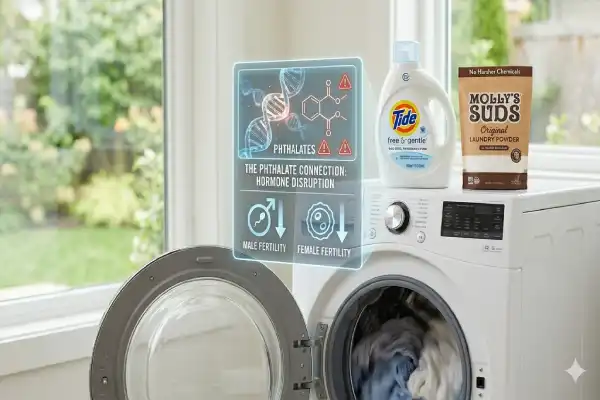
- The Pharmacist’s View: Many synthetic fragrances contain Phthalates, which are known endocrine disruptors. These can interfere with hormonal signaling, making them a concern for developing children and pregnant women.
C. Optical Brighteners
These are fluorescent whitening agents (like Disodium Distyrylbiphenyl Disulfonate). They don’t actually remove more dirt; they coat the fabric and reflect UV light to make clothes look “brighter.”
- The Concern: These chemicals are designed to stay in the fabric. This leads to prolonged dermal (skin) exposure, which is a leading cause of contact dermatitis (laundry rash).
2. The “Pod” Specific Risk: PVA and Concentration
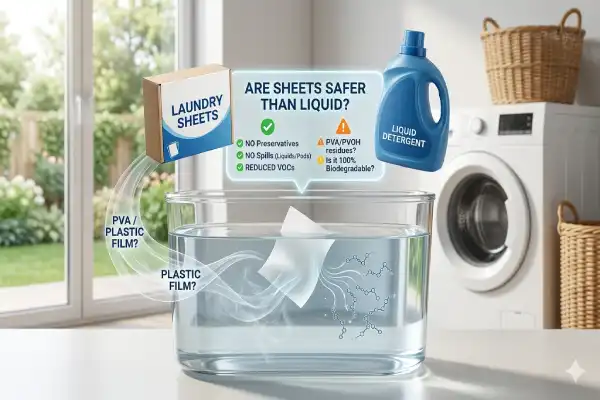
Tide Pods are a highly concentrated form of liquid detergent encased in Polyvinyl Alcohol (PVA).
- Ingestion Risk: As a pharmacist, I must highlight that the concentration of surfactants in a pod is much higher than in liquid detergent. Accidental ingestion (especially by children) can cause severe internal chemical burns and respiratory distress.
- Microplastics: While PVA is water-soluble, recent environmental studies debate how completely it degrades in wastewater treatment plants, potentially contributing to plastic pollution.Is Tide Pods Toxic
3. “Safe” vs. “Toxic” Summary Table
| Category | Rating | Pharmacist’s Note |
| Skin Irritation | High | High risk for eczema/atopic dermatitis due to brighteners. |
| Carcinogenicity | Low/Med | Concerns regarding 1,4-Dioxane trace levels. |
| Acute Toxicity | High | Dangerous if ingested or if liquid contacts the eyes. |
| Biodegradability | Medium | Contains synthetic polymers that persist in ecosystems. |
4. Pharmacist’s Recommendations for Safe Use
If you choose to use Tide Pods, follow these three clinical tips to reduce your toxic load:
- Use the Extra Rinse Cycle: This is the most effective way to strip away residual surfactants and optical brighteners from your clothing.
- Avoid in Hot/Humid Weather: Sweat can re-activate the chemicals trapped in clothing fibers, leading to “skin-fold” rashes (axillary or inguinal dermatitis).
- Store in Original Container: Never put pods in glass jars that look like candy jars. The concentrated liquid is highly corrosive if accidentally bitten.
Pharmacist FAQ – Is Tide Pods Toxic
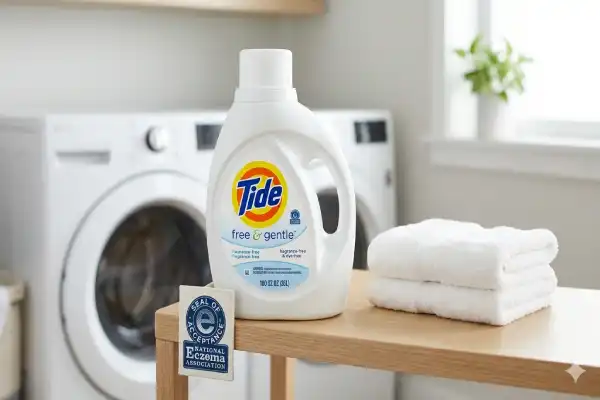
Are “Tide Free & Gentle” pods safer?
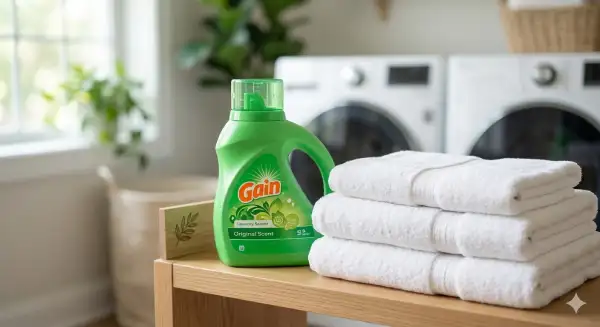
Yes. From a clinical standpoint, the Free & Gentle version is a better choice because it removes dyes and perfumes, which are the two most common triggers for skin and respiratory reactions. However, they may still contain optical brighteners.
Does the “film” on the pod leave a toxic residue?
The PVA film is designed to dissolve. However, if you overload your machine or use a cycle that is too cold, the film can partially melt into your clothes, trapping concentrated surfactants against your skin.
📚 Sources & Scientific Citations – Is Tide Pods Toxic
- Environmental Health Perspectives: Ethoxylation and the 1,4-Dioxane Contamination in Consumer Products. 2. Contact Dermatitis Journal: The role of optical brighteners in laundry-induced skin irritation.
- U.S. Consumer Product Safety Commission (CPSC): Safety reports on concentrated liquid laundry detergent packets.
All images are created with AI for this article – Is Tide Pods Toxic