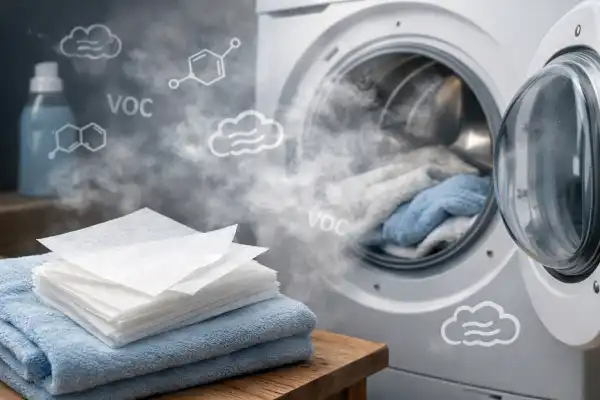
Are Dryer Sheets Toxic to Breathe – Dryer sheets can release volatile organic compounds (VOCs) and synthetic fragrances into the air during use. These chemicals may irritate the lungs, trigger allergies, and worsen asthma symptoms—especially in enclosed or poorly ventilated spaces.
What Are Dryer Sheets Made Of?
Dryer sheets are designed to reduce static and soften fabrics, but they contain a mix of chemical compounds, including:
- Fabric softening agents (quaternary ammonium compounds)
- Synthetic fragrances
- Volatile organic compounds (VOCs)
- Preservatives and stabilizers
When heated in the dryer, these substances can evaporate and become airborne, making them easy to inhale.
👉 If you’re already using scented laundry products, you may also want to read:
Why should you stop using liquid fabric softener? You Must Read
Are Dryer Sheets Toxic to Breathe?
Are Dryer Sheets Harmful to Your Lungs?
Yes, dryer sheets can affect respiratory health, especially with frequent exposure.
Short-term effects:
- Throat and lung irritation
- Headaches
- Dizziness
- Coughing
Long-term exposure:
- Worsening asthma symptoms
- Increased respiratory sensitivity
- Possible long-term irritation from repeated VOC exposure
👉 Similar risks can also occur with airborne cleaning chemicals. Learn more here:
Are Laundry Detergent Chemicals Safe?: A Pharmacist’s Guide to Safe Washing

The VOC Problem (Pharmacist Insight)
Volatile organic compounds (VOCs) are chemicals that easily evaporate into the air.
When you use dryer sheets:
- Heat accelerates VOC release
- You inhale these compounds directly
- They can irritate the respiratory tract
From a pharmaceutical and toxicological perspective, repeated exposure to VOCs may contribute to:
- oxidative stress in lung tissue
- airway inflammation
- increased sensitivity in individuals with asthma or allergies
👉 This is especially important if you’re also exposed to other airborne chemicals. You can explore this further in:
Dryer Sheets and Asthma: The VOC Connection
Who Should Avoid Dryer Sheets?
Certain groups are more sensitive to airborne chemicals:
- 👶 Babies and young children
- 🐶 Pets (especially cats and dogs with sensitive respiratory systems)
- 🤧 People with asthma or allergies
- 👩 Pregnant women
Are “Fragrance-Free” Dryer Sheets Safer?
Not always.
Some “fragrance-free” products may still contain:
- masking fragrances
- low-level chemical scent additives
These can still release VOCs, although typically in lower amounts.
Safer Alternatives to Dryer Sheets
If you want to reduce chemical exposure, consider these safer options:
- Wool dryer balls (reusable and chemical-free)
- Air drying clothes
- Using truly fragrance-free detergents
- Reducing overall laundry additives
These alternatives can significantly reduce indoor air pollution.
Final Verdict
Dryer sheets are not completely harmless. While occasional use may not cause immediate harm, regular exposure—especially in poorly ventilated environments—can negatively affect respiratory health over time.
For a safer home, minimizing exposure to synthetic fragrances and VOCs is a smart long-term choice.
FAQ – Are Dryer Sheets Toxic to Breathe?
Are dryer sheets toxic for pets?
Yes, the chemicals released can irritate pets’ respiratory systems, especially in enclosed spaces.
Can dryer sheets trigger asthma?
Yes, the VOCs and fragrances may worsen asthma symptoms or trigger attacks. – Dryer Sheets and Asthma: The VOC Connection
Are natural dryer sheets safe?
They are generally safer but may still contain some fragrance compounds.
Do dryer sheets release chemicals into the air?
Yes, heat from the dryer releases airborne chemicals that can be inhaled.
Medical Disclaimer
This article is for informational and educational purposes only and does not constitute medical advice. While written from a pharmaceutical perspective, it should not replace consultation with a qualified healthcare professional. If you experience symptoms such as difficulty breathing, allergic reactions, or prolonged irritation after exposure to household products, seek medical attention promptly.
Sources & Scientific References
- University of Washington – Research by Anne Steinemann on chemical emissions from residential dryer vents and fragranced products.
- Journal of Environmental Health – Studies on volatile organic compounds (VOCs) in scented laundry products and their impact on indoor air quality.
- American Lung Association – Guidance on cleaning products, indoor air pollution, and respiratory health risks.
- United States Environmental Protection Agency – Information on volatile organic compounds (VOCs) and their effects on indoor air quality.
All images are created with AI – Are Dryer Sheets Toxic to Breathe