Did you know that nearly 80% of American households use chemical pest control every year? These products help keep pests away but can also pose hidden dangers. Many pet owners don’t realize that bug spray used indoors can be toxic to pets if not used carefully.
It’s crucial for pet owners to understand the risks of these chemicals. Professional caution is key to keeping your home safe for your pets. By learning about how these chemicals affect pets, you can make choices that protect their health.
Key Takeaways
- Most household insecticides contain active ingredients that can cause adverse reactions in cats and dogs.
- Direct contact or inhalation of aerosolized particles poses the highest risk during application.
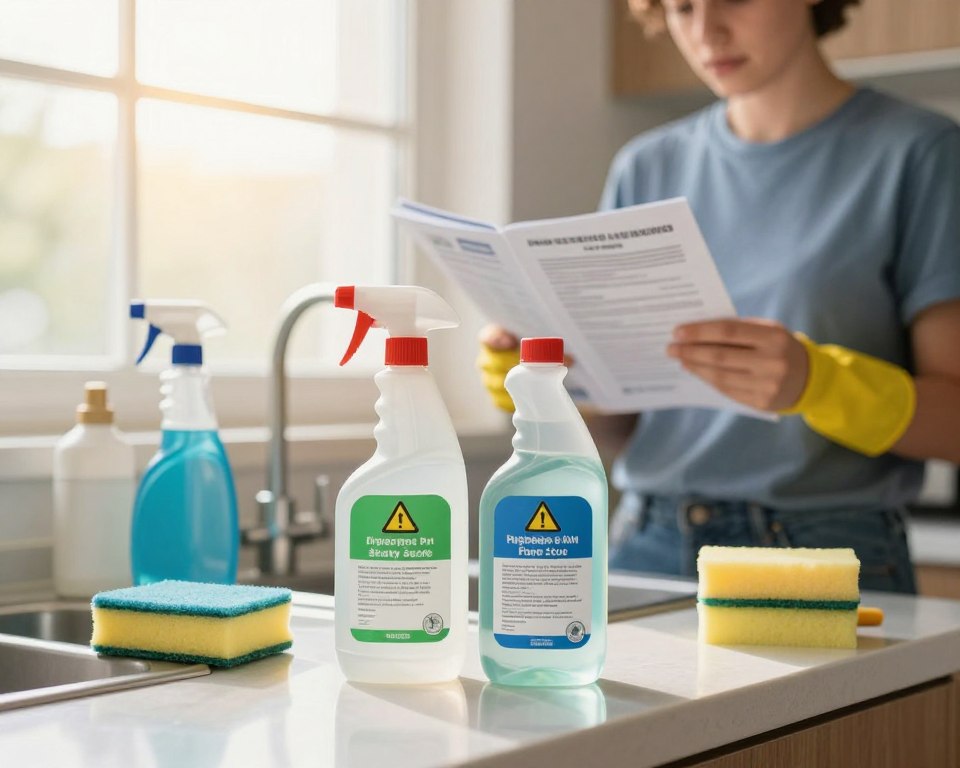
- Always read product labels for warnings about animal safety before use.
- Proper ventilation is essential to reduce the concentration of airborne chemical residues.
- Consult a veterinarian immediately if you suspect your animal has ingested or been exposed to concentrated pest control agents.
Understanding the Risks of Indoor Pest Control
It’s key to know how chemicals affect pets. Pest control products don’t just disappear after drying. They stay in the air and on surfaces, posing a risk to pets.
Pets often touch treated areas like carpets and furniture. They may lick or sleep on these spots, taking in chemicals. To find a indoor bug spray pet safe, look beyond what’s on the label.
These chemicals can build up over time, causing harm. Pets are more at risk because they metabolize differently than humans. A vet toxicologist said:
“The primary risk in a domestic setting is not always the initial application, but the cumulative effect of residues that remain active in the pet’s immediate environment long after the treatment is finished.”
To lower these risks, use pet-friendly indoor pest control methods. Choose products that are less harmful to pets. Think about these when picking a pest control:
- Surface Persistence: How long does the chemical stay active on different surfaces?
- Grooming Habits: Is the product more dangerous for pets that lick their fur?
- Application Method: Are you using bait stations instead of sprays that settle on bedding?
Switch to proactive and targeted pest control. This way, you can keep pests away while keeping your pets safe. Make sure the products you use are safe for your pets, as what’s okay for dogs might harm cats or birds.
Common Ingredients in Bug Sprays and Their Effects on Animals
Knowing what’s in your bug spray is key to keeping your pets safe. Many sprays use chemicals that work well on bugs but can harm cats and dogs. These chemicals can mess with their bodies in bad ways.
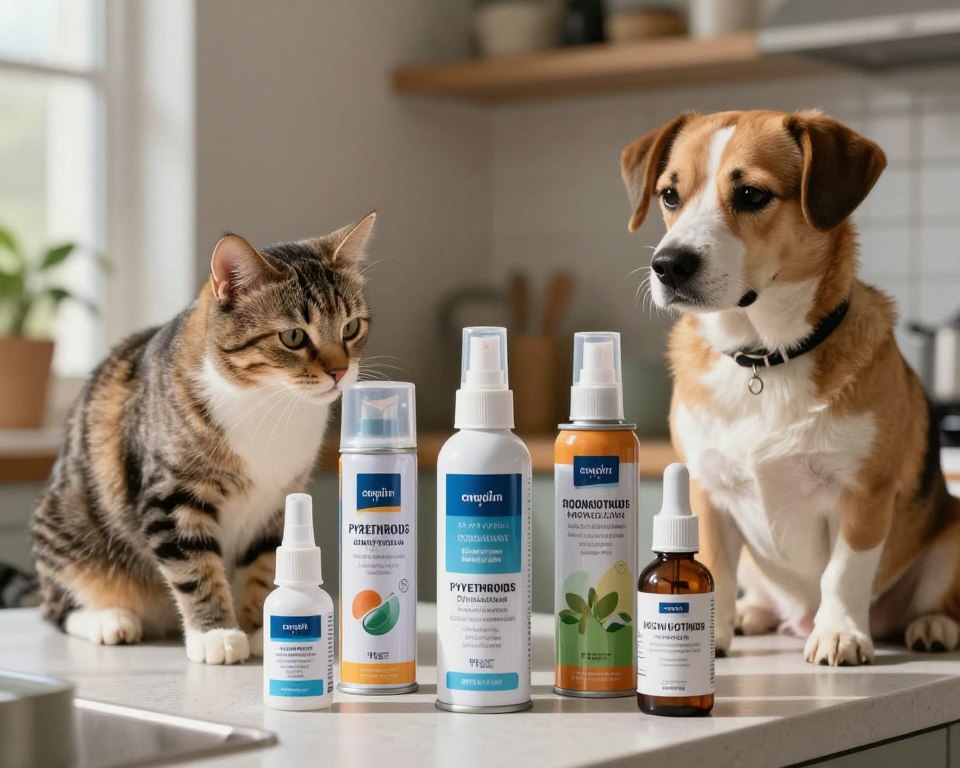
Pyrethrins and Pyrethroids
Pyrethrins come from chrysanthemum flowers and quickly kill bugs. Pyrethroids are made to last longer and work better indoors.
These chemicals make bugs’ nerves too excited, paralyzing and killing them. But cats are very sensitive to them. They can get shakes, drool, and even have seizures.
Organophosphates and Carbamates
Organophosphates and carbamates stop a key enzyme in bugs’ nerves. This makes their nerves go haywire, causing weird movements.
These chemicals are very strong and need careful use. Even a little bit can be harmful if pets lick their paws after walking on treated areas. Make sure treated spots are dry before letting pets back in.
Neonicotinoids and Their Impact
Neonicotinoids act like nicotine on bugs’ nerves. They’re not as bad for mammals but can still be risky indoors.
Long-term exposure can upset pets’ stomachs or make them feel tired. Use these products carefully and only where pets can’t get to them.
| Ingredient Class | Primary Mechanism | Main Risk to Pets |
|---|---|---|
| Pyrethroids | Nervous system overstimulation | Severe neurological tremors |
| Organophosphates | Enzyme inhibition | Nerve signal disruption |
| Neonicotinoids | Receptor binding | Gastrointestinal irritation |
Signs and Symptoms of Bug Spray Poisoning in Pets
Knowing how your pet reacts to chemicals is key. Pets might get exposed to harmful substances from pest control. Spotting these signs early is crucial for quick vet help.
Neurological Indicators
Many insecticides are neurotoxins. They can make pets act disoriented or unsteady. This is called ataxia. Severe cases might include tremors, muscle twitching, or seizures.
These signs mean the chemical has hit the pet’s nervous system. If your pet’s gait or alertness changes suddenly, call a vet fast. Time is a critical factor with neurotoxins.
Gastrointestinal Distress
When pets touch or eat treated surfaces, their stomachs get upset. You might see persistent vomiting and diarrhea. They might also drool a lot, trying to get rid of the chemical.
Some upset stomachs are mild, but they can be a warning sign. Watch for loss of appetite or belly pain. These signs mean the body is trying to get rid of the toxin.
Respiratory Complications
Inhaling particles or vapors can hurt the lungs and airways. Look for labored breathing, wheezing, or a persistent cough. You might see the pet stretching their neck to breathe better or have blue-tinted gums.
Respiratory problems need quick medical help. They can get worse fast in small spaces. Move your pet to fresh air right away if they’re having trouble breathing. The table below lists main symptoms to watch for.
| System Affected | Primary Symptoms | Severity Level |
|---|---|---|
| Neurological | Tremors, Seizures, Ataxia | High |
| Gastrointestinal | Vomiting, Drooling, Diarrhea | Moderate to High |
| Respiratory | Wheezing, Labored Breathing | Critical |
Is Bug Spray Indoors Toxic Pets: Assessing the Danger Levels
Many homeowners wonder if bug spray indoors is toxic to pets. The answer depends on how you apply it and what’s in it. Knowing how these substances work in your home is key. Safety is not a static state but a result of careful management and awareness of chemical behavior.
Direct Exposure vs. Residual Contact
Direct exposure happens when pets are around when you spray. This is the most dangerous time, as the chemicals are strongest. Residual contact is when chemicals stay on surfaces after drying.
The initial spray is risky, but leftover chemicals can harm pets over time. Pets may get sick from grooming or lying on treated areas. Even after drying, chemicals can stay active for days or weeks.
Inhalation Risks in Enclosed Spaces
Indoor spaces often don’t have enough air to clear out chemical vapors fast. Aerosol products can stay in the air, posing a big risk to pets. Proper ventilation is key to avoiding this danger.
“The concentration of volatile organic compounds in an enclosed room can reach levels that overwhelm a pet’s respiratory system long before a human notices the odor.”
The Vulnerability of Different Pet Species
Not all pets react the same to chemicals. Smaller pets, like hamsters or toy-breed dogs, absorb more because of their size. Pets with breathing problems are also more at risk from common sprays.
| Exposure Type | Primary Risk | Mitigation Strategy |
|---|---|---|
| Direct Spray | Acute Toxicity | Remove pets entirely |
| Residual Surface | Chronic Ingestion | Deep clean surfaces |
| Airborne Vapor | Respiratory Distress | Increase ventilation |
Knowing these details helps keep your pets safe from bug spray. By understanding the risks, you can protect your pets from harm.
Safe Application Practices for Indoor Pest Control
To keep your home pest-free and safe for pets, using the right application techniques is key. When picking an indoor bug spray pet safe product, how you apply it matters as much as what’s in it. Following safety steps helps avoid accidents with your pets.
Proper Ventilation Techniques
Good ventilation is crucial to reduce airborne particles after treatment. Always open windows and doors for a cross-breeze. This brings fresh air into the treated area. If using a safe bug spray for indoor use, turn on ceiling fans to spread vapors fast.
Don’t spray in small, closed rooms without air flow. Good air movement stops chemicals from sticking to surfaces where pets can touch or groom. For more on managing these risks, check the National Pesticide Information Center on household pest control.
Removing Pets During Treatment
Before starting pest control, remove all pets from the area. This includes birds, reptiles, and small mammals, which are more sensitive to fumes. Move your pets to a separate, well-ventilated room or outside.
Take away all food bowls, water dishes, and toys before starting. This stops pets from getting them dirty. Keep animals away from the treated area until it’s dry for their safety.
Waiting Periods Before Re-entry
Every product label has a waiting time before it’s safe to go back in. You must follow these times for the chemicals to settle and fade. Even if a product is labeled as safe for pets, waiting is needed to prevent skin absorption.
Don’t rush back in, as leftover moisture can still have active ingredients. After the waiting time, check for any remaining spray or moisture. Waiting patiently ensures a safe home for everyone.
Identifying Pet-Friendly Alternatives for Indoor Use
Managing pests at home doesn’t always mean using harsh chemicals. Many pet owners look for non-toxic bug repellents for pets to keep their homes clean and safe. It’s important to check each substance for its safety and potential to irritate.
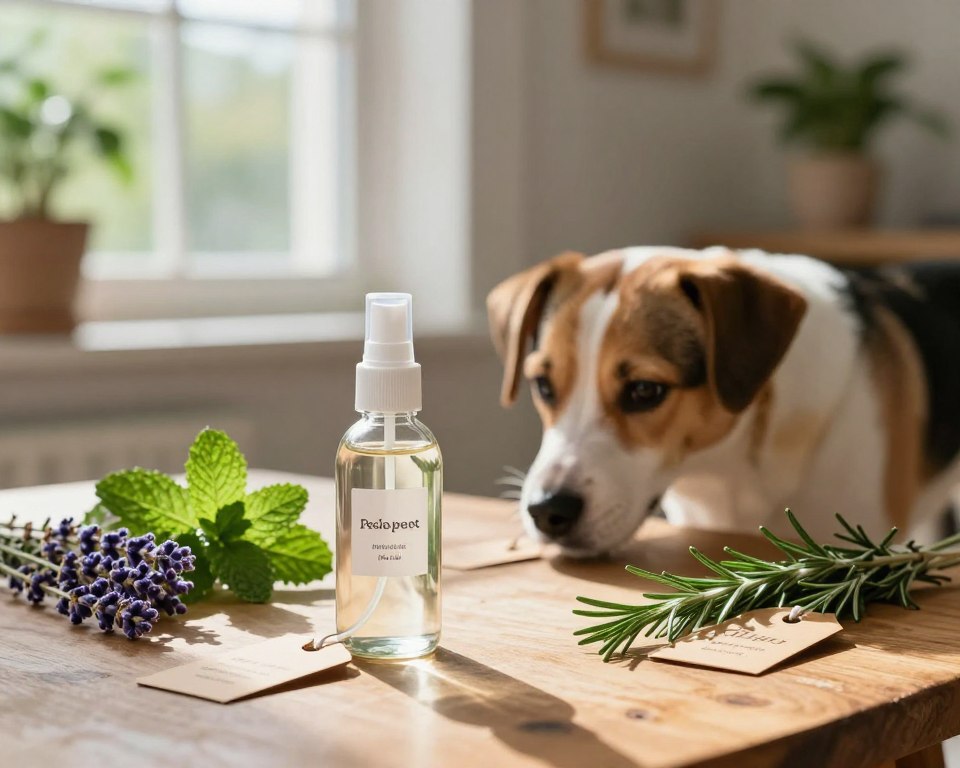
Natural Essential Oils and Their Safety
Essential oils are often seen as a natural insect repellent for pets. But, they’re not always safe. Many oils, like tea tree and peppermint, can harm pets if they get on their skin or are swallowed.
Before using any essential oil, make sure it’s safe for your pets. Consulting with a veterinarian is the best way to know if an oil is safe. Don’t think that just because it’s labeled as “natural,” it’s safe for your pets.
Diatomaceous Earth for Indoor Pests
Diatomaceous earth is a mechanical way to control pests like ants and fleas. It works by drying out the pests, not poisoning them. It’s important to use food-grade versions to avoid contamination.
Even though it’s not poisonous, inhaling a lot of it can be harmful. Keep pets away from where you’re using it until it settles. Proper ventilation is key to avoid dust inhalation during application.
Boric Acid Applications and Precautions
Boric acid is used to control indoor pests. It’s applied in hidden spots where pests hide, reducing the chance of pets getting to it. But, it’s still a chemical that can be harmful if ingested in large amounts.
Make sure boric acid is out of your pets’ reach, like behind baseboards or in wall voids. If your pet shows signs of stomach problems after use, call your vet right away. Strategic placement is crucial for effective pest control without risking your pets’ health.
Best Pet Friendly Bug Spray Options for Homeowners
Finding the best pet friendly bug spray means looking beyond what’s advertised. Homeowners should choose products made from plants, not synthetic pyrethroids. These can harm cats and dogs. Opting for safer ingredients helps keep your home pest-free without risking your pet’s health.
Plant-Based Repellents
Today, many bug sprays use plant extracts to keep pests away. Ingredients like cedar oil, peppermint, and lemongrass work by confusing pests. A good all-purpose bug spray is effective and safe for your home.
“The shift toward botanical pest control reflects a growing understanding of how synthetic chemicals interact with the sensitive biological systems of our domestic animals.”
Non-Toxic Aerosol Alternatives
When looking for a non-toxic bug repellent for pets, be careful. Some products might look safe but aren’t. Look for sprays that use water and dry quickly. They should not leave harmful chemicals on your floors or furniture.
- Check labels for “pet-safe” certifications from reputable organizations.
- Avoid products containing permethrin or organophosphates.
- Ensure the product is intended for indoor use rather than agricultural applications.
Mechanical Traps and Barriers
Preventing pests from entering your home is the best way to avoid chemicals. Mechanical barriers are a safe non-toxic bug repellent for pets. They are a good first line of defense for families with pets.
Here are some ways to reduce your need for sprays:
- Sealing entry points: Use caulk or weather stripping to block gaps around windows and doors.
- Sticky traps: Place these in hidden areas to monitor and capture crawling insects.
- Dehumidifiers: Many pests thrive in moisture; keeping your home dry naturally discourages infestations.
By using mechanical defenses and the best pet friendly bug spray, you create a safe home. This approach reduces the need for chemicals and keeps your home safe for everyone.
Veterinary Perspectives on Indoor Chemical Exposure
My experience shows that quick action is key in treating insecticide poisoning. If you think your pet has been exposed, time is of the essence. Professional guidance is crucial in these urgent situations.
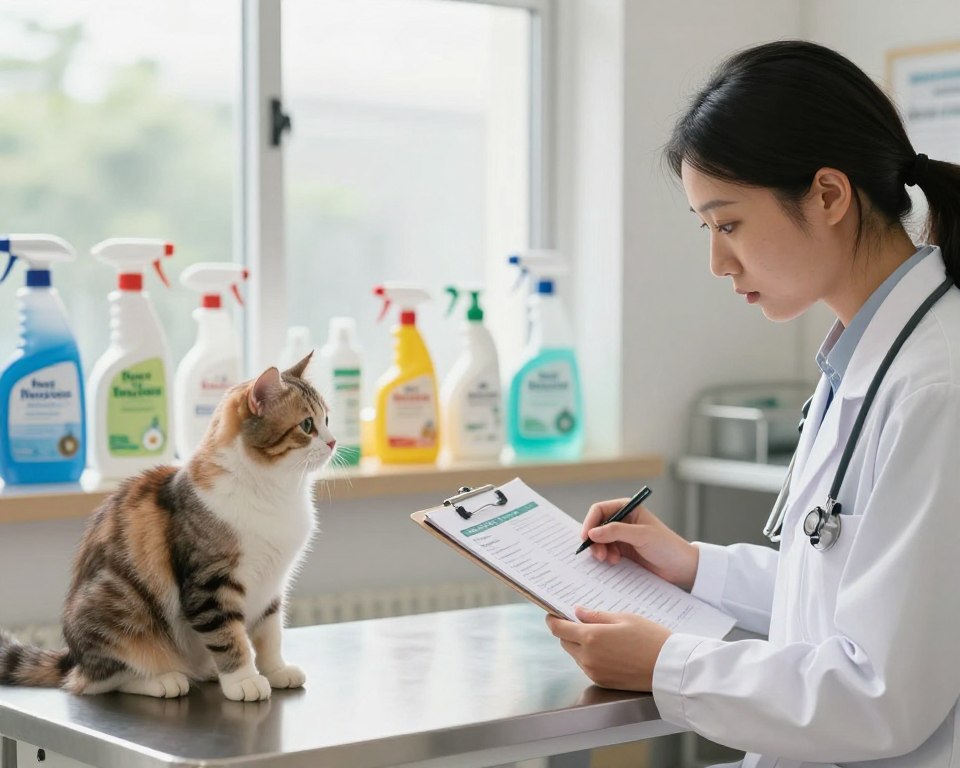
When to Seek Emergency Care
Get your pet to a vet right away if they act strangely or seem sick after pest control. Warning signs include a lot of drooling, shaking, trouble breathing, or acting very tired. Don’t wait for things to get worse, as early treatment is much better.
If you think your pet was exposed, call your local emergency vet or a pet poison hotline fast. They can give you specific advice based on the chemical. Time is a critical factor in stopping toxins from getting into your pet’s blood.
Diagnostic Procedures for Poisoning
Bring the original product label when you get to the clinic. This helps us figure out the right treatment. Without it, we have to use more general treatments that might not work as well.
We start with a detailed check-up to see how your pet’s brain and lungs are doing. We might also do blood tests to check on their organs. These tests help us see how well your pet is doing and if our treatment is working.
Long-Term Health Considerations
After a big exposure, your pet might need to be watched closely to make sure they’re okay. Some toxins can affect the nervous system or organs for a long time. Regular vet visits are important to keep an eye on how they’re doing.
We often suggest keeping an eye on your pet at home for any small changes. If they seem off for a long time, we might need to do more tests. Consistent communication with your vet is the best way to handle long-term health risks after poisoning.
Managing Pests Without Harsh Chemicals
Integrated Pest Management (IPM) is a green way to fight household bugs without harming pets. It moves from quick sprays to lasting prevention. This method focuses on long-term fixes, not just quick fixes with indoor bug spray without harmful chemicals.
Integrated Pest Management Strategies
IPM uses science to monitor and identify pests before acting. It targets the pest’s source, not just spraying everywhere. Learn more about eco-friendly pest control to keep your home safe.
Sealing Entry Points
Keeping pests out is easier than you think. Check your home’s foundation, windows, and doors for cracks. Use silicone caulk or weather stripping to block pests from entering.
Sanitation and Food Storage
Clean homes don’t attract pests. Keeping your home tidy is key for pet-friendly indoor pest control. Use airtight containers for food to stop pests from coming in.
| Method | Primary Benefit | Pet Safety Level |
|---|---|---|
| Physical Exclusion | Prevents entry | High |
| Sanitation | Removes attractants | High |
| Mechanical Traps | Targeted removal | Moderate |
| Chemical Sprays | Immediate knockdown | Low |
Specific Risks for Cats and Dogs
When picking an effective bug spray for pets indoors, think about health risks for each pet. Every pet’s body works differently when it comes to chemicals. Knowing these differences helps keep your home safe.
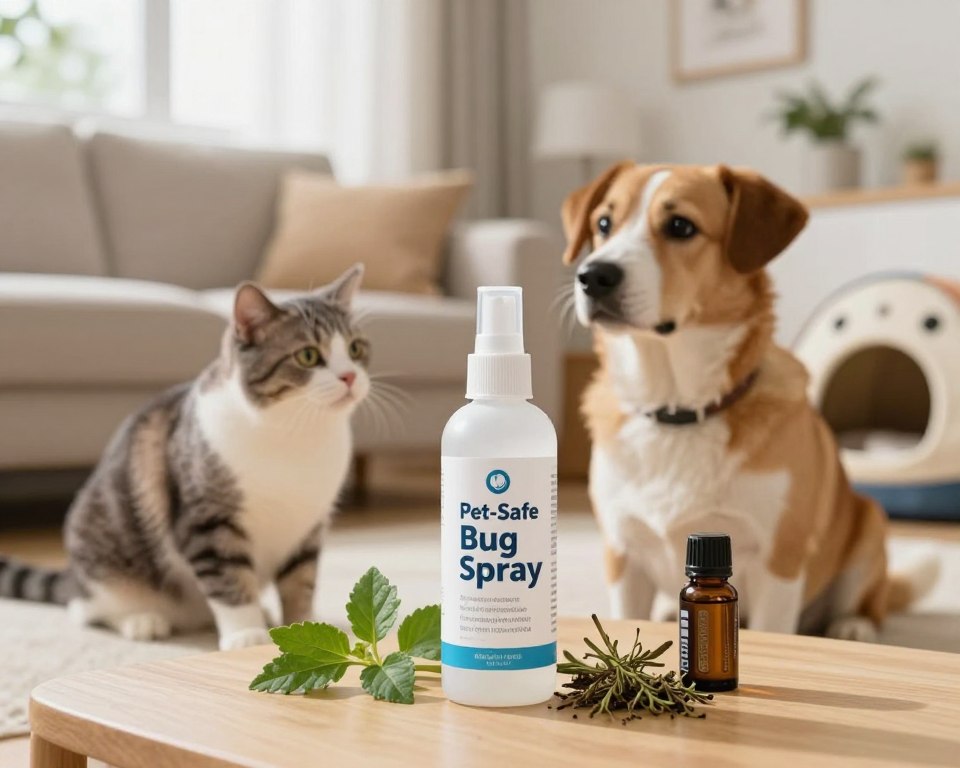
Why Cats Are More Sensitive to Toxins
Cats are very sensitive to many household chemicals. They lack a key liver enzyme called glucuronidation. This enzyme helps break down toxins.
Because of this, cats can get very sick from small amounts of toxins. Even tiny amounts of pyrethrins in bug sprays can harm cats a lot. It’s best to use safe, non-toxic options for your cat’s health.
“The feline liver is a unique biological filter that simply cannot process many synthetic compounds found in standard insecticides. What is a minor irritant to a dog can be a life-threatening event for a cat.”
Dog-Specific Sensitivities to Common Sprays
Dogs have stronger metabolic systems than cats. But, their behavior can still put them at risk. Dogs often sniff or lick treated areas, which means they can get chemicals in their bodies.
Small dogs are more at risk because they have less body mass. This means a small amount of spray can harm them more. Also, dogs with thick fur can hold onto chemicals, causing skin irritation.
| Risk Factor | Cats | Dogs |
|---|---|---|
| Metabolic Processing | Limited (Lack of glucuronidation) | Generally efficient |
| Primary Exposure Route | Grooming/Inhalation | Ingestion/Skin contact |
| Sensitivity Level | High | Moderate |
| Common Reaction | Neurological tremors | Gastrointestinal upset |
Knowing these risks helps you choose better pest control. Always check that any effective bug spray for pets indoors is safe for your pets.
Safe Bug Spray for Pets Inside: Reading Labels Correctly
Reading pesticide labels carefully is key to picking a safe bug spray for indoor use. Many products claim to work well, but the label’s details are crucial for safety. By checking these details, you can avoid accidents and keep your pets healthy.
Understanding EPA Registration
All pesticides sold in the U.S. must be registered with the Environmental Protection Agency (EPA). You’ll find this number on the label, like “EPA Reg. No.” followed by numbers. This number shows the product has been scientifically reviewed for safety and effectiveness.
Seeing an EPA registration number means the product has been tested for risks to humans and the environment. Make sure it’s for indoor use, as outdoor sprays can be too strong for homes.
Identifying Toxic Warning Labels
Manufacturers use “signal words” on labels to show how toxic a product is. These words help you find a safe bug spray for pets inside. Look for these three:
- Caution: Means the product is slightly toxic if ingested, inhaled, or on the skin.
- Warning: Shows the product is moderately toxic and needs careful handling.
- Danger: Indicates the highest toxicity, with severe injury or death possible.
Decoding Ingredient Lists
The ingredient list is often ignored but is crucial. To find an effective bug spray for pets indoors, know the difference between active and inert ingredients. Active ingredients kill or repel pests, while inert ingredients carry the product.
Don’t think “inert” means safe. Some inert ingredients can harm animals as much as active ones. Check these ingredients against veterinary safety databases to choose wisely for your pets.
Creating a Pet-Safe Environment After Pest Treatment
After treatment, focus on removing any leftover chemicals. Even indoor bug spray without harmful chemicals can leave residues. Make sure your home is safe for your pets.
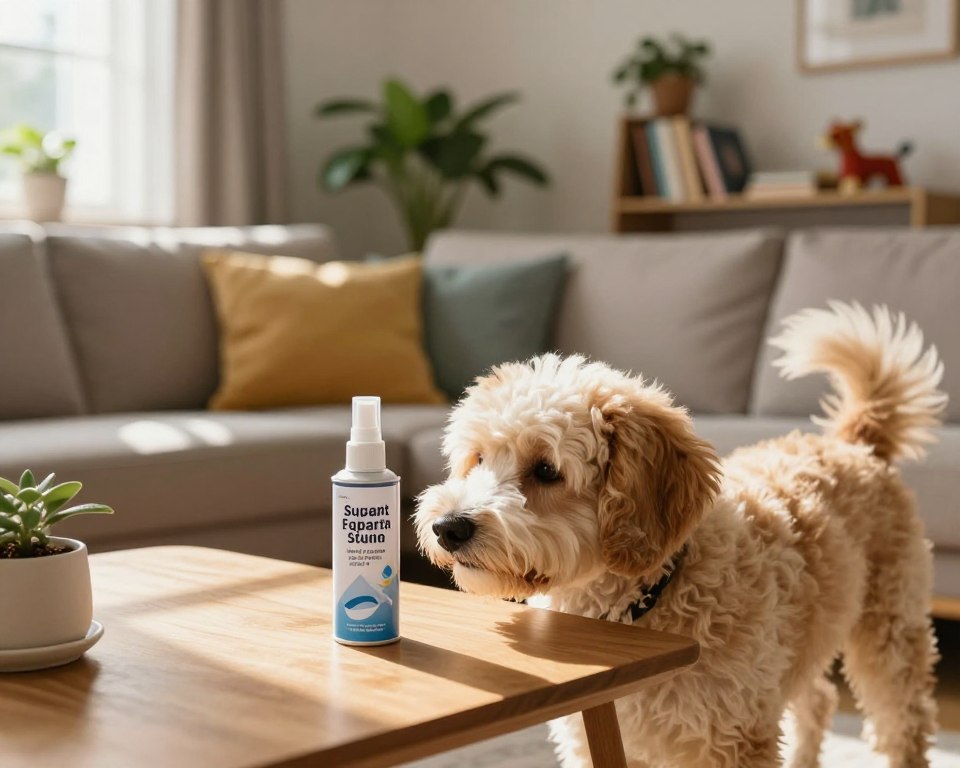
Cleaning Surfaces Post-Application
Cleaning treated areas well is key to safety. Pay attention to floors, baseboards, and furniture where pets like to hang out. Use a damp cloth or a vacuum with a HEPA filter to get rid of particles.
Even with safe bug spray for pets inside, wash pet bedding and toys. Consistency is key in keeping your home clean. Make sure all surfaces are dry before letting pets back in.
Monitoring Pet Behavior After Treatment
Watch your pets closely after treatment. They might show signs of discomfort. Look for things like excessive grooming, lethargy, or loss of appetite.
If your pet seems off, get them away from the area fast. Talk to your vet right away. Early detection helps avoid bigger health problems. Stay alert to keep your pets safe and healthy.
Image Disclosure and Educational Context
We are committed to giving you reliable health info for your pets. We want to be clear about the images we use. This way, you can trust the info we share.
Purpose of AI-Generated Veterinary Illustrations
Some images in this article are AI-generated. They show how to keep your home safe from dangers. These pictures help you see risks in your home.
These images help us talk about safety without showing scary pictures. They make learning about safety easy and clear for everyone.
Limitations of Educational Visuals
Remember, these AI images are for learning only. They can’t replace a vet’s advice or care.
If you think your pet is sick, call your vet or an animal emergency clinic right away. Visuals can’t take the place of a vet’s check-up or their expert opinion.
| Feature | AI-Generated Visuals | Clinical Photography |
|---|---|---|
| Primary Goal | Conceptual Education | Medical Documentation |
| Accuracy | Illustrative Representation | Exact Biological Evidence |
| Usage | General Safety Guidance | Professional Diagnosis |
| Reliability | Informational Support | Clinical Verification |
Common Myths About Pet-Safe Pest Control
Many pet owners think that using a natural insect repellent for pets means it’s safe for their animals. They believe this because they think natural stuff is better than man-made chemicals. But, the truth about how things can be harmful is more complicated than what labels say.
Debunking Natural Does Not Mean Safe
“Natural” doesn’t always mean safe. Some plants have strong chemicals to keep bugs away. These chemicals can be very bad for cats and dogs.
For example, some essential oils like tea tree, peppermint, and clove are thought to be safe. But, they can really hurt pets if used wrong. Using a natural insect repellent for pets without knowing the right amount can lead to vet visits.
The Truth About Homemade Remedies
DIY pest control is also filled with wrong information. People mix things like vinegar, essential oils, or citrus in their kitchens thinking it’s safe. But, these mixes haven’t been tested like real products have.
It’s easy to make a mix that’s too strong for pets. Also, homemade remedies don’t consider how different animals process things. What’s okay for a dog might be dangerous for a cat.
| Ingredient | Common Myth | Actual Risk to Pets |
|---|---|---|
| Tea Tree Oil | Safe, natural antiseptic | Can cause tremors and ataxia |
| Citrus Extracts | Non-toxic cleaner | May cause skin irritation and vomiting |
| Peppermint Oil | Gentle pest deterrent | Potential for respiratory distress |
| Garlic/Onion | Natural insect repellent | Causes anemia and red blood cell damage |
Always choose safety based on real science, not just what you read online. When picking a natural insect repellent for pets, check the ingredients against vet databases. This way, your home stays safe for everyone.
Emergency Preparedness for Accidental Exposure
Being prepared is key to handling accidental insecticide exposure at home. Staying calm helps you make quick, smart decisions for your pet’s health. Having a plan in place means you won’t waste time looking for help when it’s urgent.
Immediate First Aid Steps
If you think your pet has been exposed to a toxic substance, act fast. Remove the animal from the chemical source. Move them to a place with fresh air or outside to avoid more fumes.
Don’t try to make your pet vomit unless a vet tells you to. This can sometimes make things worse. If the chemical is on your pet, wash the area with mild soap and lukewarm water. Protect yourself by wearing gloves to avoid getting exposed too.
Once your pet is safe, collect the product packaging or take a clear photo of the label. This info is crucial for medical staff.
Contacting Poison Control Centers
Time is very important when treating poisoning. Call your vet right away or an animal poison control center if your vet is not available. These experts have extensive databases on chemical toxicity and can give you specific advice.
When you call, have the product name, how much your pet was exposed to, and their symptoms ready. Having this info helps experts figure out the best treatment fast. Here’s what you should have ready before calling for help.
| Information Category | Details to Provide | Why It Matters |
|---|---|---|
| Product Identification | Brand name and EPA registration number | Identifies specific active ingredients |
| Exposure Details | Time of incident and method of contact | Determines the rate of absorption |
| Pet Profile | Species, weight, and age | Helps calculate toxic dosage levels |
| Clinical Signs | List of observed symptoms | Guides immediate treatment protocols |
Conclusion
Keeping your home pest-free is all about balance. It’s about keeping your pets healthy and using effective bug control. Start by keeping your home clean and fixing any damage to reduce the need for harsh chemicals.
If pests still show up, picking the right bug spray for pets is key. Look for products with clear ingredient lists and proven safety. This helps protect your pets from harm.
Being a responsible pet owner means knowing what’s in your home. Always check labels and follow instructions to keep your pets safe from accidents.
By following these tips, you can make a safe space for your pets. You’re their best protector by choosing safe bug sprays and watching out for dangers. Keeping up with these steps will keep your home pest-free and comfortable for everyone.
FAQ
Is bug spray indoors toxic pets?
Yes, many bug sprays are harmful to pets. The danger depends on the chemical and how it’s used. Organophosphates and carbamates can harm a pet’s nervous system. Even small amounts on floors can be dangerous if pets lick them.
In my experience, pets often get sick from entering treated rooms too soon.
What is the best pet friendly bug spray for home use?
The best bug sprays for pets use plant-based ingredients. Wondercide and Zevo use cedarwood oil or geraniol. These ingredients target insects but are safer for pets. Still, use them carefully to avoid breathing in the spray.
Are there options for an indoor bug spray pet safe for cats?
Cats need special care because their livers can’t break down some toxins. Sprays with permethrin can be deadly to cats. For cats, I suggest using integrated pest management (IPM) like sealing holes and using traps.
How can I identify a safe bug spray for indoor use?
Look for the EPA label’s “signal word.” “Caution” means it’s safer, while “Warning” or “Danger” means it’s riskier. Also, check for an EPA registration number to ensure it’s safe and effective.
Is natural insect repellent for pets always safe?
No, “natural” doesn’t always mean safe. Essential oils like peppermint and tea tree can harm pets. Always choose a non-toxic bug repellent for pets that’s made for pets, not just for humans.
How do I implement pet-friendly indoor pest control during an infestation?
Start by keeping pets away from the treated area. Use diatomaceous earth (food grade) in places pets can’t get to. If you must use an aerosol, make sure there’s good air flow and wait a few hours before letting pets back in.
What are the signs of insecticide poisoning in dogs and cats?
Signs can include hypersalivation (drooling), muscle tremors, vomiting, diarrhea, and ataxia (stumbling). Seizures can happen with pyrethroid poisoning. If you think your pet has been poisoned, call the ASPCA Animal Poison Control Center or your vet right away.
Can I find an indoor bug spray without harmful chemicals?
Yes, you can find bug sprays without harmful chemicals. Look for ones with 2-Phenethyl propionate or sodium lauryl sulfate. These are safer for pets and work well against bugs.
Is there an effective bug spray for pets indoors that treats fleas and ticks?
For treating fleas and ticks indoors, focus on the environment. Use Precor, an insect growth regulator, to target young insects. Make sure the spray is dry on surfaces before pets can touch them.
What steps should I take if my pet licks a treated surface?
If your pet licks a treated surface, rinse their mouth with water. Watch for signs of distress. If it’s a pyrethrin-based spray, they might drool. But for stronger chemicals, see a vet to check for poisoning.