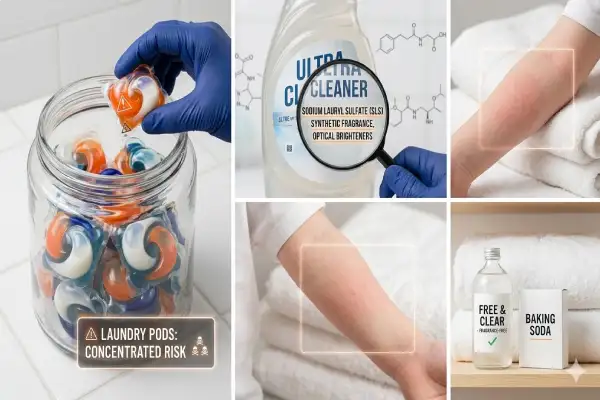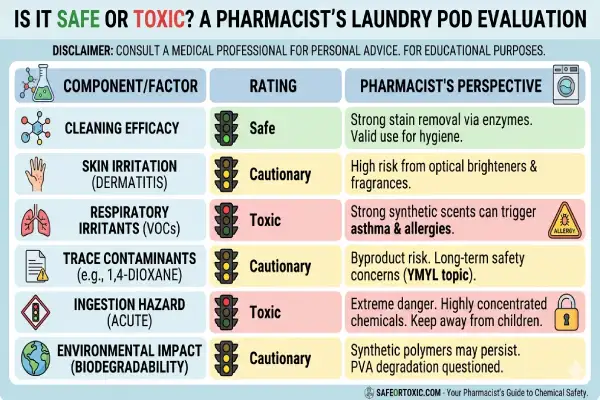
Did you know we spend almost 6,000 hours a year touching fabrics treated with laundry detergents? This is why laundry detergent safety is so important. Many people worry if their clothes have toxic residue that could harm their skin.
As a pharmacist, I check how chemicals in detergents affect our skin. Many brands say they clean well, but it’s key to know if they can cause skin problems. If you’re worried about your family’s safety, you might also want to learn are fabric softeners safe for babies. This ensures your clothes are safe for everyone.
We look at what’s in cleaning products to see if they’re safe for you. By checking how well they rinse and what’s in them, we help you choose better laundry options.
Key Takeaways
- Laundry products often leave chemical traces that remain in contact with the body for extended periods.
- Sensitive individuals should prioritize fragrance-free and dye-free options to minimize irritation risks.
- Pharmacist-verified insights help distinguish between effective cleaning and potential dermatological hazards.
- Proper rinsing techniques are just as important as the detergent choice for maintaining garment integrity.
- Evaluating ingredient lists allows consumers to avoid common allergens found in standard household cleaners.
Understanding the Chemical Composition of Woolite Darks
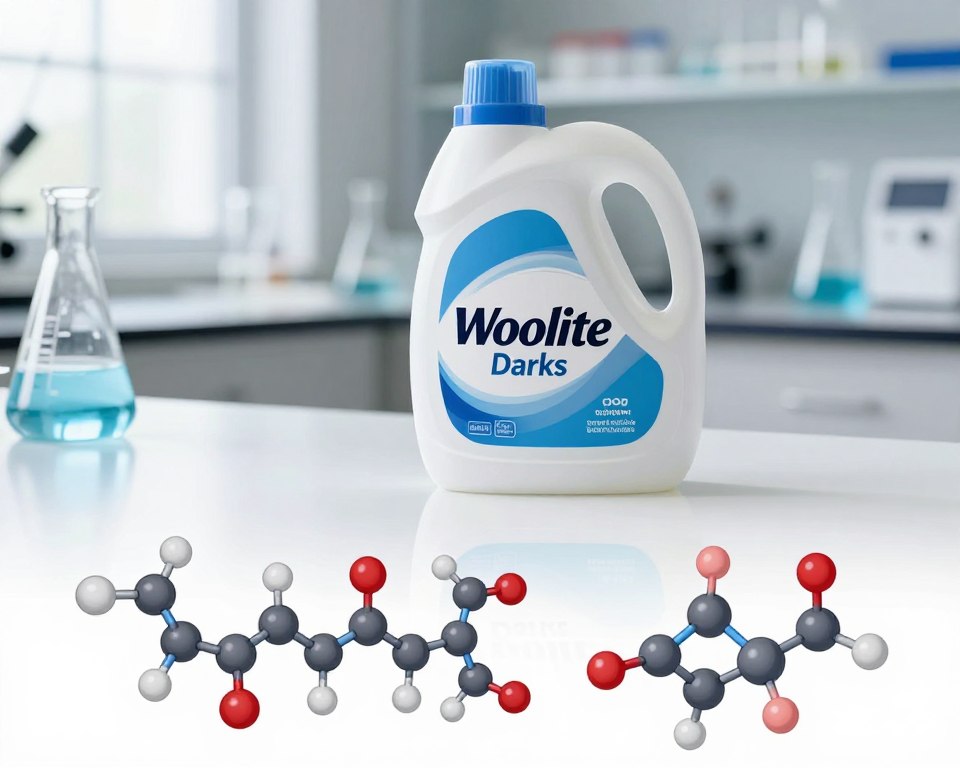
To understand how Woolite Darks protects your clothes, we need to look at its detergent chemical composition. This formula is made to clean well without harming dark fabrics. Knowing what’s in it helps us see how it works with different fabrics.
Key Surfactants Used in Woolite Formulations
Surfactants are the main cleaning agents in liquid detergents. They have two parts: one that loves water and another that grabs onto dirt. In Woolite Darks, these surfactants are chosen to gently lift stains without harming the fabric.
This special detergent chemical composition helps keep colors from fading. It does this by reducing the stress on fibers during washing. This way, your dark clothes stay vibrant and last longer.
The Role of Chelating Agents and Stabilizers
Chelating agents in the formula help manage water quality. They keep minerals like calcium and magnesium from affecting the cleaning. Without them, these minerals could make your clothes look dull or gray.
Stabilizers are added to keep the detergent working well over time. They make sure the detergent chemical composition stays the same from start to finish. Here’s a table showing what each group does:
| Ingredient Category | Primary Function | Benefit to Fabric |
|---|---|---|
| Surfactants | Removes soil and oils | Prevents fiber damage |
| Chelating Agents | Softens wash water | Prevents mineral buildup |
| Stabilizers | Maintains formula integrity | Ensures consistent cleaning |
| pH Adjusters | Balances acidity levels | Protects color vibrancy |
Is Woolite Darks Safe for Skin: Analyzing Dermatological Risks
Understanding how liquid detergents affect the skin is key. These formulas can leave chemical residues on fabrics. For people with sensitive skin, this can cause reactions.
Direct Contact Dermatitis and Laundry Products
Direct contact dermatitis happens when the skin reacts to something outside. This can cause inflammation, redness, or itching. In laundry, this often comes from surfactants or fragrances not being fully washed out.
Prolonged exposure to these can damage the skin’s protective layer. This makes the skin more prone to irritation.
Not everyone will react the same way. Skin sensitivity varies greatly. When looking at Is Woolite Darks Safe for Skin, remember that how the body reacts to chemicals is unique.
Assessing the pH Balance of Woolite Darks
The detergent pH balance is crucial for skin health. Human skin is naturally acidic, with a pH between 4.5 and 5.5. This acid mantle protects against bacteria and stress.
If a laundry product’s pH is off, it can upset this balance. This might cause dryness or irritation.
Most liquid detergents are neutral, but their exact makeup can still affect the skin. It’s important to check the detergent pH balance for those who wear clothes close to their skin. The table below shows how different pH levels affect skin health.
| pH Level Category | pH Range | Impact on Skin Barrier |
|---|---|---|
| Highly Acidic | 1.0 – 4.0 | Potential for chemical burns or severe irritation |
| Skin-Neutral | 4.5 – 6.0 | Maintains natural acid mantle integrity |
| Mildly Alkaline | 7.0 – 9.0 | May cause dryness or minor sensitivity |
| Highly Alkaline | 10.0 – 14.0 | Significant disruption of protective lipids |
The Science of Detergent Residue on Fabric Fibers
Fabric fiber absorption is key in how much cleaning agent stays after rinsing. Detergents don’t just wash away; they stick to fabric’s tiny structures. This can lead to toxic residue on clothes if rinsing isn’t enough.

How Detergents Bind to Natural Versus Synthetic Fibers
The chemical bond between detergent and fabric depends on the fabric’s molecular structure. Natural fibers like cotton and wool soak up water and cleaning agents easily. This makes them more likely to hold onto surfactants deep within their weave.
Synthetic fibers, like polyester or nylon, are different. They don’t soak up liquids as much but can attract oily residues through static forces. This makes them harder to clean:
- Natural fibers: Trap detergent molecules deep within their structure.
- Synthetic fibers: Hold onto residues on the surface due to static attraction.
- Blended fabrics: Mix both absorption and surface-binding properties, making them tricky to clean.
Factors That Lead to Incomplete Rinsing Cycles
Many factors can stop cleaning agents from being fully rinsed out. Even with good detergents, washing machine limits can leave toxic residue on clothes. Knowing these factors helps improve laundry care.
Common reasons for incomplete rinsing include:
- Overloading the drum: Blocks water flow and agitation, trapping soap in fabric folds.
- Excessive detergent dosage: Too much detergent for the rinse water to handle.
- Hard water conditions: Minerals in water react with detergent, leaving deposits on fibers.
- Low water levels: Modern machines might not use enough water to rinse thick fabrics well.
Changing these factors, like using less detergent or smaller loads, can greatly reduce chemical buildup. These adjustments help keep your clothes clean and free from harmful irritants.
Potential Health Impacts of Surfactants and Preservatives
As a pharmacist, I often hear from patients worried about chemicals getting into their bodies through their skin. Laundry detergents are meant to clean clothes, but the leftover chemicals can affect the skin. It’s crucial to understand the surfactant health impacts for those with sensitive skin or chronic conditions.

Understanding Methylisothiazolinone and Related Preservatives
Preservatives like methylisothiazolinone are added to detergents to prevent mold and bacteria. They keep the product fresh but can cause skin irritation. People with sensitive skin may react to even small amounts left on clothes.
Not all detergents have the same preservatives. If you’re looking for safer options, check out a comprehensive product safety summary. Knowing about methylisothiazolinone risks helps you choose safer products for your skin.
Systemic Absorption Risks Through Skin Contact
The skin protects us, but it’s not a complete barrier to chemicals. Surfactants or preservatives trapped in fabric can get into the skin over time. While rare, systemic toxicity from detergents can happen, but skin reactions are more common.
“The primary concern with laundry additives is not necessarily systemic toxicity, but rather the development of contact dermatitis due to repeated exposure to sensitizing agents.”
Here’s a table to help you understand common additives in cleaners and their safety for the skin.
| Ingredient Type | Primary Function | Skin Sensitivity Risk |
|---|---|---|
| Surfactants | Removes dirt and oil | Moderate (if not rinsed) |
| Methylisothiazolinone | Preservative | High (Allergen) |
| Synthetic Fragrances | Scent masking | High (Irritant) |
| Optical Brighteners | Fabric appearance | Low to Moderate |
Watching how your skin reacts to different products helps you manage your exposure. Choosing products with fewer allergens is a proactive approach to keeping your skin healthy. Always think about the total chemical load when picking laundry products.
Comparing Woolite Darks to Conventional Laundry Detergents
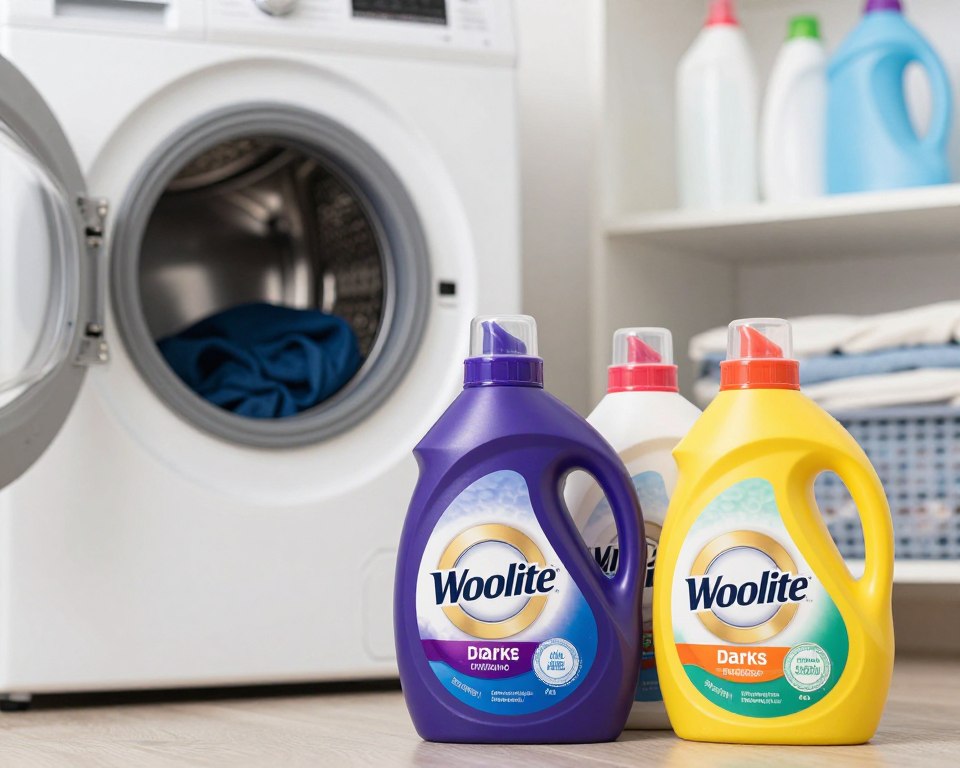
Woolite Darks and regular detergents differ mainly in what they aim to do. Regular detergents are made to remove tough stains and oils. On the other hand, Woolite Darks focuses on keeping the colors and fibers of clothes intact. This change in goal affects the chemicals used in each product.
Concentration Levels of Active Cleaning Agents
Regular detergents use lots of anionic surfactants and builders to tackle tough stains. These work well but can be too harsh on delicate fabrics and dyes. Woolite Darks, by contrast, has less of these strong cleaners.
This gentler formula helps prevent clothes from getting rough and losing their color. It might need a pre-treatment for really dirty spots. But it’s kinder to both the fabric and the skin of the wearer.
Differences in Formulation for Dark Fabric Protection
Dark fabric protection formulas often don’t include optical brighteners or harsh bleaches. These additives in regular detergents can make dark colors fade or change color. Woolite Darks uses a special pH-balanced mix to keep dye molecules from breaking down.
“The efficacy of a detergent is not merely measured by its ability to remove dirt, but by its capacity to preserve the material it cleans without leaving behind unnecessary chemical residues.”
Woolite Darks also has special stabilizers to stop dyes from mixing during washing. This keeps dark clothes looking fresh. Here’s a table showing the main differences between these detergents:
| Feature | Heavy-Duty Detergent | Woolite Darks |
|---|---|---|
| Primary Goal | Stain Removal | Color Maintenance |
| Surfactant Load | High | Moderate |
| Optical Brighteners | Commonly Included | Typically Excluded |
| Fabric Impact | High Abrasion | Low Abrasion |
Knowing these differences helps people pick the right detergent for their dark clothes. Choosing the right product can reduce the chemicals on clothes. This makes laundry day better for both the clothes and the environment.
Identifying Common Skin Sensitivities and Allergic Reactions
When your skin reacts after wearing clean clothes, it’s key to know if it’s a chemical issue or an allergy. Knowing the difference is crucial for keeping your skin healthy. Both can be uncomfortable, but they need different solutions.
Symptoms of Detergent-Induced Skin Irritation
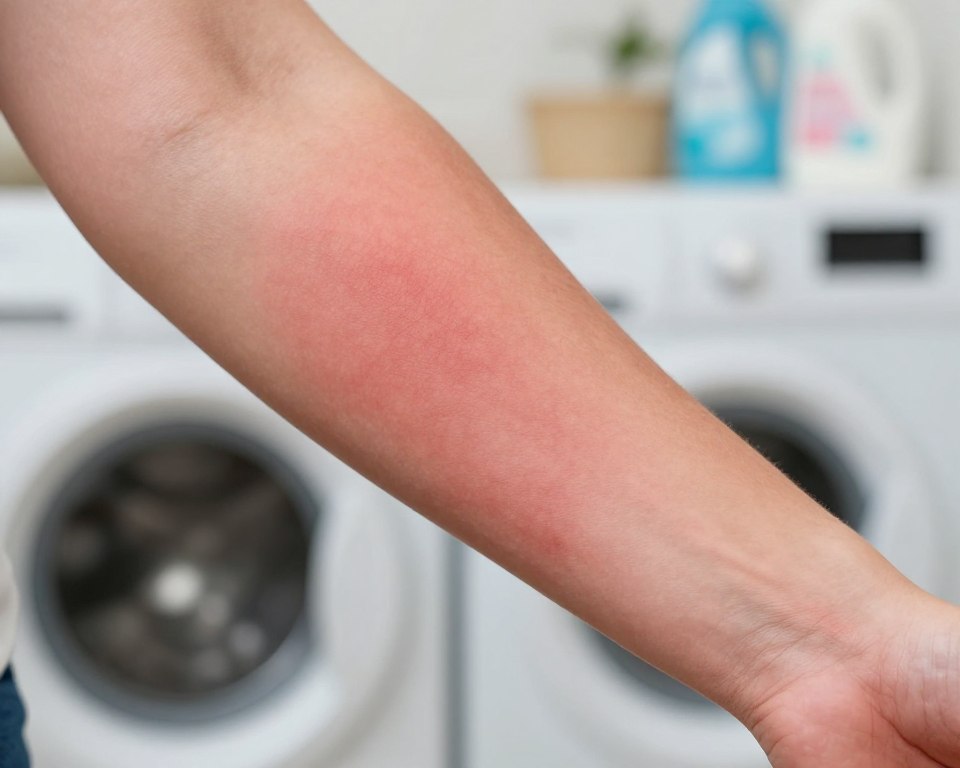
Skin irritation from detergent often shows as redness, dryness, and itching. The skin might look chapped or cracked, mainly where clothes are tight. This happens because the detergent takes away the skin’s natural oils.
Inflammation is a big sign of these reactions. You might feel a burning feeling right after wearing clothes not rinsed well. Looking for safer options, you might compare All Free Clear vs Seventh Generation Free to find the best for your skin.
Distinguishing Between Irritant and Allergic Contact Dermatitis
It’s important to know the difference between contact dermatitis symptoms to get the right treatment. Irritant contact dermatitis happens when chemicals damage the skin’s outer layer. Allergic contact dermatitis is when the body sees a chemical as a threat.
“The skin is a complex organ that acts as our primary defense against the environment. When that barrier is compromised by harsh chemicals, the resulting inflammation is the body’s way of signaling that it needs a more gentle, hypoallergenic approach to daily care.”
The table below shows the main differences to help you figure out what you might be dealing with:
| Feature | Irritant Dermatitis | Allergic Dermatitis |
|---|---|---|
| Cause | Chemical damage | Immune reaction |
| Onset | Rapid (minutes to hours) | Delayed (24-48 hours) |
| Spread | Confined to contact area | Can spread beyond contact |
| Frequency | Very common | Less common |
If your symptoms keep coming back, even with milder products, see a dermatologist. They can test if you have an allergy to certain ingredients. Knowing what you’re allergic to is the first step to fixing your skin problems.
How Fabric Types Influence Residue Retention
Not all fabrics are the same when it comes to holding onto soap residue. The way a fabric is made, from its strands to its weave, affects how well it releases cleaning agents. Knowing about fabric fiber absorption is key for avoiding skin irritation.

Cotton and Natural Fiber Absorption Characteristics
Natural fibers like cotton soak up water and what’s in it well. This makes cotton clothes often hold onto surfactants, which can stay trapped if the rinse isn’t enough.
The way cotton is woven also matters. Lighter weaves might let water through better, but thick cotton can act like a sponge. This makes it tough for water to remove all detergent, which can irritate sensitive skin.
Synthetic Blends and Their Interaction with Liquid Detergents
Synthetic fibers like polyester or nylon are different from natural ones. They don’t soak up water or detergents. But, their tight weaves can catch chemical residues on the surface or between threads.
Using liquid fabric softener on synthetic blends can make residue stick around more. The smooth surface of synthetic fibers can leave a thin film of residue after washing. This can be as bad for skin as deep-seated residue in natural fibers.
Best Practices for Rinsing Clothes to Minimize Chemical Exposure
Following laundry rinsing best practices is key to reducing surfactant and preservative exposure. Many skin issues come from leftover chemicals in fabric, not the detergent itself. Adjusting your washing machine settings can help avoid skin irritation.
The Efficacy of Extra Rinse Cycles
Modern washers often save water, which can mean clothes aren’t fully rinsed. Choosing an extra rinse cycle helps remove all detergent. This is great for people with sensitive skin or those using water-saving machines.
For dirty clothes or big loads, an extra rinse is crucial. If clothes smell soapy or feel stiff after drying, it’s a sign you need more rinsing. These laundry rinsing best practices protect your skin.
Using Vinegar as a Natural Fabric Softener and Residue Remover
Distilled white vinegar is a safe, natural fabric softener. It adds acetic acid to the rinse, balancing out detergent residue. This makes clothes soft and prevents skin irritation.
Vinegar is a budget-friendly way to improve your laundry. It doesn’t leave any smell after clothes dry, as it evaporates. Here’s a comparison of rinsing methods to find what works best for you.
| Method | Primary Benefit | Ease of Use | Effectiveness |
|---|---|---|---|
| Extra Rinse Cycle | Removes surfactants | High | High |
| White Vinegar | Neutralizes residue | Medium | High |
| Reduced Detergent | Prevents buildup | High | Medium |
Evaluating Fragrance and Dye Components in Woolite
Modern laundry detergents use complex chemicals for a nice smell. But, these additives often cause skin irritation. It’s key to know about laundry fragrance hazards for those who care about skin health and fabric care.
The Role of Synthetic Fragrances in Skin Sensitivity
Companies add synthetic fragrances to detergents to make them smell good. These scents are made of many hidden chemicals that stay on clothes. For people with sensitive skin, these can cause contact dermatitis, leading to redness and itching.
Since fragrance formulas are secret, finding the exact irritant is hard. If you get skin reactions from fresh laundry, it might be the scent. Avoiding these laundry fragrance hazards can help prevent long-term skin problems.
Dyes Used for Color Maintenance and Potential Skin Hazards
Dyes in detergents like Woolite Darks make clothes look better and stay dark. These dyes stick to fibers, which means they can get on your skin. While safe for most, they can be potential allergens for those with sensitive skin.
Using these dyes over time can make your skin more sensitive. This makes it react more to other things. Reading product labels can help you control your exposure to these chemicals.
Pharmacist Perspectives on Laundry Product Safety
As a pharmacist, I help patients navigate the confusing world of household chemicals. Many don’t know that cleaning products can affect their skin health. To keep your skin safe, it’s important to spot potential irritants early.
Expert Advice on Managing Chemical Sensitivities
Managing chemical sensitivities means cutting down on synthetic substances. I tell patients with sensitive skin to choose products with fewer additives. It’s crucial to check if your laundry detergent is safe, as some can cause itching or redness.
Consistency is key when trying new products. I suggest introducing one new laundry item at a time. If you react, you can quickly find and remove the cause.
Interpreting Ingredient Labels for Health-Conscious Consumers
When reading labels, don’t just look at the front. The back panel lists the chemicals in order. Watch out for “fragrance,” which can hide many unknown chemicals that cause skin problems.
| Ingredient Category | Common Function | Potential Risk |
|---|---|---|
| Surfactants | Removes dirt/oils | Skin barrier disruption |
| Synthetic Fragrances | Masks odors | Allergic sensitization |
| Optical Brighteners | Enhances whiteness | Residual skin irritation |
| Preservatives | Prevents spoilage | Contact dermatitis |
Knowing these ingredient categories helps you make safer choices. Always choose products with clear ingredient lists. This simple step can greatly reduce your risk of exposure to harsh chemicals.
Environmental and Health Regulations for Detergent Ingredients
Safety in the laundry room is not left to chance, thanks to established federal regulatory frameworks. In the United States, the oversight of cleaning products involves multiple agencies. They work to ensure that chemicals used in our homes do not pose unreasonable risks to human health or the environment. Understanding these EPA detergent standards helps consumers grasp the level of scrutiny applied to the products they use daily.
Compliance with United States Environmental Protection Agency Standards
The Environmental Protection Agency (EPA) plays a pivotal role in managing the chemical substances found in household detergents. While the agency does not pre-approve every individual laundry soap, it regulates the active ingredients and surfactants under the Toxic Substances Control Act (TSCA). This law allows the agency to track, assess, and control chemicals that may be harmful.
Manufacturers must ensure their formulations align with these federal guidelines to remain on the market. When new chemicals are introduced, they undergo rigorous safety assessments to determine potential toxicity. Adherence to these EPA detergent standards ensures that the environmental impact of surfactants—such as their biodegradability—is kept within acceptable limits.
Transparency in Ingredient Disclosure for Household Cleaners
Transparency remains a significant topic for health-conscious consumers who want to know exactly what is in their detergent. Currently, federal law does not mandate the full disclosure of every single ingredient on a product label for household cleaners. This lack of a universal requirement often leads to confusion regarding the presence of fragrances or preservatives.
Many companies have begun to adopt voluntary disclosure programs to build trust with their customers. These initiatives often provide detailed lists of ingredients on company websites, even when the physical packaging remains limited by space. The following table outlines the key areas of regulatory focus for household cleaning products.
| Regulatory Focus | Primary Objective | Oversight Level |
|---|---|---|
| Chemical Toxicity | Prevent health risks | High |
| Biodegradability | Protect water systems | Moderate |
| Ingredient Labeling | Consumer awareness | Voluntary/Partial |
| Surfactant Safety | Skin barrier protection | High |
Tips for Individuals with Eczema or Sensitive Skin
For those with sensitive skin, wearing clothes can be irritating. It’s important to follow sensitive skin laundry tips to avoid allergens. By changing your laundry routine, you can help your skin heal and stay calm.
Selecting Laundry Products for Compromised Skin Barriers
When picking detergents, the ingredient list is key. People with eczema should choose products labeled as hypoallergenic and free from irritants. These sensitive skin laundry tips suggest avoiding synthetic fragrances and dyes, which can cause skin reactions.
- Look for the “Fragrance-Free” label rather than “Unscented,” as the latter may still contain masking chemicals.
- Choose liquid detergents over powders, as liquids generally dissolve more completely in water.
- Verify that the product has been dermatologically tested for use on sensitive skin.
Managing Laundry Habits to Reduce Flare-Ups
Your washing method is crucial for protecting your skin. One effective sensitive skin laundry tip is to use an extra rinse cycle for every load. This ensures all chemicals are washed away from the fabric.
It’s also smart to skip traditional liquid fabric softeners. They can trap irritants against your skin. Instead, use a half-cup of white vinegar in the rinse cycle to soften fabrics naturally. By sticking to these habits, you can lower the chance of skin flare-ups from laundry additives.
Alternatives for Those Concerned About Chemical Residue
Switching to cleaner laundry can help protect your skin. Look for products that are clear about their ingredients and safe for your skin. Using hypoallergenic laundry options keeps your clothes clean and reduces skin problems.
Plant-Based and Hypoallergenic Detergent Options
New plant-based formulas clean well without harsh chemicals. They use natural enzymes to remove stains, making them good for sensitive skin. Check out Purex Free & Clear vs All Free & Clear to see how they compare.
When picking hypoallergenic laundry options, read labels to avoid irritants. These detergents are tested to keep your skin safe. Here are some benefits:
- Reduced chemical load: Less residue on fabrics.
- Fragrance-free profiles: No artificial scents to cause allergies.
- Biodegradable ingredients: Better for your skin and the planet.
DIY Laundry Solutions for Maximum Purity
DIY laundry lets you control what goes into your clothes. Mix simple ingredients to avoid unknown chemicals. Simplicity is often the most effective strategy for sensitive skin.
“The most effective way to ensure your laundry is free from hidden irritants is to simplify your ingredient list to the bare essentials.”
DIY laundry uses washing soda, borax, and castile soap. These ingredients clean without synthetic chemicals. While it takes more effort, it’s worth it for those sensitive to chemicals.
Conclusion
Keeping clothes in good shape and protecting our skin is all about finding the right balance. Woolite Darks is great for dark clothes, but we need to watch out for chemicals that might harm our skin.
Everyone’s health needs are different. People with sensitive skin or skin problems should take extra steps in laundry. Using extra rinse cycles or choosing plant-based cleaners can help avoid skin irritation.
It’s important to know what’s in the products we use. Reading labels helps us make choices that are safe for us. This way, our clothes stay clean and comfy to wear every day.
We encourage you to share your laundry experiences in the comments below. Talking about our laundry choices helps us all learn more about safe home care. Your stories help us understand how everyday products affect our health.
FAQ
Does Woolite Darks leave a toxic residue on clothing after a standard wash cycle?
Woolite Darks might leave some residue if not rinsed well. This is more common with natural fibers like cotton. To avoid this, adding an extra rinse can help remove all detergent.
What are the risks associated with the preservative Methylisothiazolinone in detergents?
Methylisothiazolinone can cause skin problems in some people. It’s used to keep detergents fresh but can irritate sensitive skin. This is more likely if it stays on clothes too long.
How does the pH balance of Woolite Darks compare to heavy-duty detergents?
Woolite Darks has a more neutral pH than heavy-duty detergents. This is better for delicate fibers and skin, reducing the chance of skin irritation.
Can adding vinegar to the laundry help reduce chemical exposure?
Yes, vinegar can help. It acts as a natural cleaner, removing detergent residue from clothes. This is a safe way to keep clothes free from chemicals.
Are the dyes used in Woolite Darks for color maintenance safe for the skin?
The dyes in Woolite Darks are meant to keep colors bright. But, they might cause problems for people with very sensitive skin. Watch for skin reactions, mainly where clothes are tight.
Is Woolite Darks a suitable choice for individuals with eczema?
Woolite is gentler than many detergents but still has fragrances. For people with eczema, it’s better to use hypoallergenic or fragrance-free options. Brands like Seventh Generation or All Free Clear are safer.
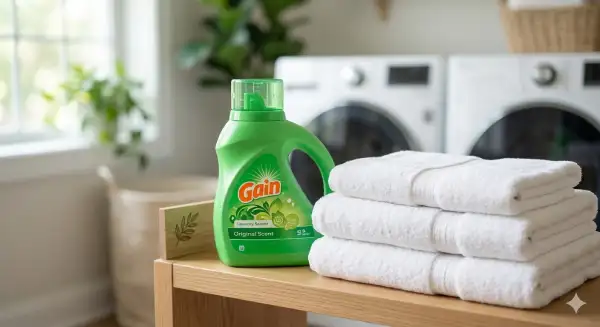
How does the concentration of active cleaning agents in Woolite differ from brands like Gain?
Woolite Darks has fewer strong cleaning agents. Brands like Gain use more to tackle tough stains. Woolite focuses on protecting fabrics and colors, using less chemicals.
Does the Environmental Protection Agency (EPA) regulate the ingredients in Woolite?
Yes, Woolite meets EPA standards for safety and the environment. Look for the EPA Safer Choice label for products that are safer for humans and the planet.
Can surfactants from detergents be systemically absorbed through the skin?
The main worry is skin irritation, not absorbing chemicals into the body. The skin is good at keeping things out. But, broken skin or too much detergent can increase the risk of some absorption.
What are the symptoms of detergent-induced skin irritation?
Signs include red rashes, dry skin, and itching. If you get a rash from new clothes or a specific detergent, see a dermatologist. They can help figure out what’s causing it.