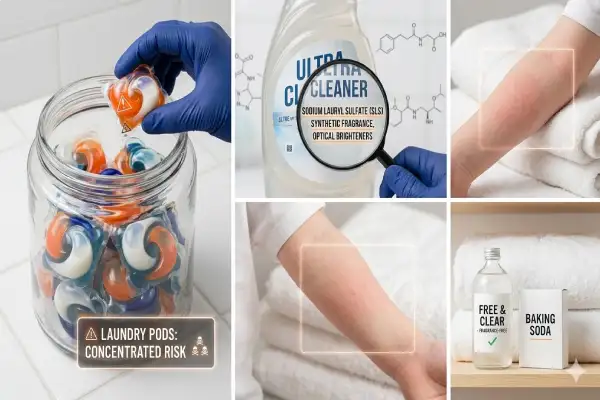
Nearly 70% of households unknowingly use laundry products with harsh surfactants and synthetic fragrances. These can damage the skin barrier. For those with skin inflammation, these chemicals can be hidden irritants. Identifying the right laundry solution is key to avoiding flare-ups and keeping skin healthy.
This guide looks at how common household items can cause skin problems. We focus on evidence-based recommendations to guide you. Choosing products without known allergens helps protect your skin from environmental stress.
Key Takeaways
- Many standard laundry soaps contain fragrances and preservatives that trigger skin irritation.
- Clinical research emphasizes the importance of fragrance-free and dye-free formulas.
- Understanding ingredient labels helps avoid common chemical triggers.
- Dermatologist-recommended options focus on hypoallergenic safety standards.
- Switching to gentle alternatives supports the long-term health of your skin barrier.
Understanding Contact Dermatitis and Laundry Triggers
Contact dermatitis is an inflammatory reaction to external substances, not an internal immune issue. It happens when the skin barrier meets a specific irritant. Finding out what contact dermatitis laundry triggers are is key to long-term skin comfort.
Washing clothes leaves detergent residues in fabric fibers. These chemicals can cause redness, itching, and inflammation when they touch your skin. Managing skin flare-ups means knowing how these substances affect your body.
Many laundry products have fragrances, dyes, and harsh surfactants. These can break down the skin’s natural protective layer. Knowing these contact dermatitis laundry triggers helps you choose better products for your home.
Being consistent is crucial when managing skin flare-ups at home. Avoiding harsh chemicals in laundry helps reduce irritation. Using hypoallergenic alternatives is a good way to find relief from chronic skin sensitivity.
Criteria for Selecting Dermatologist-Approved Detergents
Finding a gentle detergent means looking closely at its ingredients and safety marks. When searching for a dermatologist-recommended laundry detergent, ignore the marketing. Instead, check the ingredient list for things like synthetic fragrances and harsh dyes.
For those with chronic skin issues, picking an eczema-friendly laundry detergent is crucial. These detergents clean well without leaving behind chemicals that can irritate the skin. Consistency is key, as even small amounts of leftover surfactants can cause a reaction.
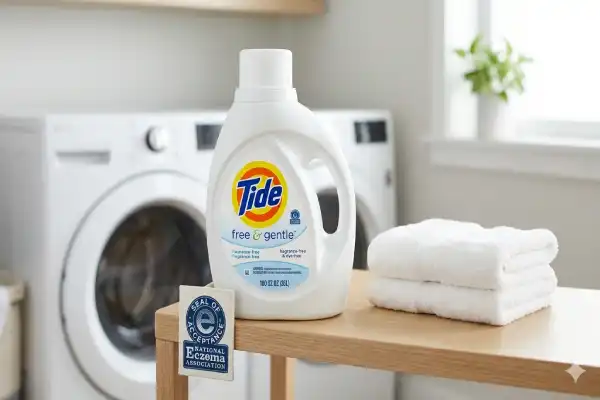
Looking for the National Eczema Association seal is a smart move. This seal means the product has been tested and is safe for sensitive skin. You can also compare different products by reading reviews, like Tide Original vs Tide Free.
When choosing between liquid vs powder detergent, think about how they work in your washing machine. Liquid detergents are better for cold water and sensitive skin. Powders might leave behind particles that can irritate the skin or cause friction.
| Feature | Recommended Choice | Avoid |
|---|---|---|
| Fragrance | Fragrance-Free | Synthetic Perfumes |
| Colorants | Dye-Free | Artificial Dyes |
| Certification | NEA Seal | Vague “Natural” Claims |
| Formulation | Liquid | High-Residue Powders |
The Best US Detergents for Contact Dermatitis
Finding the right laundry detergent is key for managing chronic skin irritation. Harsh chemicals in fabric can cause a reaction when your skin is already sensitive. The Best US Detergents for Contact Dermatitis clean well without being too harsh.
Choosing an eczema-friendly laundry detergent means looking beyond what’s advertised. Dermatologists focus on products without synthetic fragrances, dyes, and harsh preservatives. These are common causes of skin irritation.
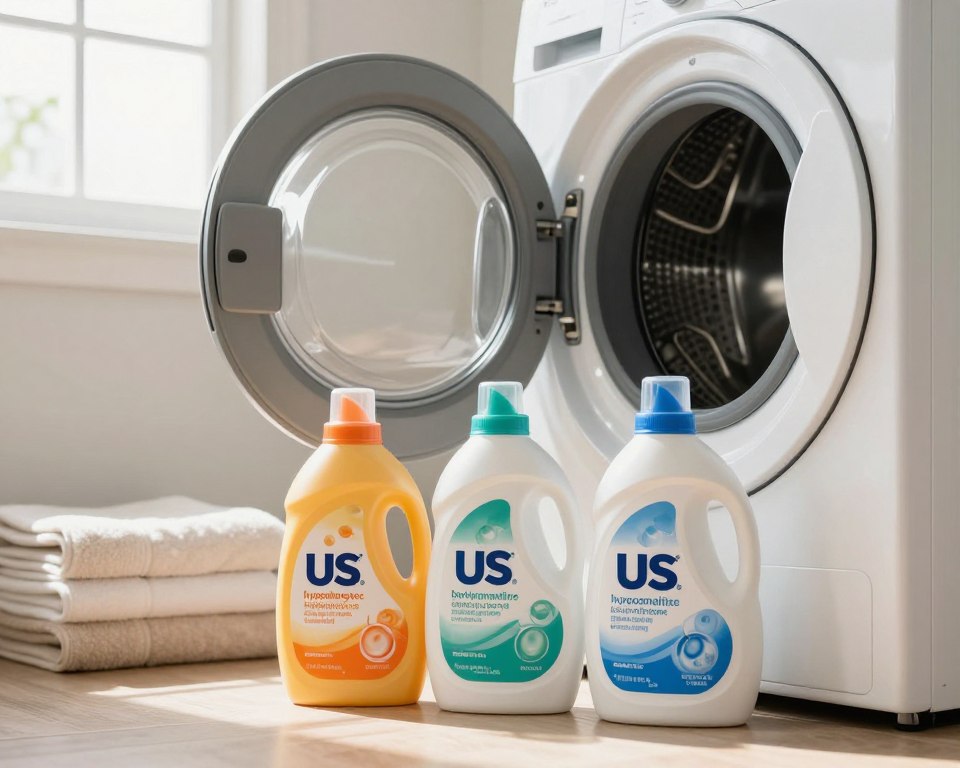
Experts say the best products clean well but are also gentle. A good laundry detergent for sensitive skin should leave no residue. This prevents skin irritation all day.
“The goal of choosing a laundry product for sensitive skin is to minimize exposure to potential allergens while ensuring that clothes are cleaned thoroughly enough to prevent bacterial buildup.”
By choosing these vetted options, you can make shopping easier. You’ll lower the risk of exposure to irritants. Whether for a child or yourself, these are the safest choices for sensitive skin.
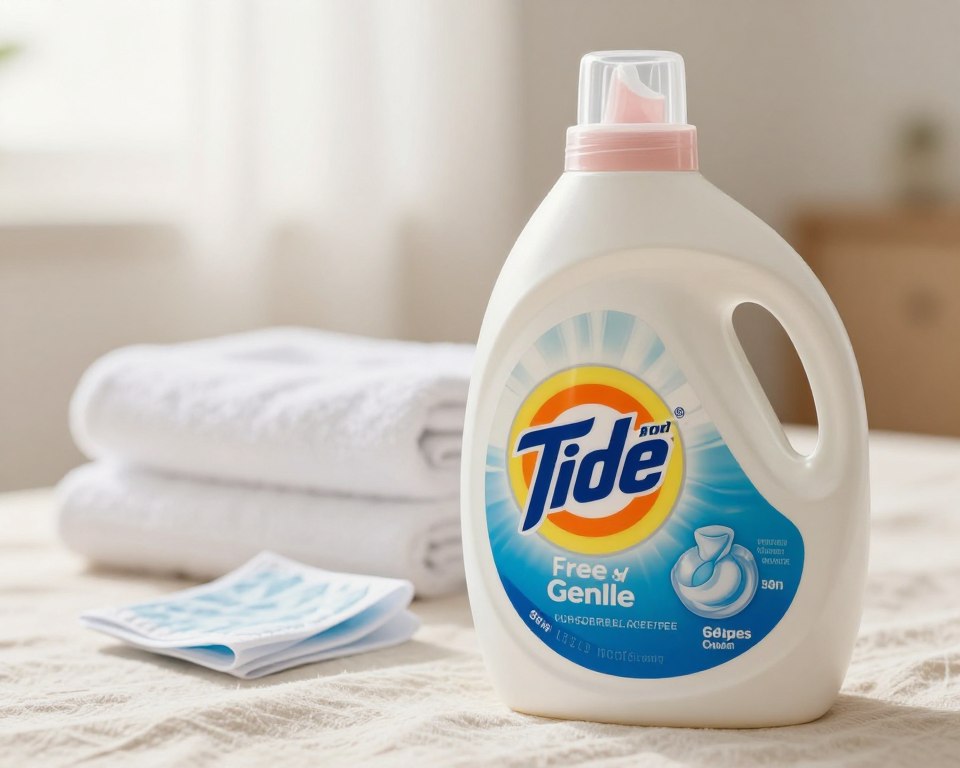
Tide Free and Gentle Liquid Laundry Detergent
Looking for a fragrance-free laundry detergent? Tide Free and Gentle is a top pick. It’s easy to find in the U.S. and is great for families with sensitive skin. It cleans well without being too harsh.
Overview
Tide Free and Gentle removes dirt and stains without dyes or perfumes. Dermatologists often suggest it to avoid skin irritation. It’s safe for kids and adults with sensitive skin.
Pros
This detergent cleans well. It’s a fragrance-free laundry detergent that tackles tough stains. It’s also easy to find in big stores, perfect for busy families.
Cons
It might cost more than some generic brands. Even though it’s free of common irritants, people with severe chemical allergies should check the ingredients. It’s not the cheapest for big families.
Features
This detergent doesn’t have dyes or perfumes, which can irritate skin. It’s dermatologist-tested and approved by the National Eczema Association. A little goes a long way, working well in different water temperatures.
| Feature | Benefit | Status |
|---|---|---|
| Fragrance | None | Hypoallergenic |
| Dyes | None | Skin-Safe |
| Cleaning Power | High | Stain Removal |
| Availability | High | Nationwide |
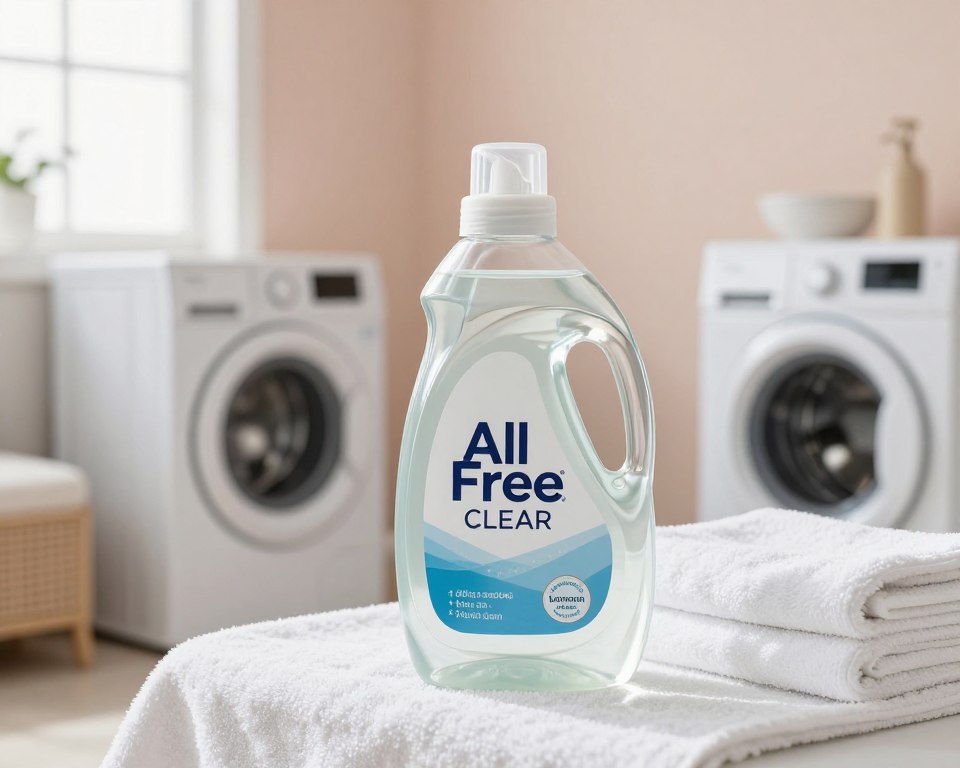
All Free Clear Liquid Laundry Detergent
Many dermatologists recommend All Free Clear as a top choice for fragrance-free laundry detergent. It’s known for being gentle yet effective. This makes it a great option for those with sensitive skin.
This detergent is made to remove all residue, which helps prevent skin reactions. For people with chronic skin issues, it’s a key part of their laundry routine. You can find more about it at this link.
Overview
All Free Clear is known for its strong backing from healthcare professionals. It’s often the first choice for those with laundry-related skin issues. The brand focuses on hypoallergenic ingredients to avoid common allergens.
Pros
- Excellent cleaning performance on tough stains without harsh additives.
- The formula is dermatologist-tested and hypoallergenic.
- It rinses clean, preventing fabric-based skin triggers.
Cons
Some users might not like the lack of scent. If you prefer your laundry to smell fresh, this might not be for you. Also, the packaging can be bulky, which might be a problem for small laundry rooms.
Features
This fragrance-free laundry detergent doesn’t have dyes or perfumes, which are common allergens. It’s a liquid formula that’s concentrated, so you get more uses from each bottle. It uses only essential cleaning agents, reducing the number of chemicals that touch your skin.
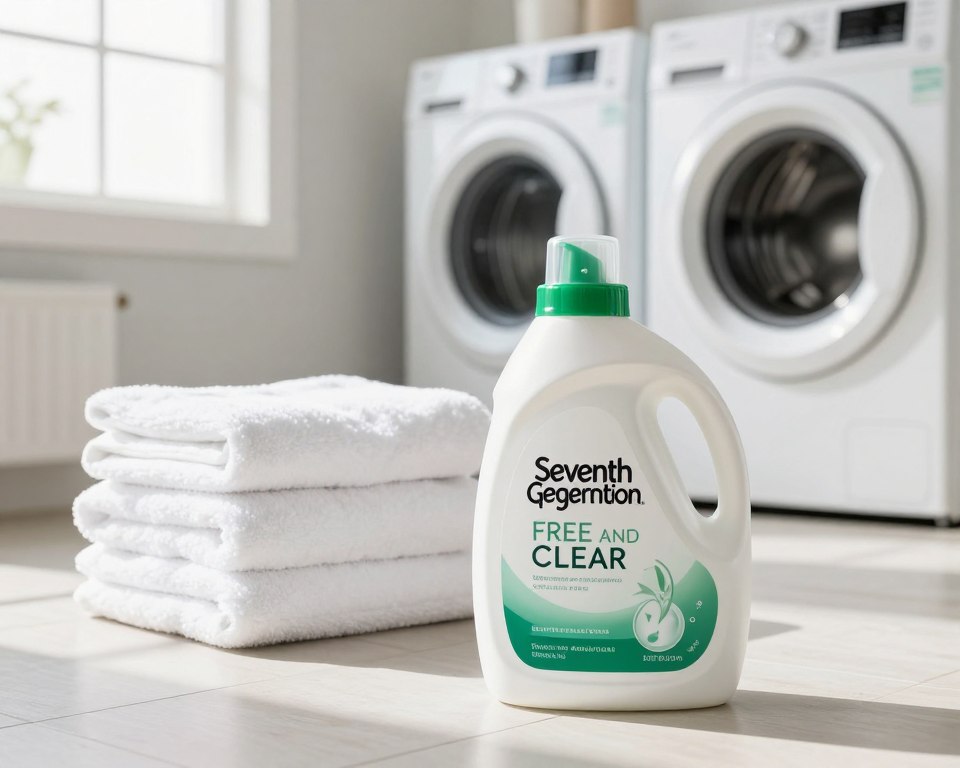
Seventh Generation Free and Clear Laundry Detergent
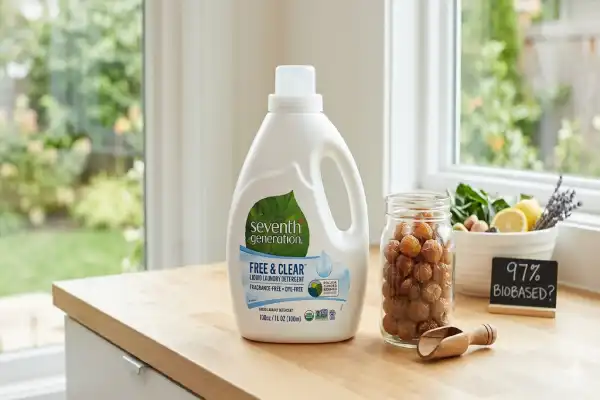
Seventh Generation is great for families who care about the planet and their skin. It uses plant-based ingredients to clean clothes without harsh chemicals. This helps avoid skin problems in sensitive people.
Overview
Seventh Generation is all about being open and safe. They use plant enzymes to get rid of stains. They avoid harsh chemicals and artificial smells, making their dye-free laundry detergent gentle on skin. This keeps clothes clean and safe from skin irritation.
“Selecting products with minimal, plant-based ingredients is a cornerstone of managing chronic skin sensitivity at home.”
Pros
- Hypoallergenic formula that is safe for infants and adults with eczema.
- Contains no synthetic fragrances or dyes, reducing the likelihood of allergic reactions.
- The product is widely available in most major retailers across the United States.
Cons
This detergent works well for everyday cleaning but might need extra help for tough stains. Some people might find it doesn’t clean as well as detergents with strong chemicals.
Features
This product stands out because it has the National Eczema Association seal. This seal shows it’s safe for people with eczema. The formula is designed to leave no residue, so it won’t irritate skin all day.
| Feature | Benefit | Certification |
|---|---|---|
| Plant-based enzymes | Effective cleaning | USDA Biobased |
| Fragrance-free | Prevents irritation | None |
| Dye-free | Skin safety | National Eczema Association seal |
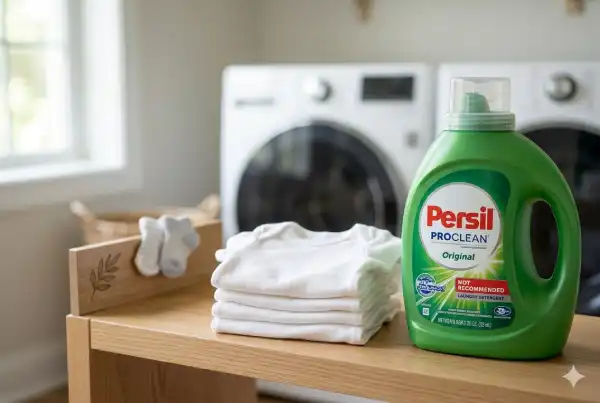
Persil ProClean Free and Sensitive
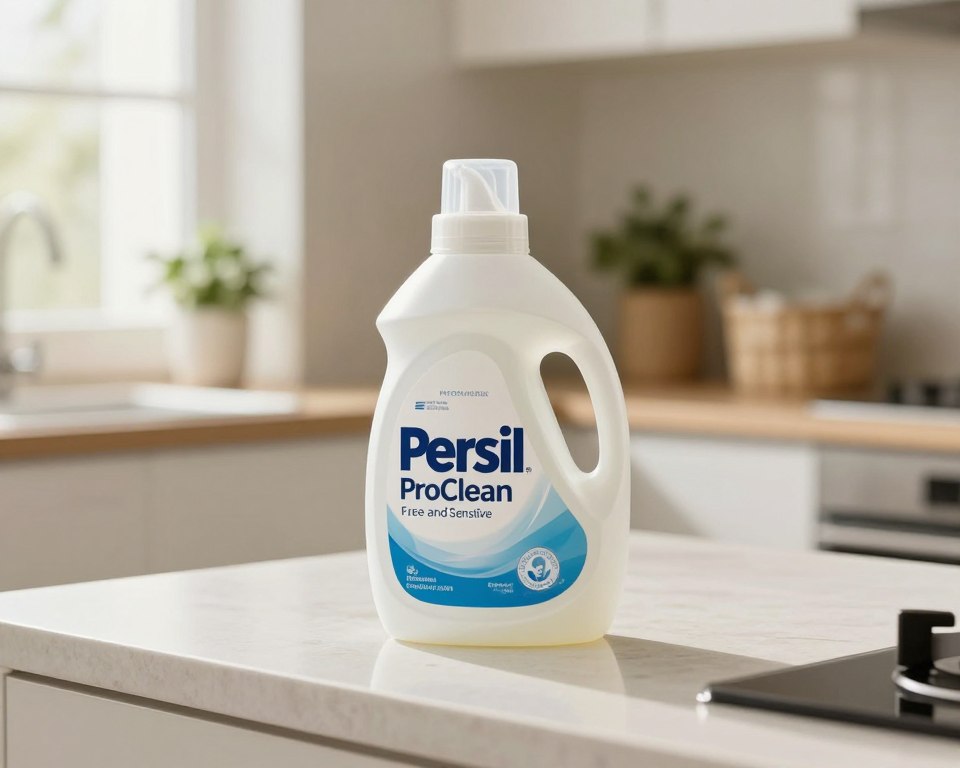
Persil ProClean Free and Sensitive is great for those who need strong cleaning without irritating their skin. It’s perfect for people with contact dermatitis who find regular detergents too harsh. This formula cleans well and is a dye-free laundry detergent.
Overview
This product is made for those who want to remove allergens and irritants from their clothes. It’s known as one of the best laundry detergents for sensitive skin. It avoids common irritants like perfumes and dyes. It uses stain-fighting enzymes to keep fabrics clean and safe.
Pros
- Exceptional stain removal compared to other hypoallergenic options.
- Free of perfumes and dyes, making it great for reactive skin.
- Works well in both cold and hot water.
- Dermatologist-tested to reduce the risk of contact dermatitis.
Cons
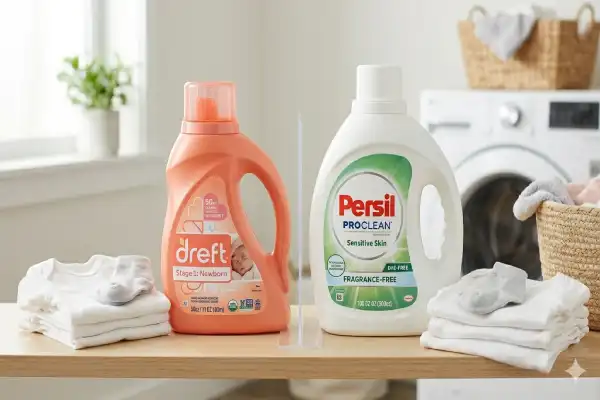
Some users might find it pricier than other options. It’s also less common in small stores than big brands. For parents, comparing Dreft vs Persil for newborns can help understand the differences.
Features
The heart of this dye-free laundry detergent is its enzyme blend. These enzymes attack protein and starch stains at a molecular level. The formula is also pH-balanced to avoid residue buildup that can irritate sensitive skin.
| Feature | Benefit | Suitability |
|---|---|---|
| Dye-free formula | Reduces chemical exposure | High |
| Fragrance-free | Prevents respiratory/skin irritation | High |
| Enzyme-based cleaning | Removes tough stains | Excellent |
| Concentrated liquid | Cost-effective per load | Moderate |
Dropps Sensitive Skin Laundry Detergent Pods
Dealing with skin sensitivities means avoiding spills and direct contact with traditional liquid detergents. Dropps has a special pod system to lower the chance of skin reactions during laundry. This hypoallergenic laundry detergent is a precise, mess-free option for homes that want to avoid common chemical irritants.
Overview
Dropps uses a concentrated, pre-measured format that eliminates the need for heavy bottles. This removes the risk of skin contact during dosing, making it a good choice for those with reactive skin. The formula is free from dyes, enzymes, and synthetic fragrances.
Pros
- Convenience: Pre-measured pods remove the guesswork and prevent accidental spills.
- Safety: The formula is designed to be a hypoallergenic laundry detergent, reducing the chance of contact dermatitis.
- Sustainability: The brand uses plastic-free, compostable packaging, perfect for eco-conscious consumers.
Cons
- Usage Limitations: Pods are not good for hand-washing clothes or pre-treating stains directly.
- Safety Precautions: These pods must be kept out of reach of children and pets to prevent accidental ingestion.
Features
The product focuses on clean, plant-based ingredients. It avoids harsh surfactants that can cause flare-ups in sensitive individuals. Each pod dissolves completely in both hot and cold water, leaving no residue on fabrics to irritate the skin.
| Feature | Dropps Pods | Standard Liquid |
|---|---|---|
| Application | Pre-measured Pod | Manual Pouring |
| Skin Safety | Hypoallergenic | Varies by Brand |
| Packaging | Plastic-Free | Plastic Jug |
| Residue Risk | Low | Moderate |
Arm and Hammer Sensitive Skin Free and Clear
Arm and Hammer Sensitive Skin Free and Clear stands out with baking soda. It’s a top pick for laundry detergent for sensitive skin. It’s made for people who often get contact dermatitis.
Overview
This detergent uses baking soda to clean clothes well. It gets rid of irritants like perfumes and dyes. This gives clothes a gentle yet thorough clean.
Pros
- Budget-friendly pricing makes it easy to use every day.
- Natural baking soda gets rid of smells without synthetic fragrances.
- It’s tested by dermatologists to be safe for sensitive skin.
Cons
This laundry detergent for sensitive skin works well for everyday cleaning. But, it might not handle tough stains as well as others. Some might miss the scent, preferring traditional smells over nothing.
Features
This detergent is all about being hypoallergenic. It’s free from dyes and perfumes, common causes of skin problems. With a simple ingredient list, it helps keep clothes clean and safe for sensitive skin.
ECOS Hypoallergenic Laundry Detergent
ECOS offers a safe, plant-based laundry option for those with chronic skin issues. It’s known for clear ingredients and eco-friendliness. This hypoallergenic laundry detergent cuts down on skin irritation while cleaning clothes well.
Overview
ECOS is known for its safe formulas, avoiding parabens, phosphates, and phthalates. It’s simple, which is great for people with sensitive skin. Knowing if fabric softeners are safe for babies is also key, as they mix with your detergent.
“The skin is our largest organ, and the substances we introduce to our clothing can have a direct impact on our dermatological health.”
Pros
This detergent is made from gentle, plant-based ingredients. It works well for everyday laundry and is made in eco-friendly facilities. It’s also pH-balanced, which keeps skin healthy when touching clothes.
Cons
ECOS is good for everyday cleaning but might not tackle tough stains as well as other detergents. It needs a pre-treatment for tough stains. Also, it might not be easy to find in all parts of the United States.
Features
This hypoallergenic laundry detergent focuses on being pure and effective. It doesn’t have optical brighteners or synthetic dyes, which can irritate skin. Here’s a table showing what makes it different from regular detergents.
| Feature | ECOS Performance | Standard Detergent |
|---|---|---|
| Plant-Derived Ingredients | High | Low |
| Synthetic Dyes/Fragrances | None | Common |
| pH Balance | Neutral | Variable |
| Environmental Impact | Low (Sustainable) | High |
Ingredients to Avoid in Conventional Detergents
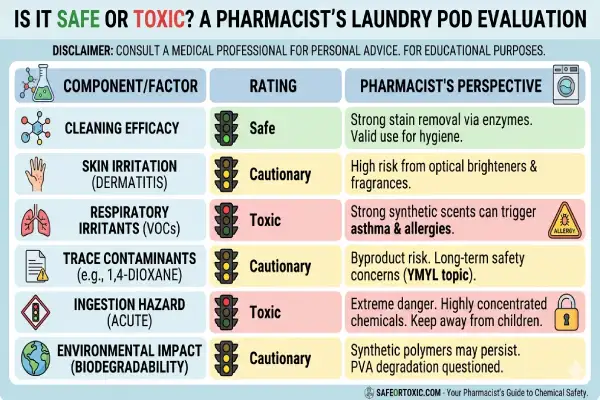
Understanding detergent labels is key when you have contact dermatitis. Even small amounts of certain chemicals can cause a reaction. Knowing which ingredients to avoid in laundry is crucial for your skin health.
Many conventional products use additives for feel rather than cleaning. These additives stay in fabric fibers after washing. When they touch your skin, they can cause irritation or allergic contact dermatitis.
To protect your skin, know the common chemical offenders in standard detergents. If you want to learn more about these substances, check out are laundry detergent chemicals safe for your home.
The list below shows the main components that can harm your skin:
- Synthetic Fragrances: These are the top cause of allergic reactions. They are a mix of chemicals that don’t need to be listed on the label.
- Artificial Dyes: They make the liquid look good but don’t clean. They often cause skin sensitization.
- Isothiazolinones: These are strong preservatives, like methylisothiazolinone, used to extend shelf life. They can cause severe contact dermatitis.
- Optical Brighteners: These chemicals make clothes appear whiter by reflecting light. They stay on clothes and can irritate the skin.
Reading labels carefully is your best defense against these hidden irritants. By picking products without these additives, you can manage safe laundry for eczema. Choosing transparent cleaning products reduces the risk of flare-ups and supports long-term skin comfort.
Best Practices for Washing Clothes to Minimize Irritation
For skin comfort, it’s not just about the soap. The whole washing process matters too. Learning how to manage contact dermatitis means paying attention to how you wash clothes. Even the best hypoallergenic soaps can cause problems if the wash cycle isn’t right.
Start by focusing on the rinse cycle for best laundry practices for skin. Modern washers might not rinse all detergent out. Always choose the “extra rinse” option to get rid of all soap residue.
Think twice about adding extras like fabric softeners and dryer sheets. They can cause skin irritation. By skipping these, you cut down on chemicals on your skin. If you’re wondering about baby-safe laundry detergent, start with these simple steps.
When choosing between liquid vs powder detergent, go for liquid for sensitive skin. Powder needs hot water to dissolve, and undissolved bits can irritate skin. Liquid detergents work well in cold or warm water, leading to a cleaner wash.
- Always use the extra rinse cycle to remove hidden detergent residue.
- Avoid fabric softeners and dryer sheets, as they contain common contact allergens.
- Choose liquid detergents over powders to ensure better solubility and less residue.
- Do not overload the washer, as this prevents clothes from moving freely and rinsing properly.
Keeping your washing machine clean is key. Mold and detergent buildup can irritate skin. Run a monthly cleaning cycle with white vinegar or a machine cleaner to keep your washer fresh.
When to Consult a Dermatologist About Laundry Reactions
If you keep getting skin flare-ups even with a dermatologist-recommended laundry detergent, it’s time to see a doctor. Mild irritation might go away with a hypoallergenic detergent. But, some skin problems are more serious than just a simple reaction.
Managing skin flare-ups at home is a good start. But, if your symptoms don’t get better, you need medical help. Look for signs of infection like swelling, warmth, or pus. Also, if the rash is big or keeps you awake at night, see a doctor.
A dermatologist can find out what’s causing your skin problems. They’ll create a personalized treatment plan to fix the issue. Using a dermatologist-recommended laundry detergent is a good step. But, it’s not enough to solve serious skin problems like eczema or severe contact dermatitis.
Dealing with skin issues needs both the right products and a doctor’s advice. If your current approach doesn’t work after a few weeks, get expert help. A dermatologist can give you the right treatment to make your skin healthy again.
Conclusion
Managing contact dermatitis means being careful with what touches your skin every day. Choosing detergents that are okay for your skin, without fragrances or dyes, is key. These products help block common irritants found in many cleaners.
Safe laundry for eczema is more than just picking the right detergent. It’s about making habits like using extra rinse cycles and skipping harsh fabric softeners. These steps help stop residue that can cause flare-ups.
Brands like Tide, All, and Seventh Generation have special formulas for sensitive skin. Using these products helps keep your skin comfortable at home. Making safe laundry a priority is a big step towards better skin health.
Start checking your laundry supplies today to take control of your space. Share your experiences with these recommended products to help others with sensitive skin. Making informed choices can greatly improve life for those with skin conditions.
FAQ
What is the difference between contact dermatitis and a standard skin allergy?
Contact dermatitis happens when the skin touches something harsh, like surfactants or fragrances. It’s different from allergies that affect the whole body. To treat it, you need to find and avoid the things that cause it, like in regular laundry detergents.
Why is the National Eczema Association (NEA) seal important when choosing a detergent?
The NEA seal means a product is safe for sensitive skin. It shows the product has been tested and doesn’t have things that can make skin worse, like dyes and fragrances.
Can I still remove tough stains using a “Free and Clear” detergent?
Yes, you can. Detergents like Tide Free and Gentle and Persil ProClean Free and Sensitive clean well without irritating your skin. They get rid of dirt and oils without harming sensitive skin.
Why should I avoid fabric softeners if I have sensitive skin?
Fabric softeners can cause itching and redness because of their fragrances and coatings. If you have contact dermatitis, it’s better to avoid them. Use an extra rinse to get rid of all detergent residue.
Are plant-based detergents like Seventh Generation better for the skin?
Yes, they are. Seventh Generation and ECOS use natural ingredients instead of harsh chemicals. This way, they clean well without drying out your skin or causing irritation.
Is “unscented” the same as “fragrance-free”?
No, “unscented” doesn’t mean there’s no fragrance. It means there’s a fragrance to hide the smell of other chemicals. Always choose products labeled as fragrance-free, like All Free Clear, for safety.
How do Dropps Sensitive Skin pods help those with skin sensitivities?
Dropps Sensitive Skin pods are easy to use and don’t irritate your skin. They’re made to be hypoallergenic, which is great for people who get irritated by regular detergents.
What ingredients are the most common triggers for laundry-related dermatitis?
Common culprits include methylisothiazolinone, synthetic dyes, and optical brighteners. These chemicals are in detergents to make clothes look and smell better. But they can also cause skin inflammation.
When is it necessary to see a board-certified dermatologist for a skin rash?
If you’re using a safe detergent and still have skin problems, see a dermatologist. They can do tests to find out what’s causing the issue and help you get better.