Nearly 80% of households increased their use of disinfectants during the COVID-19 pandemic — a surge that changed cleaning habits nationwide.
This introduction explains why the topic matters. Many people now rely on surface cleaners to protect family health. Experts still stress that frequent hand washing is a primary defense against infection.
Understanding whether a specific surface disinfectant is appropriate for daily use means balancing pathogen control with chemical exposure. Public health guidance notes these products reduce germs but also require proper handling and clear labeling.
Households want practical, evidence-based advice. This section outlines the core issues — from which surfaces to treat to how often — so readers can weigh benefits and risks for their living spaces.
Key Takeaways
- Use cleaning products as one part of broader hygiene practices, including hand washing.
- Read labels and follow manufacturer instructions to limit unnecessary exposure.
- Target high-touch surfaces rather than treating every surface daily.
- Balance germ control with household members’ health needs, such as kids and pets.
- Look for evidence-based guidance from public health agencies when in doubt.
Understanding Quaternary Ammonium Compounds
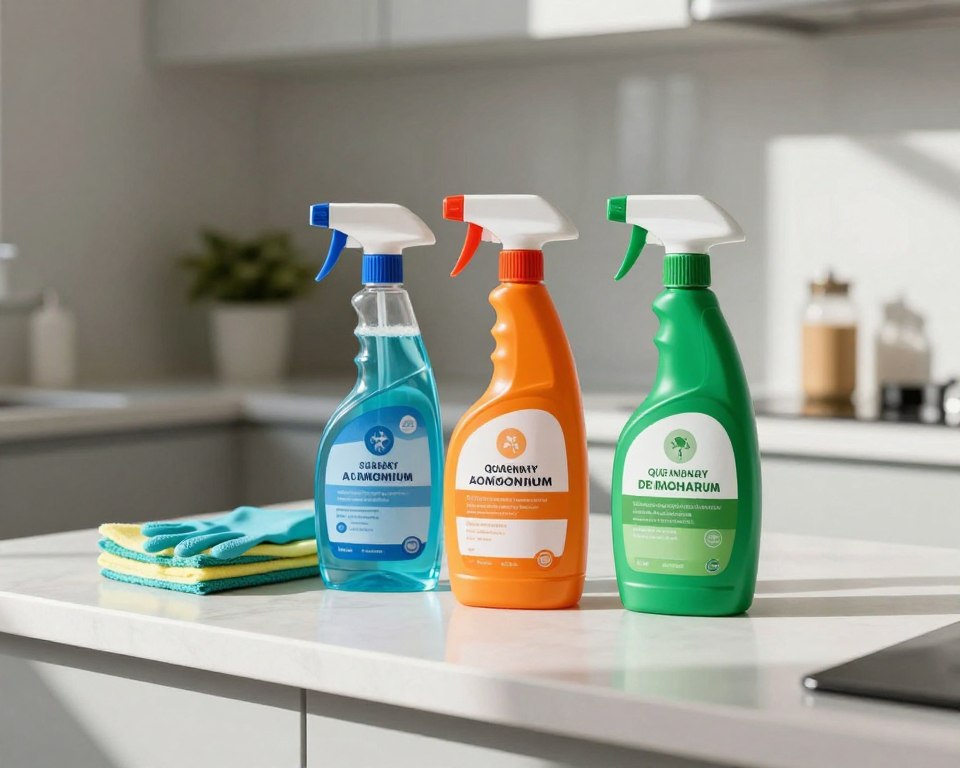
Many common cleaning products include quats as active ingredients—here’s how they work. Quaternary ammonium compounds are a group of cationic chemicals widely used in consumer and institutional products.
What are Quats
These compounds bind to negatively charged membranes of bacteria, viruses, and fungi. That interaction disrupts the outer layer and leads to pathogen breakdown. Common subclasses include benzalkonium chlorides (BACs) and alkyltrimethylammonium compounds (ATMACs).
Common Household Applications
Quats appear in wipes, sprays, and many cleaning products used in schools, food service, and medical facilities. They also show up in some personal care and sanitizing items.
- Wipes and sprays: fast surface treatment for high-touch areas.
- Hand and skin formulations: selected products include low concentrations for sanitizing.
- Food-contact uses: specific products list names ending in chloride to indicate presence of these compounds.
“These compounds provide a broad range of antimicrobial benefits across many applications.”
For a concise, peer-reviewed summary of usage and evidence, see a detailed review at this review. Knowing ingredient names and common uses helps consumers manage exposure and choose appropriate products for disinfection and cleaning.
Is Quaternary Ammonium Disinfectant Safe Home Use
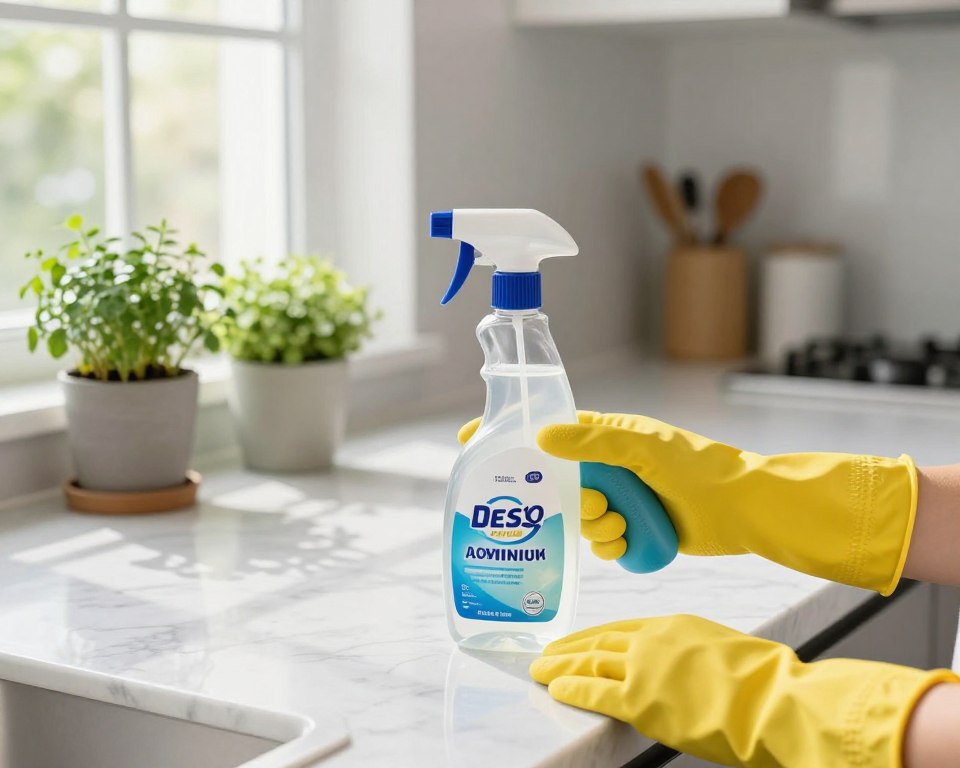
When used exactly as labeled, products that contain quats can be an effective part of routine surface care.
Regulatory review requires manufacturers to submit data showing intended uses are safe when directions are followed. That means many common products were tested for performance against bacteria and viruses before registration.
Determining whether a specific product is appropriate for a household depends on strict adherence to the label. Follow contact time, dilution, and surface guidance to avoid misuse—such as ingestion or skin contact—that raises exposure risks.
Choose the right product for the task: pick formulations labeled for the surface you plan to treat so the chemical concentration matches the job and won’t harm finishes.
- Apply only as instructed; improper use reduces effectiveness and increases risk.
- Registered products have supporting safety data for listed uses.
- Proper application and correct contact time help reduce germ levels in living spaces.
For a practical FAQ and registration details, see the quaternary ammonium compounds FAQ.
Regulatory Oversight and Safety Standards
Two different agencies oversee products used on skin versus surfaces in the United States. That split determines which data sets manufacturers must submit and which tests regulators require.
The Role of the EPA and FDA
The Environmental Protection Agency (EPA) registers surface disinfectants and sanitizers. The EPA reviews toxicology, efficacy, and exposure studies before a product can be sold for household or institutional use.

- EPA oversight: ensures that products containing ammonium compounds meet strict safety and efficacy standards.
- FDA jurisdiction: applies to hand hygiene items such as antibacterial soaps and sanitizers intended for humans.
- Data demands: the EPA’s review is data-intensive — multiple toxicology studies and performance tests are common.
- Ongoing review: agencies update guidance to reflect new science and protect public health.
Understanding regulatory roles helps consumers evaluate label claims. When a registered product lists contact times and approved surfaces, it has passed a defined review process.
“Rigorous oversight by the environmental protection agency and the FDA helps ensure products on the market meet agreed safety benchmarks.”
Proper Application and Contact Time
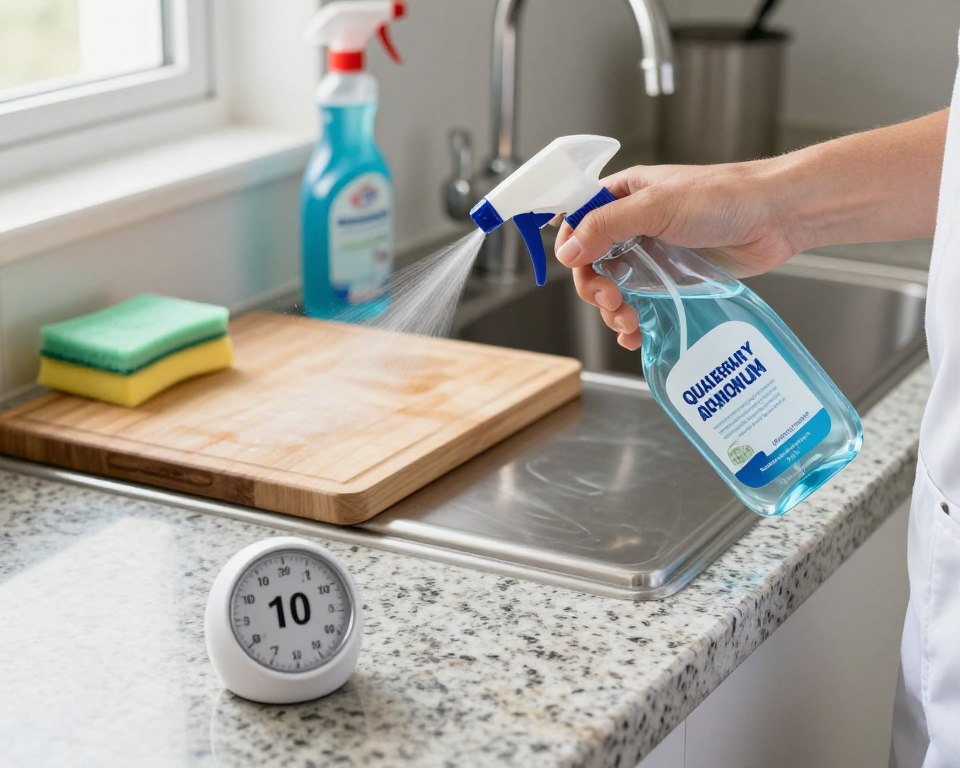
Contact time is the single most important step between spraying a surface and achieving reliable disinfection. Letting the labeled wet interval elapse ensures the product can inactivate bacteria, viruses, and fungi as tested.
Importance of Contact Time
Always check the label for the required contact time specific to your product. Many wipes and sprays need a continuously wet surface for several minutes to reach full efficacy.
Clean visible dirt first. Soil and residues reduce activity of compounds and can shorten effective action.
“If it dries before the listed time, the kill claims no longer apply.”
Rinsing Food-Contact Surfaces
For food prep areas, follow the directions exactly: allow the contact time, then rinse with potable water when the label requires it. This removes residues that could transfer to food.
For toys or utensils used by children, rinsing after the required contact time reduces ingestion risk and protects skin from concentrated residues.
- Follow EPA-registered product instructions and the manufacturer’s list of approved surfaces.
- Wear gloves or avoid skin contact with concentrated solutions to limit exposure.
- When in doubt on a food surface, rinse after the contact interval to prioritize safety and cleanliness.
Distinguishing Between Cleaning and Disinfecting
Cute clutter can hide germs—the two tasks are not the same.
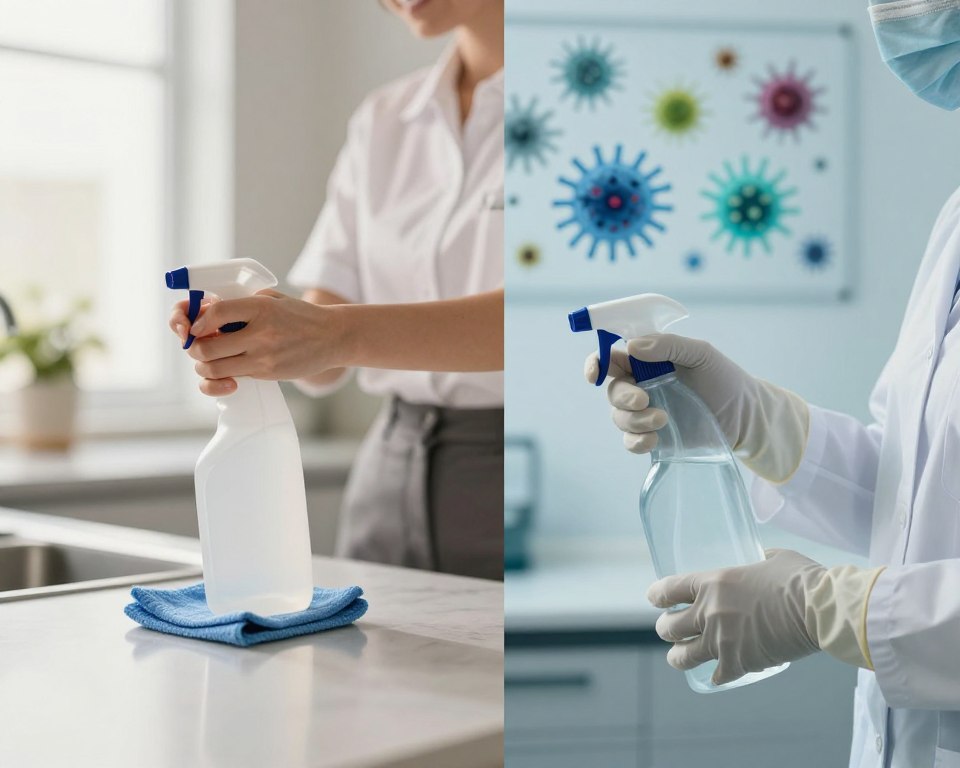
Cleaning removes dirt, grease, and organic matter from surfaces. It usually uses soap or detergent and water. Cleaning prepares a surface so a product can work better.
Disinfecting aims to inactivate bacteria and viruses. This process uses chemical compounds formulated for microbial kill. A labeled disinfectant must remain wet for the listed contact time to reach tested effectiveness.
Many modern products combine both steps. One-step cleaner-disinfectants let users clean and perform disinfection in a single pass. These products save time and reduce the chance of skipping the second step.
Sanitizing is different again: it lowers germ counts to levels accepted by public health codes but does not equal full disinfection.
- Clean first when surfaces are visibly soiled.
- Use a proper product and follow label directions for disinfection.
- Combine cleaning and disinfecting for the best protection against pathogens.
For a detailed comparison and practical tips, see cleaning vs disinfecting.
Potential Health Risks and Exposure Concerns
Some laboratory and occupational data suggest measurable risks tied to frequent use of specific quats in sprays and wipes.
Respiratory irritation
Workers who use cleaning products in poorly ventilated schools or facilities report coughing, wheeze, and asthma-like symptoms.
Sprays can produce aerosols that irritate airways. Proper ventilation and avoiding unnecessary spray use reduce risk.
Reproductive toxicity concerns
Animal studies have raised flags about reproductive and developmental effects after high-dose exposure. Researchers such as Terry Hrubec reported links in rodent models.
These findings warrant caution for pregnant workers and vulnerable groups, though typical consumer exposure is usually lower than tested doses.
Mitochondrial dysfunction
Hrubec et al. demonstrated that BACs and DDACs can impair mitochondrial function in neural and liver cell lines at low micromolar concentrations.
Cell energy disruption may contribute to broader health effects if exposure is frequent and sustained.
“While concerning, many studies use doses above common consumer exposure; ongoing research will clarify real-world relevance.”
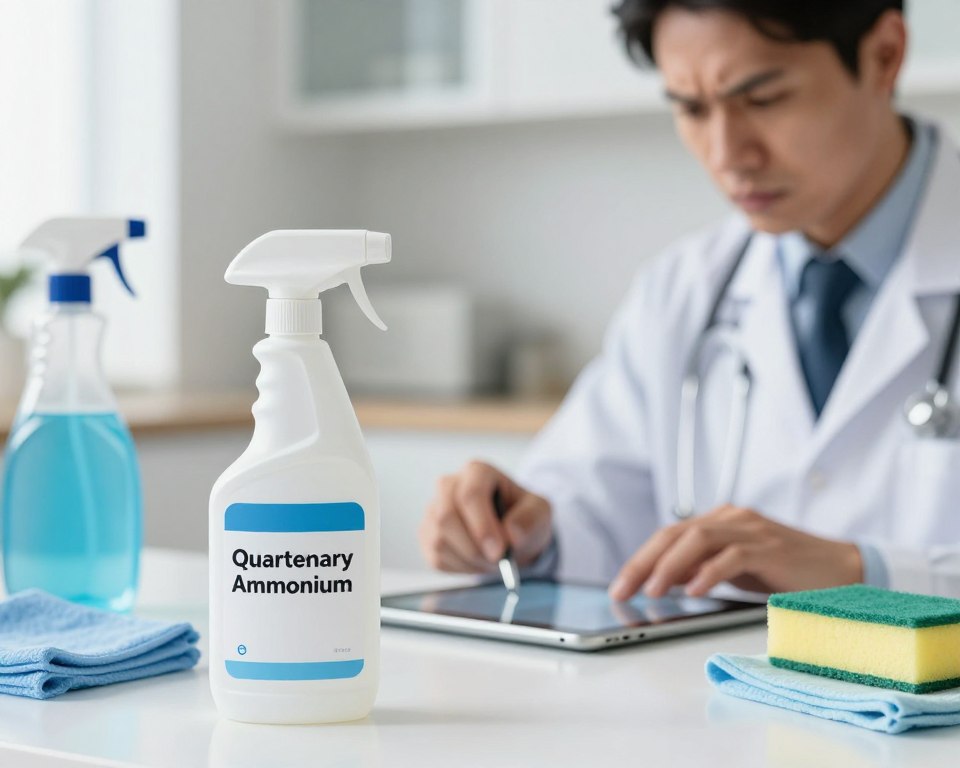
| Risk Area | Reported Effects | Where Noted | Practical Note |
|---|---|---|---|
| Respiratory | Irritation, occupational asthma | Schools, healthcare | Improve ventilation; limit sprays |
| Skin & Eyes | Contact dermatitis, irritation | Cleaning staff, frequent handlers | Use gloves and eyewear |
| Cellular | Mitochondrial dysfunction | Lab studies (BACs, DDACs) | Reduce chronic exposure; monitor research |
Summary: Evidence supports cautious use of quaternary ammonium products—follow label directions, protect skin and eyes, and prioritize ventilation to reduce potential harm.
Environmental Impact of Chemical Disinfectants
Routine use of some products contributes to a slow buildup of active compounds in local ecosystems. Chemical agents washed from counters, sinks, and floors can persist in soil, water, and sediment.
Widespread use in schools and kitchens raises the environmental burden. Aquatic species may be sensitive to these residues, which can cause ecotoxicity and bioaccumulation over time.
Because these compounds target bacteria and viruses broadly, non-target organisms in rivers and wetlands face unintended harm. That effect can alter food chains and reduce biodiversity.
Reducing unnecessary use helps lower the footprint of these products and protect water systems. Consumers should follow disposal guidance and avoid pouring concentrated solutions down drains.
- Limit routine spraying and choose targeted disinfection for high-touch surfaces only.
- Rinse treated food prep areas when labels recommend it to reduce runoff.
- Seek products with clearer labeling and take-back or disposal options where available.
“Understanding environmental fate is essential for balancing cleanliness and stewardship.”
For a detailed look at persistence and ecological effects, see an environmental fate review.
Best Practices for Minimizing Exposure
Practical steps can cut unnecessary contact with cleaning chemicals without compromising disinfection.
Protective Measures for Homeowners
Ventilate rooms during and after use of sprays or wipes. Open windows or run a fan to lower airborne residues and reduce irritation.
Wear simple protection — nitrile or rubber gloves prevent direct skin contact with active compounds. Dispose of single-use gloves and wash hands after removing them.
Store and restrict access by keeping products locked or out of reach of children and pets. Follow label guidance for dilution and approved surfaces.
Rinse food-contact areas with water after the labeled contact time if residue is a concern. Focus on doorknobs, handles, and other high-touch points rather than treating every surface.
| Action | Why it helps | Practical tip |
|---|---|---|
| Ventilation | Reduces inhalation of aerosols | Open windows; run exhaust fans |
| Glove use | Limits skin irritation | Use disposable gloves; wash hands |
| Targeted disinfection | Reduces overall chemical load | Clean high-touch surfaces only |
| Check registrations | Ensures product matches intended use | Consult EPA-registered list |
“Smart application lowers exposure while keeping bacteria and pathogens in check.”
Exploring Non-Chemical Alternatives
UV-C and related methods provide a different path for maintaining cleanliness that does not rely on routine chemicals.
Ultraviolet-C (UV-C) light has shown strong efficacy against bacteria, viruses, and fungi without leaving chemical residues. It offers a credible non-chemical option for disinfection in many settings.
These technologies are now found in HVAC units and standalone units for surface treatment. They reduce reliance on traditional products and lower the need for frequent spray use.
Advantages include no lingering residues and reduced risk of skin or respiratory irritation compared with some chemical compounds.
- UV-C works quickly when applied correctly and can complement routine cleaning.
- Systems for ducts and rooms extend microbial control without added chemicals.
- For the consumer seeking fewer sprays, UV-C can be a practical part of care routines.
“As research grows, additional non-chemical tools will become more accessible for everyday disinfection.”
Conclusion
Concluding guidance centers on making informed choices about products and exposure.
Choose EPA-registered product labels to confirm tested safety and performance. Follow contact time, rinsing steps, and approved surface instructions to keep cleaning effective and reduce risk.
Limit routine use where possible and prioritize high-touch surfaces to lower overall chemical load. Consider non-chemical options such as UV-C to cut reliance on ammonium compounds while maintaining disinfection goals.
Stay current with research on quats and environmental protection updates so decisions reflect the latest evidence. A careful, evidence-based approach preserves health and reduces unnecessary environmental impact.
FAQ
Is quaternary ammonium disinfectant safe for daily home use?
Most products containing quat compounds are approved for household use when labeled directions are followed. They kill bacteria, many viruses, and fungi on hard, nonporous surfaces. Safety depends on proper dilution, contact time, ventilation, and avoiding direct skin or eye contact. People with asthma, pets, or young children should take extra precautions—use in well-ventilated areas, store products out of reach, and follow label warnings.
What are quats?
Quats are a class of positively charged antimicrobial compounds used in many cleaning products. They disrupt microbial cell membranes, which inactivates bacteria and enveloped viruses. Manufacturers list active ingredients on labels; common trade names include benzalkonium chloride and alkyl dimethyl ammonium salts. Read the EPA-registered label for intended uses and limits.
What are common household applications for these compounds?
These agents appear in sprays, wipes, concentrates, and surface cleaners for kitchens, bathrooms, schools, and healthcare settings. They work on countertops, sinks, appliances, and nonporous flooring. Some formulations are made for food-service surfaces—those require a post-application rinse if the label specifies it.
How do regulators oversee these products?
The U.S. Environmental Protection Agency (EPA) registers surface antimicrobials and reviews efficacy and some safety data. The Food and Drug Administration (FDA) regulates antiseptics and products that make medical claims. Labels must include approved uses, contact times, and safety statements. Consumers should choose EPA-registered products for disinfecting pathogens.
What is the role of the EPA and FDA in product safety?
The EPA assesses environmental and human health risks for surface disinfectants and requires registration. The FDA evaluates products intended for skin antisepsis or wound care. Labels carry directions, required personal protective equipment guidance, and child safety warnings. Check the EPA List N and the agency’s product pages for up-to-date registrations.
Why is contact time important?
Contact time—the surface wet time specified on the label—ensures the product achieves claimed kill rates. Wiping away a product too soon can leave active microbes. Follow the specified dwell time and keep the surface visibly wet for the full interval to get effective disinfection.
Do I need to rinse food-contact surfaces after using these products?
Some formulations require rinsing before food contact; others do not. Always read the label. For surfaces that touch unwrapped food, use products labeled safe for food-contact or rinse with potable water after treatment if the label instructs.
What’s the difference between cleaning and disinfecting?
Cleaning removes dirt, grease, and some microbes through detergents and mechanical action. Disinfecting uses chemical agents to inactivate remaining pathogens on cleaned surfaces. Best practice: clean first, then apply the disinfectant and respect the required contact time.
Can these products cause respiratory irritation?
Yes. Sprays and aerosols can irritate eyes, nose, and airways, particularly in people with asthma or chronic lung conditions. Use in well-ventilated spaces, avoid spraying near people or pets, and consider low-odor formulations or wipes to reduce airborne exposure.
Are there reproductive toxicity concerns?
Some laboratory studies have raised questions about reproductive or developmental effects linked to high, chronic exposures to certain compounds in animal models. Human data are limited. For household use, follow label guidance, minimize prolonged exposure, and avoid unnecessary daily overuse.
Is there evidence linking these agents to mitochondrial dysfunction?
In vitro studies have reported mitochondrial effects in cells exposed to high concentrations. These findings inform toxicology research but do not translate directly to typical household exposures when products are used per label. Still, prudent use and avoiding direct skin contact reduce any theoretical risk.
What environmental impacts should I consider?
Some active ingredients persist in wastewater and can affect aquatic organisms. Proper disposal—never pouring concentrates down storm drains—and using manufacturer-recommended dilutions limit environmental load. Choose products with lower environmental toxicity when available and follow local disposal guidance.
How can homeowners minimize exposure?
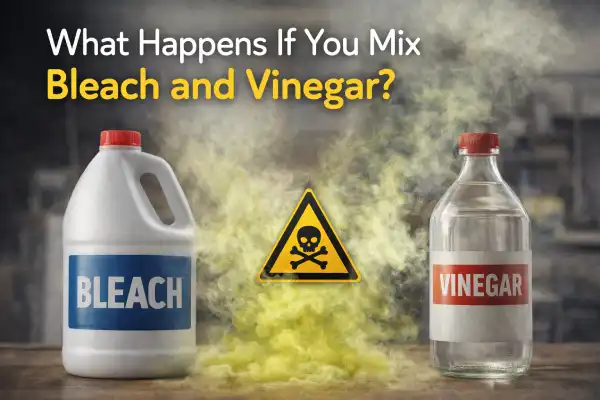
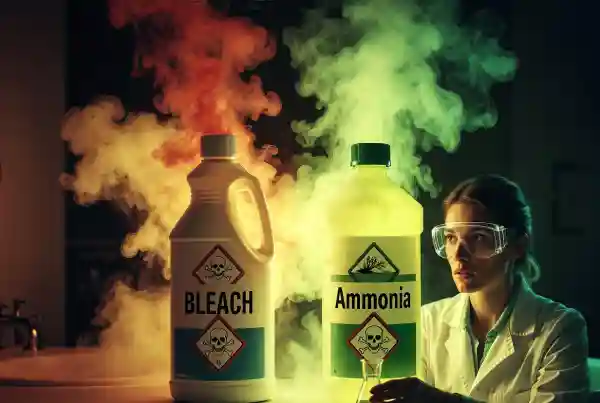
Use the lowest effective concentration, apply in well-ventilated areas, wear gloves if skin contact is likely, and keep products away from children and pets. Store products in original containers and never mix them with bleach or acids—mixing can produce harmful gases.
What protective measures are recommended?
Read the label for required personal protective equipment. At minimum, use gloves for prolonged contact and avoid splashing into eyes. Consider eye protection if mixing concentrates. Ensure adequate airflow while the product dries and wash hands after use.
Are there effective non-chemical alternatives?
Steam cleaning, hot water and detergent, and UV-C devices can reduce microbial load on certain surfaces. These methods have limitations—UV-C needs proper exposure and safety precautions; heat and detergents work well for routine cleaning but do not provide broad-spectrum residual disinfection like registered products.
How often should households disinfect high-touch surfaces?
For routine household settings, regular cleaning with detergent is sufficient most days. Increase disinfection frequency during illness, after known exposure to infectious agents, or in high-traffic household areas. Follow public health guidance during outbreaks for specific recommendations.
Are wipes and sprays equally effective?
Effectiveness depends on active ingredient concentration, formulation, and meeting contact time. Pre-moistened wipes can be convenient but may dry out or provide insufficient wet time if used with pressure. Sprays allow better surface coverage but may create aerosols. Choose products with clear label directions and follow them.
Can pets and children be harmed by residues?
Pets and children are more sensitive to residues and ingestion. Keep treated surfaces out of reach until dry, store products securely, and use pet-safe formulations when available. Call Poison Control (1-800-222-1222 in the U.S.) for exposures or visible symptoms.
Where can consumers find reliable product lists and guidance?
Consult the EPA’s registered product lists and FDA guidance for antiseptics. State health departments and the Centers for Disease Control and Prevention (CDC) provide practical cleaning and disinfection recommendations for households, schools, and healthcare facilities.