
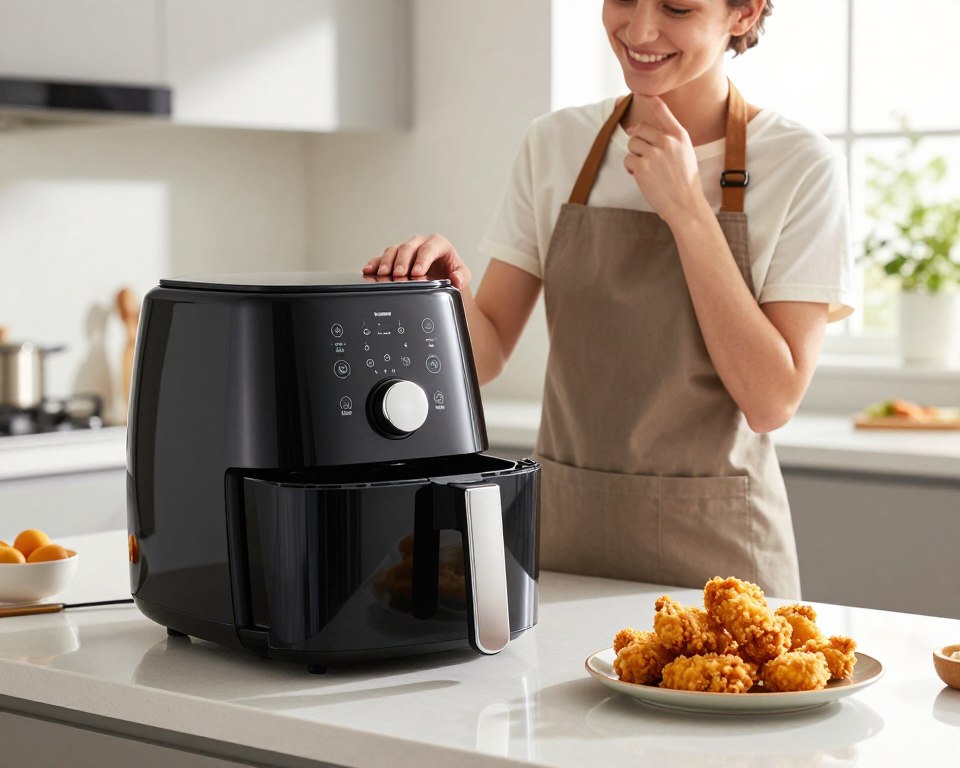
Modern kitchens use rapid convection technology for quick meals. Many families have these appliances for their ease and speed. But, using them often raises questions about their safety and durability.
It’s key to understand how these devices work. We need to look at how high heat and food chemistry interact. Keeping your appliance in good shape is as important as cooking itself.
Always choose cleaning products that are safe for food areas to avoid contamination. By balancing convenience with safety, you can cook efficiently without risks. This guide helps you make smart choices for your kitchen.
Key Takeaways
- Daily use of convection appliances is generally considered low-risk when manufacturers’ guidelines are followed.
- Material degradation of non-stick coatings can occur over time, necessitating careful handling and proper cleaning.
- Chemical residues from improper cleaning agents pose a greater immediate risk than the cooking process itself.
- Consistent ventilation during operation helps mitigate the buildup of cooking vapors in small kitchen spaces.
- Selecting high-quality, durable appliances reduces the likelihood of chemical leaching during high-heat cycles.
Understanding the Mechanics of Air Frying
To understand your air fryer’s safety, you need to know how it works. These devices are compact, high-powered convection ovens. They use hot air to cook food quickly and evenly, like deep frying.
How Convection Technology Works
An air fryer has a heating element at the top and a strong fan. When it’s on, the heating element warms the air. The fan then blows this hot air down into the food basket.
The basket has holes or a mesh to let air flow freely. This air movement cooks food evenly. The air’s fast movement makes cooking faster than in a regular oven.
The Difference Between Air Frying and Deep Frying
Air frying and deep frying both aim for a crispy outside. But they use different methods. Deep frying uses hot oil to cook food all over.
Air frying, on the other hand, uses the Maillard reaction to brown and crisp food. This reaction happens with dry heat, needing only a little oil for taste and texture.
| Feature | Air Frying | Deep Frying |
|---|---|---|
| Heat Medium | Rapidly circulating hot air | Submersion in hot oil |
| Oil Requirement | Minimal (often just a light spray) | High (total immersion) |
| Cooking Speed | Fast due to convection | Fast due to thermal conductivity |
| Nutritional Impact | Lower fat and calorie content | Higher fat and calorie content |
Are Air Fryers Safe Every Day
It’s important to know the truth about air fryers in daily use. Many people use them for quick meals, wondering if they’re safe for everyday use.
These appliances work by circulating hot air, not using chemicals or radiation. Since they act like small ovens, they’re safe when kept clean.
Evaluating Daily Usage Patterns
Using an air fryer often doesn’t make food less safe. Unlike deep frying, air frying uses hot air to make food crispy.
Consistency is key when checking your air fryer’s performance. Make sure the basket and heating element are clean to avoid problems.
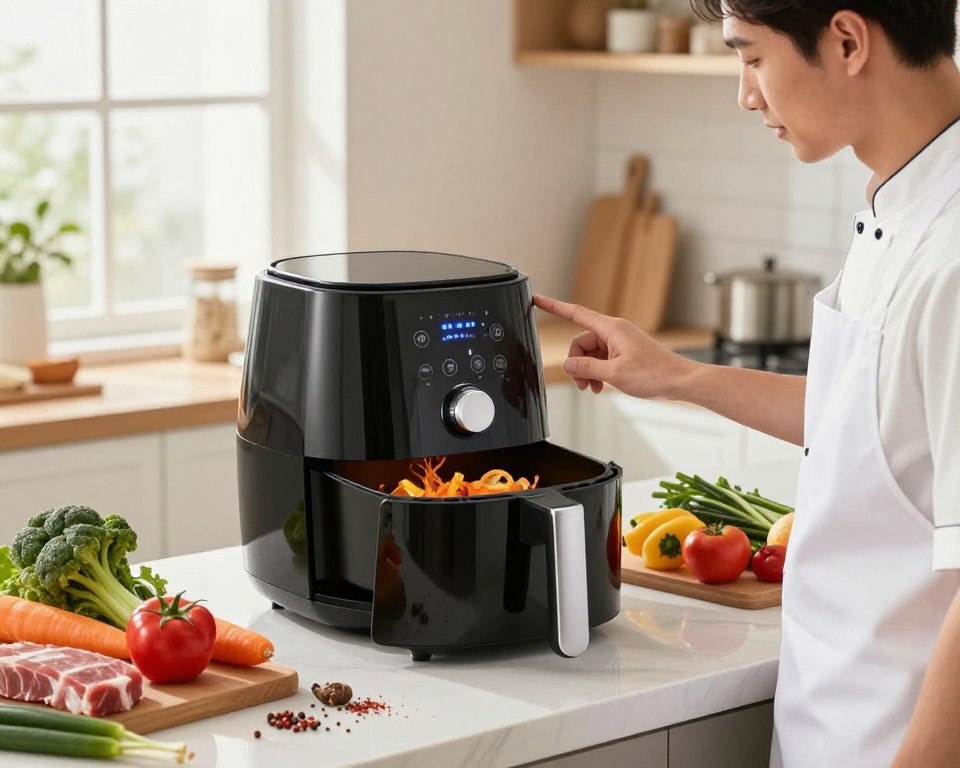
Keeping your air fryer in good shape is crucial. Follow the maker’s cleaning and use tips to avoid risks.
Common Misconceptions About Air Fryer Safety
Some worry about radiation or harmful fumes from air fryers. But, air fryers don’t give off harmful radiation. They use normal electric heating to warm the air.
“The most effective way to ensure safety in the kitchen is to rely on evidence-based operation rather than anecdotal fears found in online forums.”
Many myths about air fryer safety come from not understanding how heat works with food. With good ventilation and quality materials, air fryers are safe for daily use.
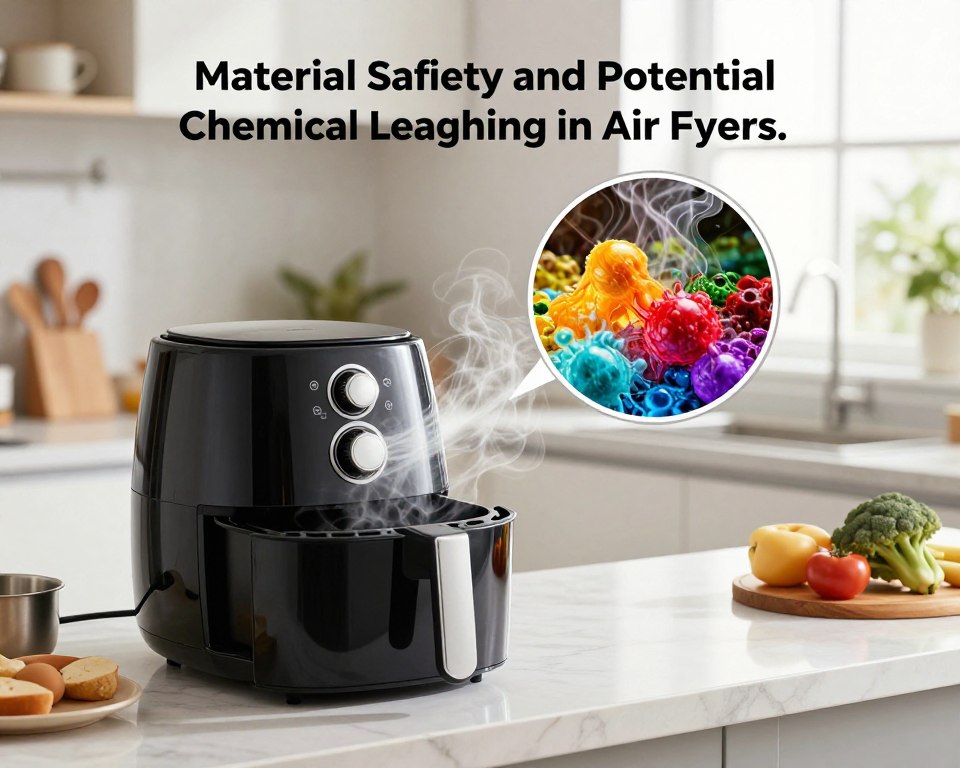
Material Safety and Potential Chemical Leaching
Checking the safety of non-stick coatings and basket materials is key for home cooks. High temperatures can affect the cooking surface’s safety. Knowing how these materials handle heat is crucial for a safe kitchen.
Non-stick Coatings and PTFE Concerns
Most air fryers have a non-stick coating, often called PTFE. This synthetic material is safe at cooking temperatures below 500°F. But, if it gets too hot, the coating can start to break down.
When the coating degrades, it might release harmful particles or fumes. To stay safe, use silicone or wooden utensils instead of metal. Also, avoid using harsh scrubbers to keep the coating intact and prevent chemicals from getting into your food.
Stainless Steel Versus Ceramic Baskets
People looking for alternatives to non-stick coatings often choose stainless steel or ceramic. Stainless steel is tough and has no synthetic coatings, making it safe from chemical leaching. It needs a bit more oil to prevent food from sticking, but it lasts a long time.
Ceramic coatings offer a non-stick surface without PTFE or PFOA. These surfaces are safer but can chip if handled roughly. Your choice depends on whether you prefer easy cleaning or long-lasting material.
| Material Type | Durability | Safety Profile | Maintenance |
|---|---|---|---|
| PTFE Non-Stick | Moderate | Stable if not overheated | Requires gentle care |
| Stainless Steel | High | Inert and non-reactive | Easy to scrub |
| Ceramic | Moderate | Free of PTFE/PFOA | Avoid metal utensils |
Managing Acrylamide Formation in Daily Cooking
It’s important to know what happens when you cook starchy foods at high heat. This process, called the Maillard reaction, makes food golden-brown and flavorful. But, it also creates chemicals we should watch out for.
What is Acrylamide and Why It Matters
Acrylamide forms in foods like potatoes and grains when they’re cooked hot. It happens when asparagine reacts with sugars in the food. This is common in many foods we eat.
Experts say it’s good to limit our exposure to acrylamide for our health. Air fryers can make this compound more because of their intense heat. Knowing this helps us enjoy our food without worry.
Strategies to Minimize Acrylamide Levels
There are ways to cut down on acrylamide. Soaking sliced potatoes in water before cooking is one. This removes some starch and sugars that lead to the compound.
Also, watch the color of your food. Aim for a light yellow instead of dark brown. This means less acrylamide. Cooking at moderate temperatures and not crowding the basket also helps.
| Cooking Method | Acrylamide Risk Level | Primary Mitigation Strategy |
|---|---|---|
| Deep Frying | High | Limit frequency and oil temperature |
| Air Frying | Moderate | Soak starches and avoid over-browning |
| Steaming/Boiling | Very Low | Use for high-starch vegetables |
Temperature Control and Food Safety
Keeping the right temperature is key for cooking safely with air fryers every day. These appliances use fast air flow, which can cause hot spots. Knowing how your air fryer heats up is the first step to avoid kitchen dangers.
Preventing Under-Cooking and Bacterial Growth
The biggest risk in the kitchen is harmful bacteria like Salmonella or E. coli. If food isn’t cooked well, these bacteria can grow, mainly in thick foods. Even heat helps fight off foodborne illnesses.
To cook safely with air fryers, don’t fill the basket too much. Overcrowding blocks air flow, creating cold spots where bacteria can hide. Make sure there’s enough room for air to reach all parts of your food.
The Importance of Internal Food Temperatures
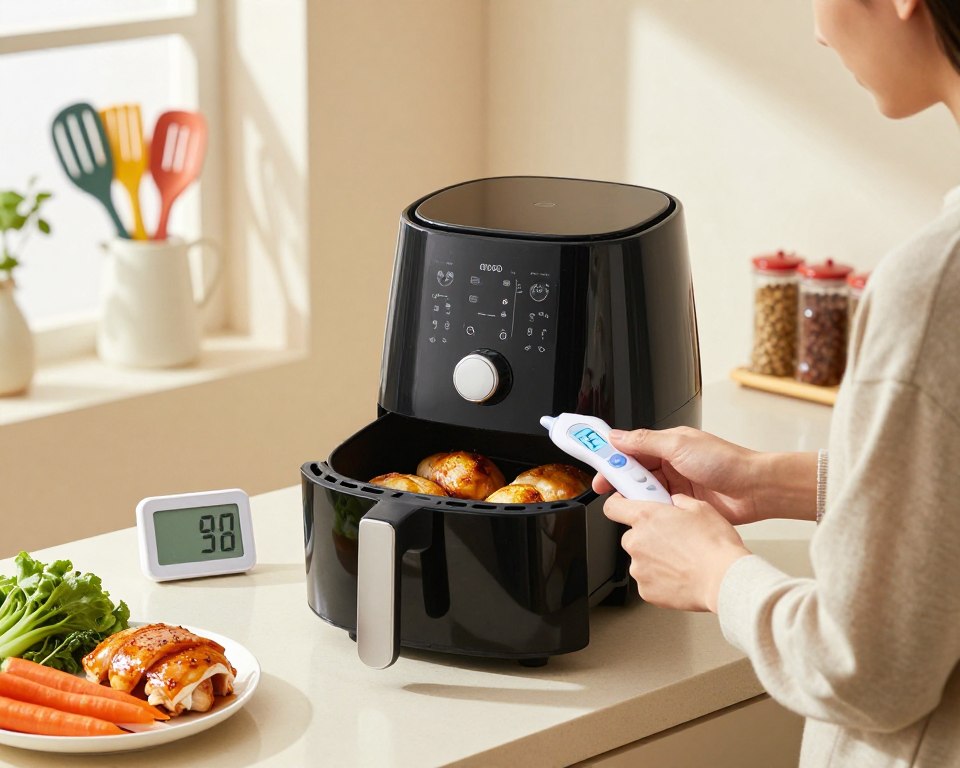
Looks like browning or texture don’t always mean food is safe. The only sure way to know is with a calibrated food thermometer. Check the thickest part of the meat to ensure it’s hot enough to kill bacteria.
It’s crucial to follow safety guidelines for internal temperatures when cooking. Whether it’s chicken, beef, or fish, accuracy is essential for cooking safely with air fryers. See the table below for the minimum internal temperatures for different proteins.
| Food Item | Minimum Internal Temperature | Resting Time |
|---|---|---|
| Ground Beef | 160°F (71°C) | None |
| Whole Chicken | 165°F (74°C) | 3 Minutes |
| Fish Fillets | 145°F (63°C) | None |
| Pork Chops | 145°F (63°C) | 3 Minutes |
Ventilation and Air Quality in the Kitchen
Air fryers are great, but they need the right environment to work well. Good ventilation is key to keep your kitchen safe and comfy. By understanding how your air fryer affects the air, you can keep your kitchen air clean.
Managing Smoke and Particulate Matter
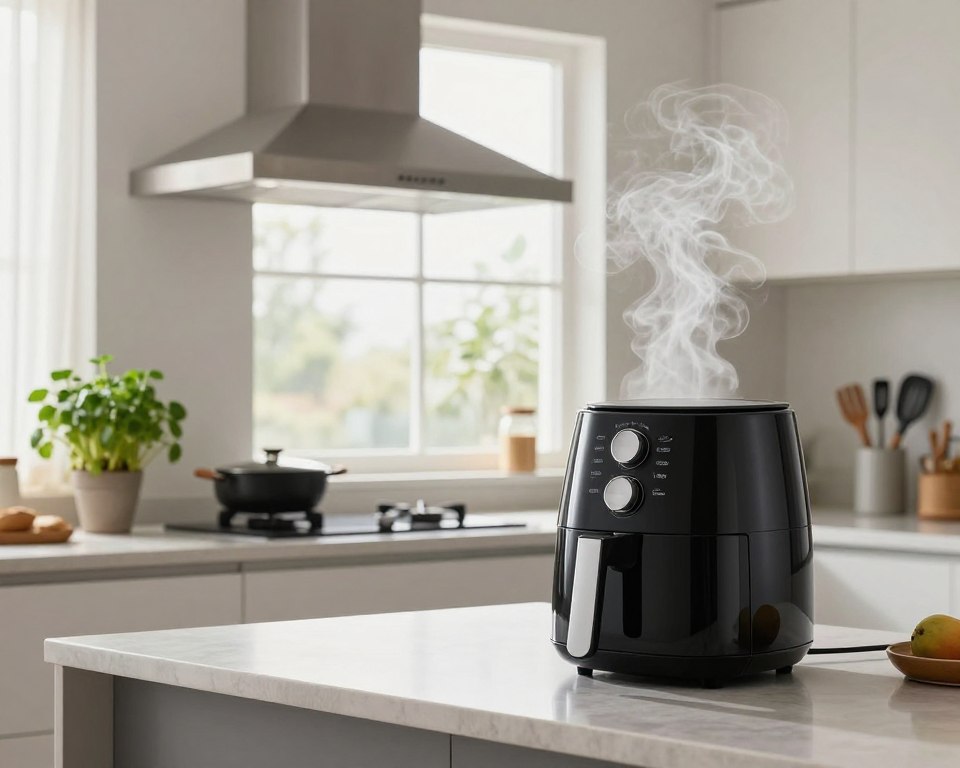
Air fryers can make smoke and tiny particles when you cook. This happens more with fatty foods or when grease builds up. Too much smoke means the unit is burning off old oils.
To keep the air clean, turn on your kitchen exhaust fan while cooking. If you don’t have a range hood, open a window nearby. Clean the basket and inside often to stop grease buildup and smoke.
Placement Tips for Optimal Airflow
Where you put your air fryer is very important. It needs space for heat to spread out. Putting it too close to walls or cabinets can cause damage.
Make sure there’s at least five inches of space around the air fryer. This lets the fan move air well. By following these tips, your kitchen stays cool and your air fryer works best.
Cleaning and Maintenance for Long-Term Safety
Keeping your air fryer clean prevents problems like coating wear and smoke. A regular cleaning schedule keeps your appliance safe for cooking. If you ignore these steps, your air fryer might not work well and could be unsafe.
Proper Basket Care to Prevent Coating Degradation
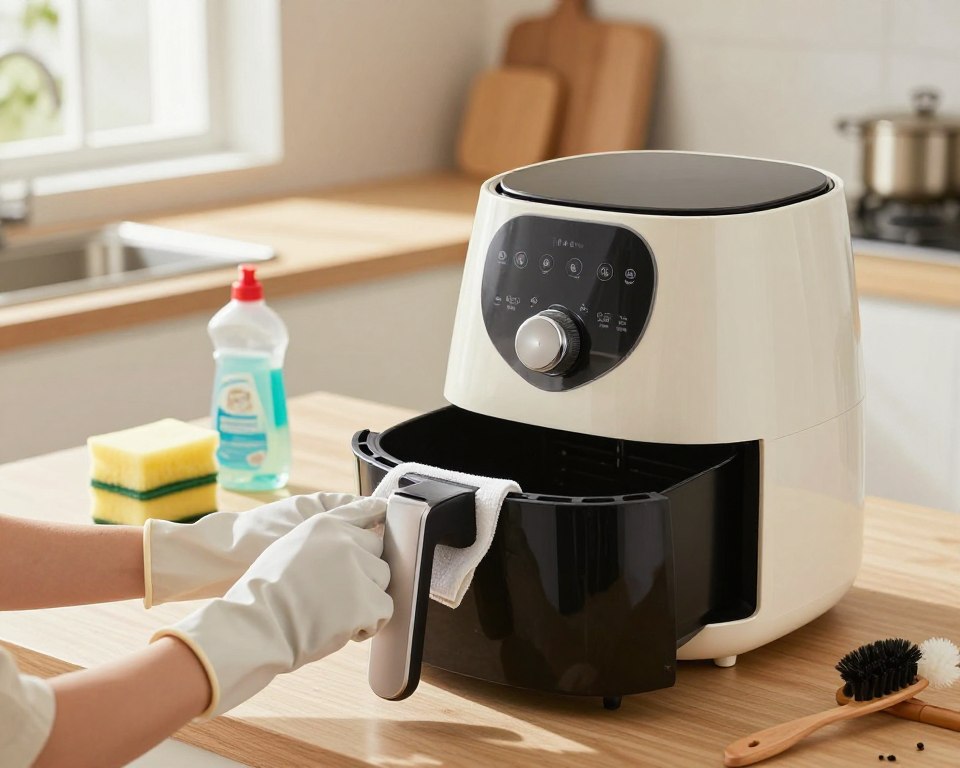
The non-stick coating on your air fryer basket is fragile. Avoid using metal utensils or rough cleaners to prevent damage. If the coating flakes, it can lose its non-stick quality and possibly contaminate your food.
Here’s how to care for your basket:
- Let the basket cool down before washing it in water to avoid damage.
- Use a soft sponge or microfiber cloth with mild soap for cleaning.
- Stay away from strong chemical cleaners, as they can be harmful on food surfaces.
- Hand washing is better than the dishwasher to keep the non-stick layer intact.
Removing Grease Buildup from Heating Elements
Grease on the heating element causes smoke. If not cleaned, it can burn and smell bad or even catch fire. Check the heating element often to remove oil splatters.
To clean the heating element safely, make sure it’s unplugged and cool. Use a damp cloth or soft-bristled brush to remove grease. Never use sharp objects or harsh cleaners to avoid damaging the electrical parts. For tough grease, a mild degreaser on a cloth can help, but make sure to clean it with water afterward.
Nutritional Impact of Daily Air Frying
When we talk about air fryer health concerns, it’s key to see how it keeps nutrients in your food. Many people love the ease of air frying. But knowing how high heat changes food helps us make better choices.
Retaining Nutrients in Vegetables and Proteins
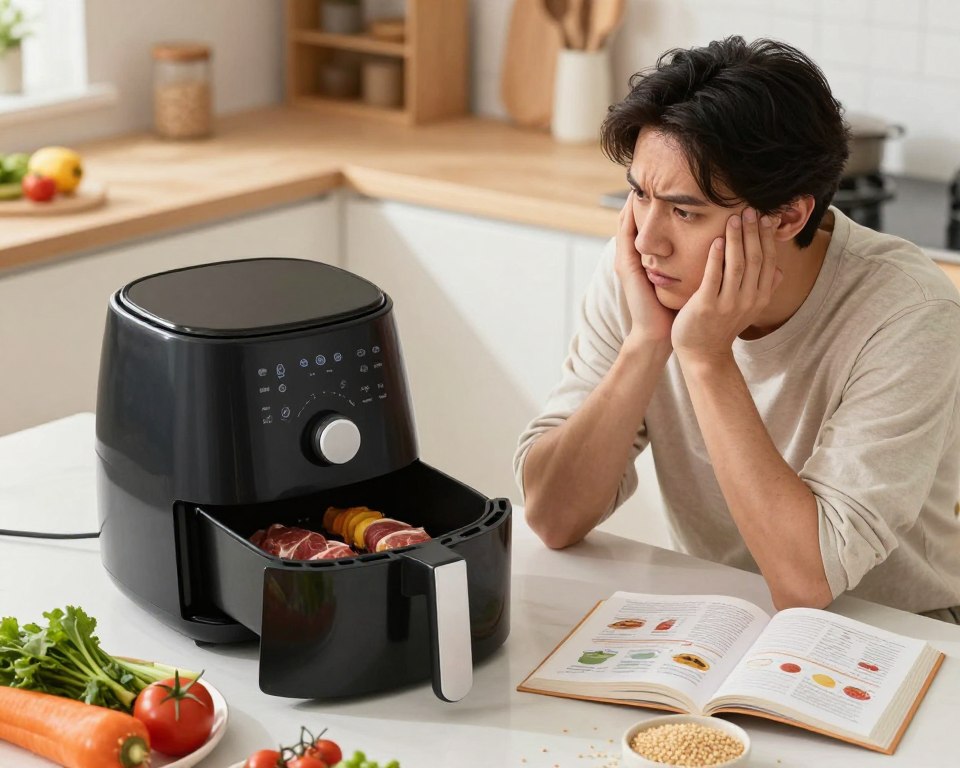
The hot air circulates fast in an air fryer. This means food cooks quicker than baking or roasting. This quick cooking is great for keeping vitamins like Vitamin C and B vitamins from getting lost.
Proteins also get a boost from air frying. The quick seal keeps moisture inside. This helps amino acids stay strong. To keep nutrients in check, follow these tips:
- Minimize cook times by cutting vegetables into uniform, bite-sized pieces.
- Avoid overcooking proteins to prevent the breakdown of essential nutrients.
- Use a meat thermometer to ensure safety without excessive heat exposure.
The Role of Added Fats in Air Frying
One big air fryer health concern is oil use. Unlike deep frying, air frying uses air to crisp food. This cuts down on fat calories.
Using just a little oil can make food crispy without adding too much fat. This is good for your heart. It helps those watching their fat intake.
The air fryer is a tool to help you eat better when you use fresh ingredients. It’s all about balancing heat and fat in your food. Used right, it’s a great addition to a healthy kitchen.
Comparing Air Fryer Safety to Traditional Ovens
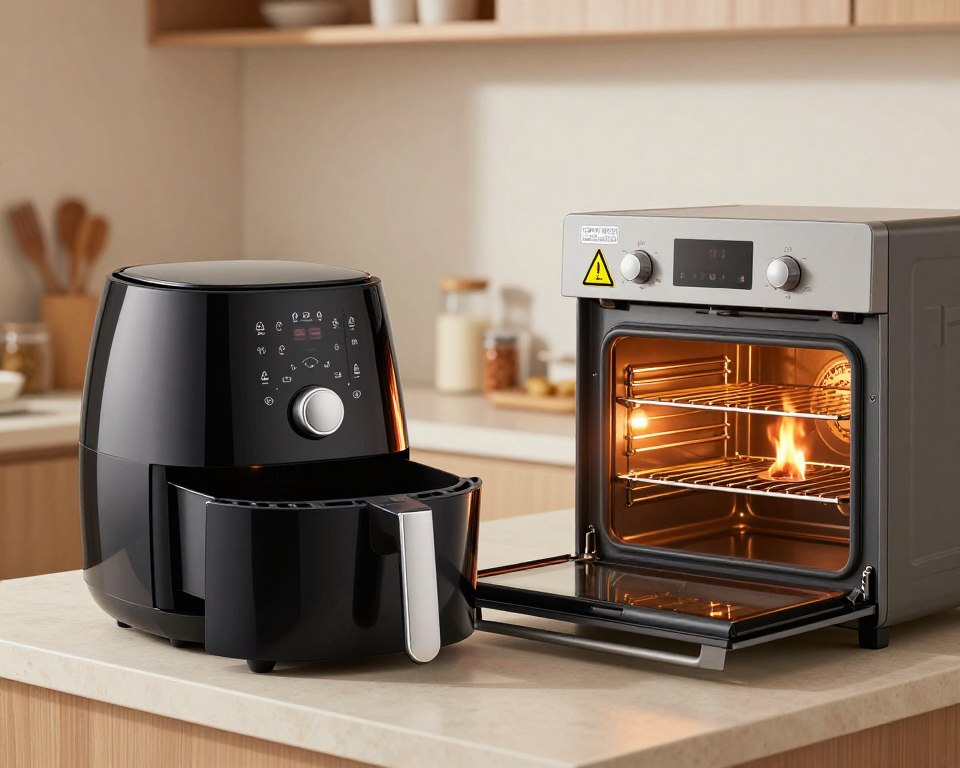
Knowing the differences between air fryers and traditional ovens helps you choose better in your kitchen. Both cook food, but they do it in different ways. This affects safety, energy use, and how much heat they give off.
Many people worry about the electromagnetic fields (EMF) from kitchen appliances. It’s key to know the kinds of radiation to understand safety better.
Radiation and Electromagnetic Field Considerations
Air fryers use non-ionizing radiation. This is different from the ionizing radiation in medical or nuclear fields. Non-ionizing radiation can’t harm DNA or cells.
Most electrical appliances, like ovens and microwaves, make some electromagnetic fields. Air fryers, being small convection ovens, have low EMF levels. These levels are safe for home use.
Energy Efficiency and Heat Exposure
Air fryers are superior in energy efficiency compared to big ovens. They cook faster and use less electricity. This makes them better for the environment and your wallet.
They also make cooking more comfortable. Big ovens heat up the kitchen a lot, which is hard in summer. Air fryers keep the heat inside, so you’re not as hot.
| Feature | Air Fryer | Traditional Oven |
|---|---|---|
| Energy Usage | High Efficiency | Moderate Efficiency |
| Ambient Heat | Minimal | Significant |
| Radiation Type | Non-Ionizing | Non-Ionizing |
| Preheat Time | Very Fast | Slow |
Best Practices for Safe Daily Operation
Using your air fryer safely is more than just pressing a button. By following daily use air fryer tips, you can make your appliance last longer. You also ensure your meals are cooked safely. Keeping it clean and handling it with care are key to a safe kitchen.
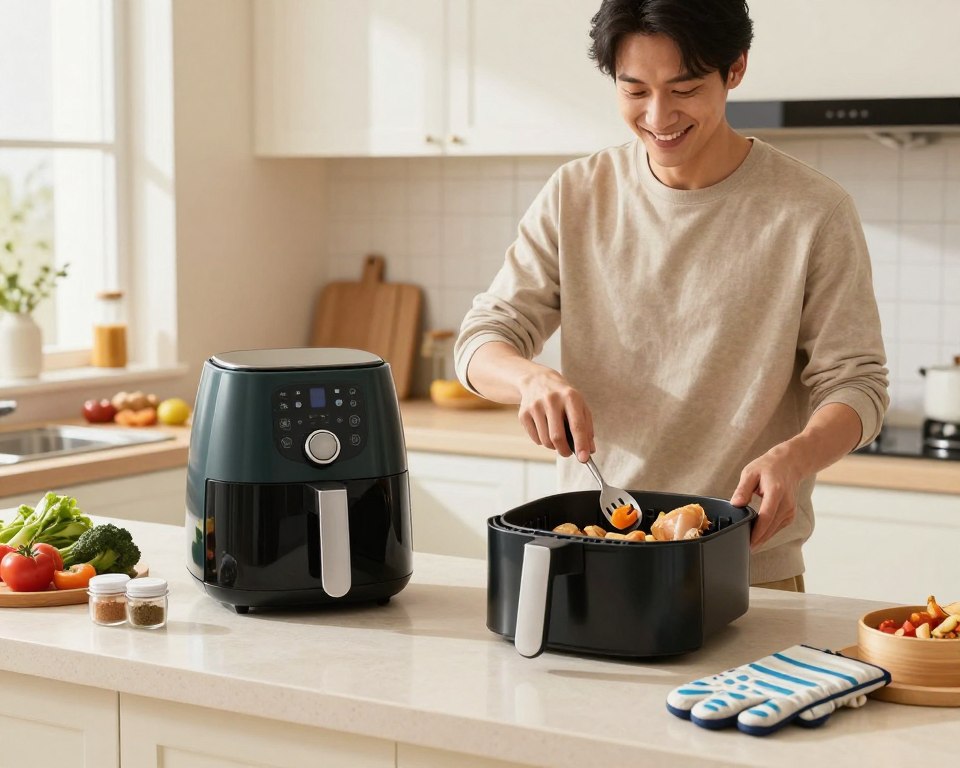
Choosing High-Quality Cookware Accessories
When picking accessories for your air fryer, choose materials made for high heat. Cheap silicone or plastic can melt or release harmful chemicals. Make sure any parchment paper or metal rack is safe for food and heat.
Looking at the air fryer dos and donts helps. This ensures your accessories don’t block the heating element. Good accessories let air flow, cooking your food evenly.
Avoiding Overcrowding the Basket
One big everyday air fryer precaution is not to overfill the basket. Too much food stops air from reaching all parts, leading to uneven cooking. Always leave space for air to circulate.
Following these best practices for using air fryers daily means your meals are always good. Proper spacing makes food taste better and helps your appliance work better.
| Practice | Benefit | Safety Impact |
|---|---|---|
| Proper Spacing | Even browning | Prevents under-cooking |
| Quality Inserts | Easy cleanup | Avoids chemical leaching |
| Regular Inspection | Optimal performance | Reduces fire risk |
Image Disclosure and Educational Context
Some illustrations in this guide are made by artificial intelligence. We want to give clear, visual explanations to help keep you safe. This is part of our educational mission.
These images help you see complex ideas that are hard to understand in a kitchen. They break down tough mechanical processes into simple graphics. This makes it easier for you to learn.
Understanding AI-Generated Illustrations
It’s key to know that these AI-generated illustrations are for learning only. They help explain ideas but should not replace expert advice or specific appliance guides.
We’re open about these materials to make sure you get the context. Even though these graphics are detailed, they’re not real photos of appliance parts.
Purpose of Visual Aids in Kitchen Safety
Visual aids are very important for understanding how appliances work and how to take care of them. They help you make smart choices about cooking every day.
We’re dedicated to your safety and provide accurate, easy-to-use resources. These visual tools focus on several key areas:
- Mechanical clarity: Showing how airflow patterns interact with food items.
- Safety protocols: Demonstrating proper placement and cleaning techniques.
- Risk mitigation: Illustrating the importance of avoiding common operational errors.
Use these illustrations as a help, not a replacement, for your appliance’s user manual. Always follow the specific guidelines in your product’s documentation for technical or safety issues.
Common Mistakes That Compromise Safety
Many kitchen habits can make air frying less safe. These appliances are meant to be easy to use, but they need careful handling. Air fryer safety depends on following the right steps.
Using Improper Utensils and Materials
One big mistake is using metal utensils in the basket. They can scratch the non-stick coating. This might lead to eating small pieces of the basket over time. Always choose silicone or wooden tools to keep the basket safe.
Also, putting the air fryer on unstable or heat-sensitive surfaces is risky. It needs enough space around it to vent heat properly. Using it on a plastic mat or blocking vents can cause overheating or damage.
Ignoring Manufacturer Guidelines and Recalls
Every appliance comes with a manual that explains how to use it safely. Not following these instructions can lead to electrical problems or fires. Air fryer safety means following the maker’s rules about voltage and how much you can cook at once.
“The longevity and safety of any kitchen appliance are directly proportional to how strictly the owner adheres to the provided technical documentation and maintenance schedules.”
It’s also important to check for product recalls. Manufacturers sometimes issue safety notices for certain models. Look up the Consumer Product Safety Commission (CPSC) database to stay informed about any risks with your air fryer.
| Practice | Risk Level | Safety Outcome |
|---|---|---|
| Using metal tongs | High | Coating damage |
| Blocking air vents | Critical | Fire hazard |
| Ignoring recalls | High | Electrical failure |
| Using silicone tools | Low | Surface protection |
By avoiding these mistakes, you can make your air frying safer. Regular maintenance and following the guidelines help keep your appliance and home safe.
Conclusion
Modern kitchen appliances like the Ninja Foodi or Cosori air fryers bring big benefits to daily cooking. They help you get crisp textures without losing nutrients in your favorite foods.
Safety is key when using new tech in your kitchen. Following the maker’s rules helps your appliance work well for a long time. Check the heating parts and clean the baskets often to avoid dangers.
Knowing what you’re doing helps you choose the best for your home. By controlling temperature and picking the right materials, you make cooking better and safer. We encourage you to share your air fryer stories or ask questions about kitchen safety.
Sticking to what works keeps your family safe and your cooking great. Keep up the good work to enjoy your air frying for many years.
FAQ
Are air fryers safe every day for long-term meal preparation?
Yes, cooking safely with air fryers daily is safe for most people. They work like small convection ovens, using fans to spread heat. To stay safe, follow best practices for using air fryers daily, like keeping it clean and using it in a well-ventilated area.
What are the main air fryer health concerns regarding non-stick coatings?
Most air fryer safety talks are about PTFE (also known as Teflon) coatings. These are safe at normal cooking temperatures but can break down if too hot. For those worried about chemicals, choose models with ceramic-coated baskets or stainless steel interiors, like Ninja or Instant Pot.
How can I reduce acrylamide levels when using my air fryer daily?
A: Acrylamide forms in starchy foods when cooked at high heat. To lower its formation, follow these daily use air fryer tips: don’t over-brown food, soak raw potato slices in water for 30 minutes before frying, and aim for a golden-yellow finish. These everyday air fryer precautions help keep your meals nutritious.
Do air fryers emit dangerous radiation or EMF?
No. Air fryers use non-ionizing radiation like a toaster or oven, not like microwaves. They do create a small electromagnetic field (EMF), but brands like Cosori or Philips keep it safe for use.
What are the best practices for using air fryers daily to prevent foodborne illness?
The key to air fryer safety is checking proteins’ internal temperature. The outside might look done, but the inside could still be raw. Always use a ThermoWorks digital probe to check that poultry, pork, and beef are safe.
How does the nutritional impact of air frying compare to traditional methods?
Air frying is better than deep frying because it uses less oil. This means less trans fats and calories. It also helps keep more nutrients in vegetables and proteins, making it healthier for your heart.
Why is kitchen ventilation important when using an air fryer?
Even with cooking safely with air fryers, high-fat foods can smoke and release particles. To keep air clean, use a range hood or open a window. Make sure there’s enough space around the unit for heat to escape and the motor to cool down.
What common mistakes should I avoid to ensure my air fryer remains safe?
Don’t use metal utensils that can scratch the non-stick lining. This can flake into your food. Also, don’t overcrowd the basket; everyday air fryer precautions suggest cooking in batches. Lastly, always register your product to get updates on manufacturer recalls.