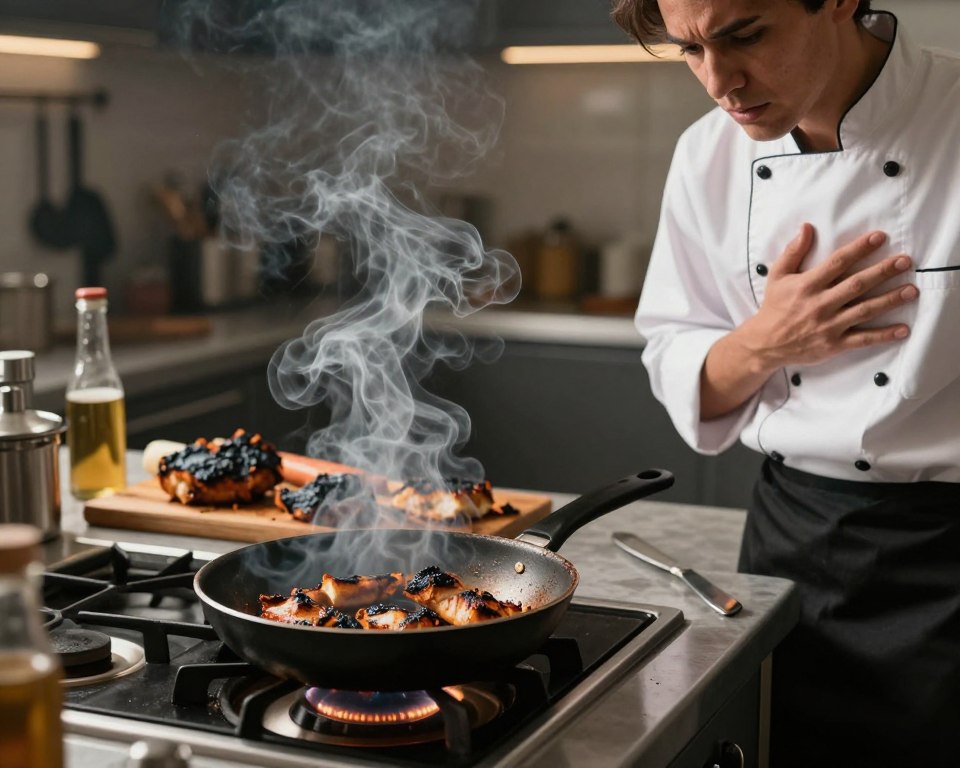
Did you know that nearly one-third of all residential fires start in the kitchen? Most people think of fires as the main danger. But the smoke from burned food is a bigger worry for indoor air quality.
As a pharmacist, I often look into how the environment affects our health. Many people ask if kitchen smoke is really harmful or just a minor problem.
Understanding the chemicals in smoke is key to avoiding health risks. By studying what happens when food burns, we can keep our homes safer from harmful particles.
Key Takeaways
- Kitchen accidents are a leading cause of indoor air quality degradation.
- Charred items release complex chemical compounds that may irritate the respiratory tract.
- Pharmacists emphasize that identifying the source of indoor haze is vital for safety.
- Proper ventilation is the most effective method to reduce exposure to particulate matter.
- Distinguishing between a minor nuisance and a health risk requires evidence-based awareness.
Understanding the Composition of Kitchen Smoke
When food hits its smoke point, the kitchen changes fast. This is called thermal decomposition. It happens when oils and food break down under high heat. The burned food smoke that follows is more than just water vapor and carbon. It’s a mix of gases and particles that can stick around.
Chemical Byproducts of Charred Proteins and Fats
When proteins and fats get too hot, they release harmful chemicals. These include aldehydes, ketones, and heterocyclic amines. These are signs of thermal stress in cooking oils and food.
The smell of char is a sign of these chemicals in the air. The exact mix depends on:
- The type of fat or oil used for cooking.
- The temperature reached during heating.
- How long it was exposed to high heat.
- Any moisture or food additives present.
Particulate Matter and Its Behavior in Indoor Air
Food combustion also creates tiny particles, known as PM2.5. These tiny particles stay in the air for a long time. They’re so light, they don’t fall down fast, letting burned food smoke spread through your home.
These particles stick to surfaces like walls and fabrics. In tight homes, they can build up because there’s little air exchange. Knowing how they move is key to keeping the air clean.
Can Burned Food Smoke Damage Your Lungs
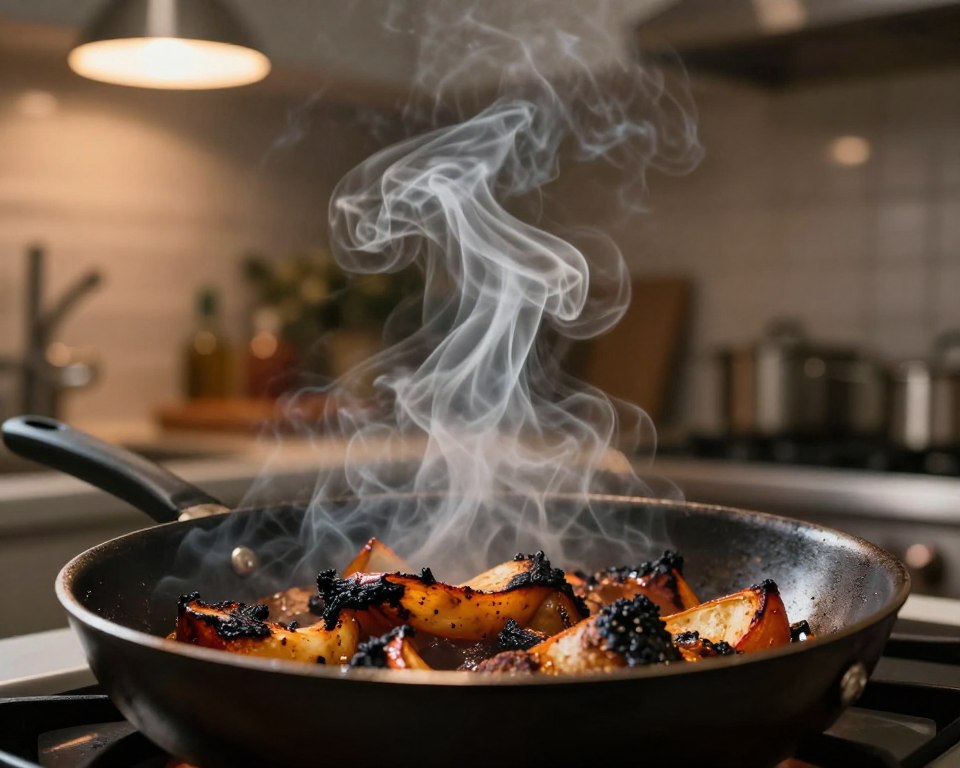
Can burned food smoke harm your lungs, or is it just a kitchen annoyance? Most people think kitchen smoke is just a minor problem. But, the truth is, it can affect your respiratory system in real ways. Knowing how your body reacts to smoke is key to better air in your home.
The Physiological Response to Inhaling Combustion Particles
Inhaling smoke from burnt food starts an immediate reaction in your body. These tiny particles go deep into your airways. They can cause swelling and restricted oxygen flow.
Doctors have seen this reaction as a tight chest or a cough that won’t go away. Your respiratory system tries to get rid of these particles by making more mucus. This can cause airways to collapse in some people.
Distinguishing Between Nuisance Smoke and Toxic Exposure
It’s crucial to tell the difference between regular smoke and harmful exposure. Nuisance smoke comes from small burns and usually goes away once the air clears.
But, toxic exposure happens when smoke stays around for too long. Prolonged inhalation of thick smoke can cause serious harm. It can go beyond just making you uncomfortable to causing real breathing problems. Knowing the difference helps you know when to get the air moving again.
Acute Respiratory Effects of Smoke Inhalation
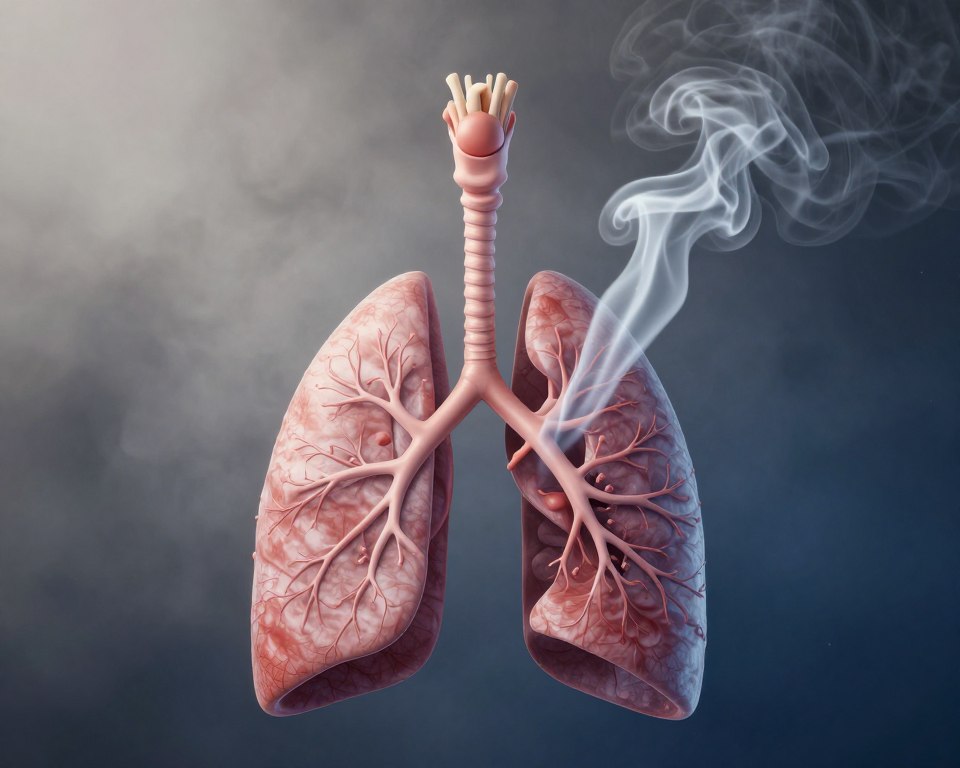
Inhaling smoke from charred food quickly affects the respiratory system. When smoke particles enter the airways, the body tries to get rid of them. This is a natural way to protect the lungs from harm.
Immediate Irritation of the Airways
The airway membranes are very sensitive to smoke chemicals. When they touch these chemicals, they get inflamed. This leads to a reflex cough as the body tries to clear the airways.
Long-term exposure can make breathing harder. These symptoms are a warning that the respiratory system is stressed. Ignoring these signs can lead to more discomfort and irritation.
Symptoms of Short-Term Exposure in Healthy Individuals
Even healthy people can show symptoms from short-term smoke exposure. These symptoms are usually short-lived and go away when they move to clean air. It’s important to know when to leave the stove or improve ventilation.
“The human airway is remarkably efficient at filtering out irritants, but it has a threshold. When that threshold is crossed by concentrated cooking smoke, the body will signal distress through coughing and airway constriction.”
The table below shows common symptoms of acute smoke inhalation and their usual duration in healthy people.
| Symptom | Primary Cause | Typical Duration |
|---|---|---|
| Reflex Cough | Airway irritation | Minutes to hours |
| Shortness of breath | Bronchial constriction | Short-term |
| Localized chest pain | Muscle strain or inflammation | Temporary |
If you have ongoing chest pain or trouble breathing, get medical help. Most smoke incidents from cooking are minor. But, it’s crucial to protect the respiratory system for long-term health. Knowing these symptoms helps you make better choices about indoor air quality.
Chronic Risks and Long-Term Lung Health
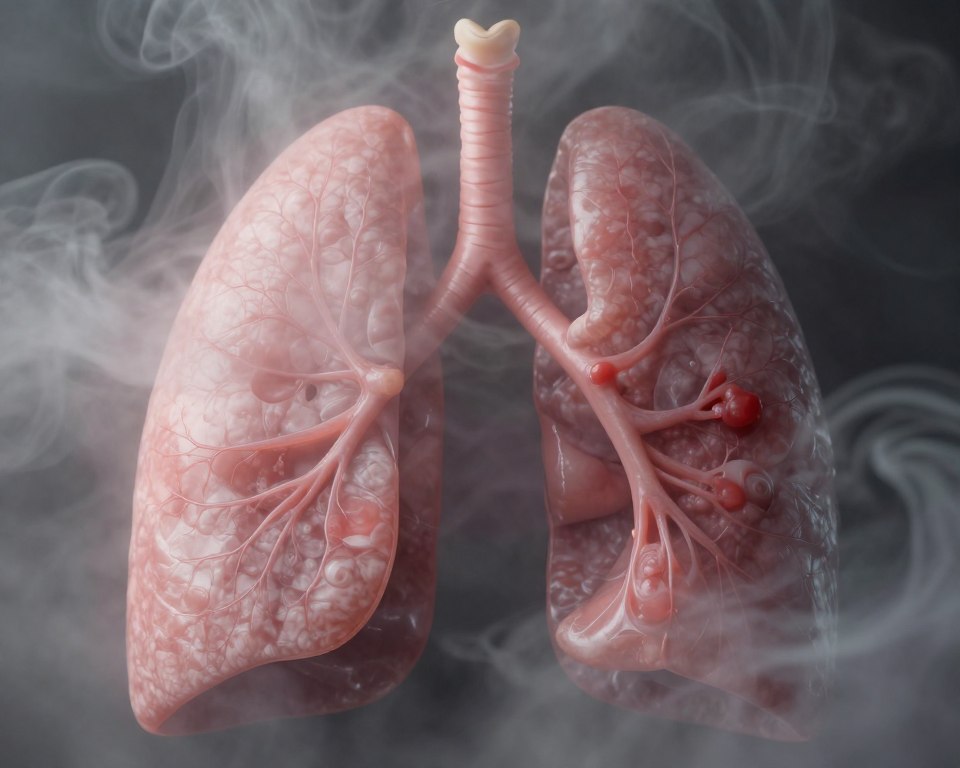
Many people don’t think about the dangers of cooking in poorly ventilated kitchens. While one instance of burnt toast is unlikely to harm, repeated exposure to cooking smoke is a big worry for lung health. Breathing in smoke over time can stress your lungs too much.
Cumulative Impact of Repeated Exposure
Your body has ways to clean out your airways, but it can get tired from constant smoke. Cooking often without good air flow means you breathe in tiny particles that can get stuck in your lungs. This is like other dangers, like chemicals in multi-surface sprays, that can also hurt your lungs.
To keep your lungs working well, think about these things:
- How often and for how long you cook at high heat.
- If your kitchen’s air system works well.
- If there are other air pollutants in your kitchen that make smoke worse.
Potential Links to Respiratory Sensitization
Constant irritation can make your airways more sensitive to smoke or dust. Once you’re sensitized, even small amounts of smoke can make your lungs react more. This shows why it’s key to prevent lung diseases by controlling your environment better.
If you cook a lot in a small space, you need to take action. By cutting down on air particles, you lower the chance of long-term lung problems. Keeping your kitchen clean and well-ventilated is a big step in keeping you healthy.
Vulnerable Populations and Pre-existing Conditions
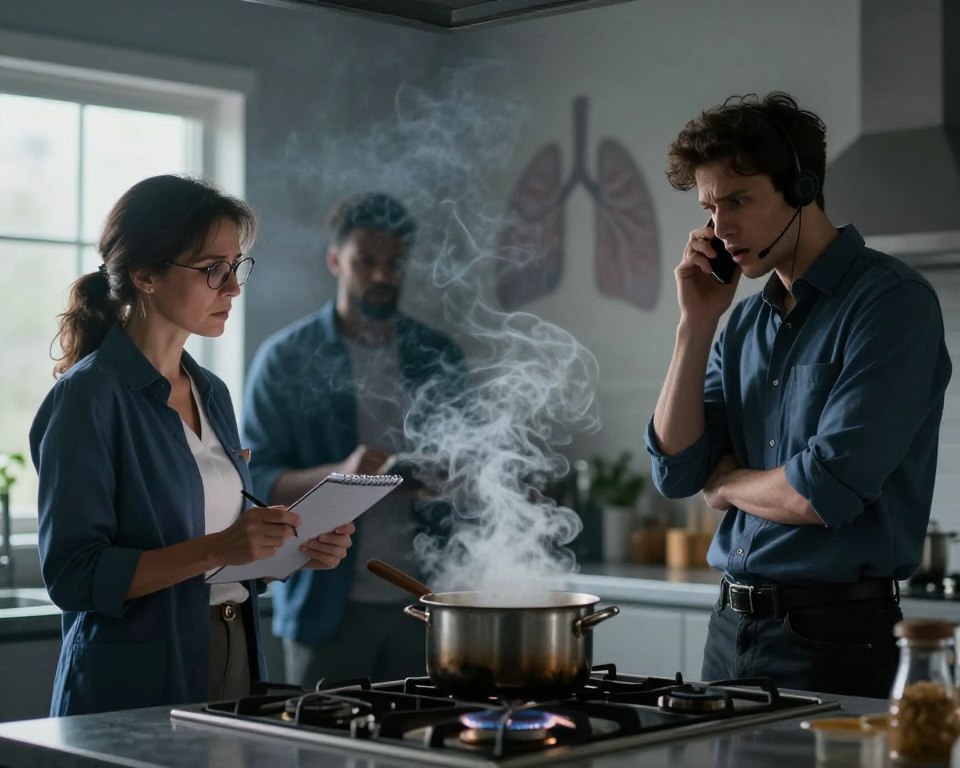
Understanding smoke inhalation risks shows how different bodies react to air pollutants. A healthy adult might feel a bit uncomfortable from smoke. But, those with health issues can face serious problems. They need cleaner air to breathe easily.
Risks for Individuals with Asthma and COPD
People with asthma or COPD have airways that are very sensitive. When they breathe in smoke, their airways can close up fast. This can cause an asthma attack or make COPD symptoms worse.
Even a little smoke can be very harmful to them. The inflammation from smoke can make it hard for them to recover. It’s crucial for them to have good air flow when cooking to avoid breathing problems.
“For patients with compromised lung function, the threshold for irritation is significantly lower, making even minor kitchen emissions a potential clinical concern.”
Why Children and the Elderly Face Higher Sensitivity
Children are more at risk because their lungs are still growing. They breathe in more air and pollutants than adults. This makes them more likely to suffer from poor air quality.
The elderly also face challenges. Their lungs and immune system get weaker with age. It’s harder for them to get rid of inhaled particles. Keeping the air clean in their homes is key to their health.
| Population Group | Primary Vulnerability | Risk Level |
|---|---|---|
| Asthma Patients | Airway Hyper-responsiveness | High |
| COPD Patients | Reduced Lung Capacity | High |
| Young Children | Developing Respiratory System | Moderate to High |
| Elderly Adults | Decreased Immune Clearance | Moderate |
The Role of Indoor Air Quality in Modern Homes
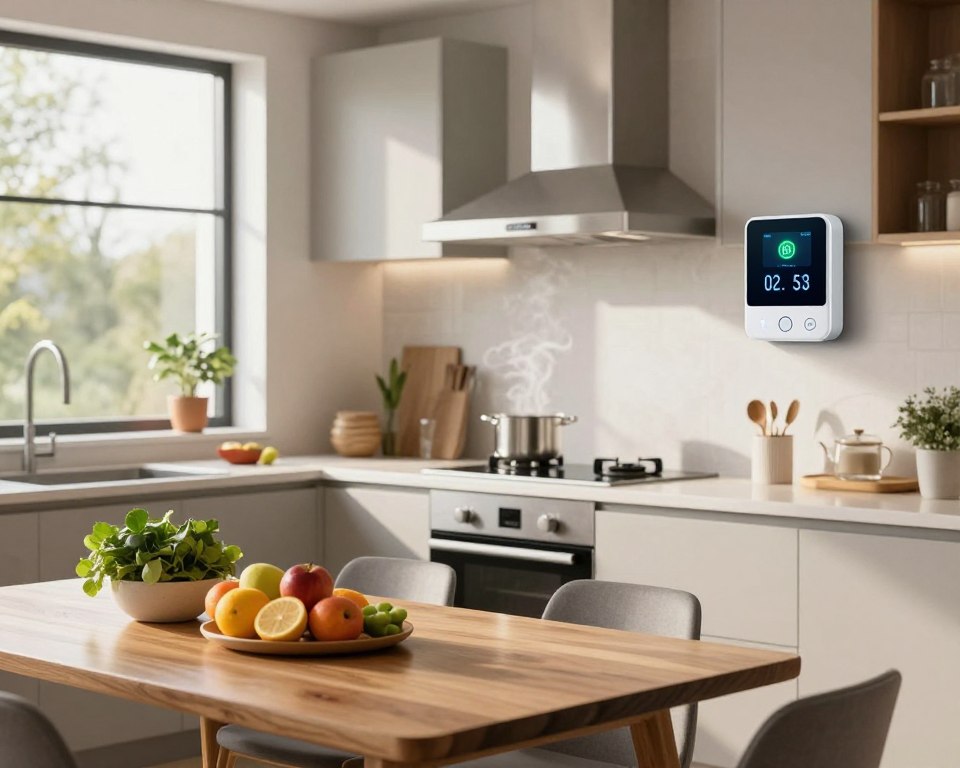
Today’s homes are built to save energy by sealing them tight. But this makes it harder to keep the air clean. The air gets trapped, making smoke from cooking last longer than in older homes.
Ventilation Systems and Their Limitations
Kitchens often use range hoods that just recirculate air. These hoods use ineffective charcoal filters to catch small particles. Even if a hood vents outside, its effectiveness depends on the house’s air pressure.
In tightly sealed homes, range hoods may not work well. This is because there’s no make-up air to replace what’s being pulled out. Relying only on these systems can’t stop pollutants from building up. It’s like using a fabric refresher spray to hide smells without fixing the air quality.
The Impact of Modern Airtight Building Standards
Modern homes are built to save energy with tight insulation and vapor barriers. These features help with bills but make homes air-tight. Without systems like an Energy Recovery Ventilator (ERV), pollutants can quickly build up during cooking.
Without natural air coming in, even small smoke events can cause long-term exposure. People in these homes need to work harder to keep the air fresh. Knowing your home’s air-tightness is key to a healthier indoor environment.
| Ventilation Type | Mechanism | Effectiveness | Best For |
|---|---|---|---|
| Recirculating Hood | Filters air and returns it | Low | Minor steam |
| External Exhaust | Pushes air outside | High | Heavy smoke |
| ERV/HRV System | Balanced air exchange | Very High | Airtight homes |
| Natural Ventilation | Opening windows | Moderate | Mild weather |
Scientific Perspectives on Cooking Emissions
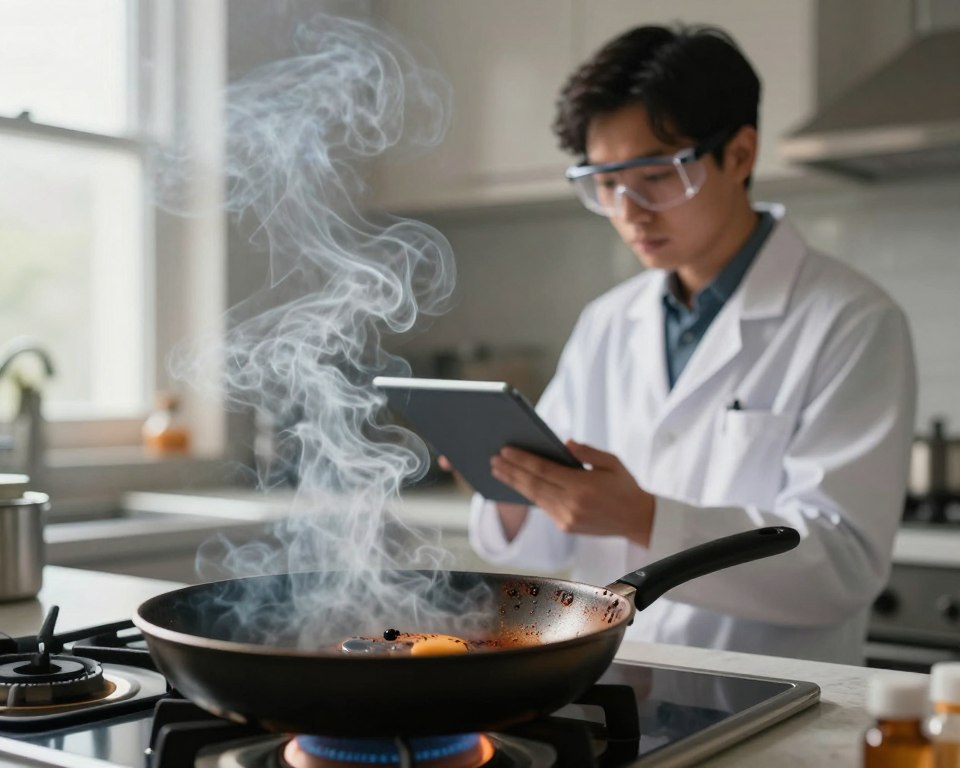
Kitchens at home and factories share a common concern: smoke inhalation risks and public health. Scientists study factories to understand how particles affect our bodies. This helps us see how cooking at home can impact our lungs over time.
Evidence from Occupational Health Studies
Studies show that fine particles, or PM2.5, are harmful to our lungs. These tiny particles can get past our defenses and harm our lungs deeply. They cause inflammation and stress in the lungs.
Research, like studies on air quality and health, shows long-term exposure to these particles weakens our lungs. These findings are crucial for keeping our homes healthy.
Comparing Residential Cooking Smoke to Industrial Exposure
Home cooking and factory emissions are different. Factories have constant, high levels of chemicals. Home cooking, though, has lower smoke levels but similar chemicals.
The main difference is how long and how much we’re exposed. But, even small amounts of smoke inhalation risks can add up, mainly in poorly ventilated homes. Here’s a table to help you understand the differences.
| Feature | Residential Cooking | Industrial Exposure |
|---|---|---|
| Exposure Duration | Intermittent (Daily) | Continuous (Shift-based) |
| Particle Concentration | Low to Moderate | High to Very High |
| Chemical Complexity | Variable (Food-based) | Consistent (Process-based) |
| Primary Risk Factor | Cumulative exposure | Acute and chronic toxicity |
Image Disclosure and Educational Context
This section gives you the background on the images in this article. We want to be open about the pictures we use to help teach you.
Some pictures in this guide are AI-generated for educational illustration purposes. They aim to make hard ideas easier to understand for you.
Remember, these pictures are only for informational use. They should not replace a real doctor or vet’s check-up and diagnosis.
If you’re worried about your health or your pets’, talk to a professional. Getting evidence-based clinical advice is the best way to handle health concerns.
Practical Strategies for Healthy Cooking Practices
Using healthy cooking practices is key to less smoke in the kitchen. Small changes in your daily cooking can greatly improve your home’s air. These steps protect your lungs and keep your food tasty.
Optimizing Stove Ventilation and Range Hood Usage
Many people forget the importance of timing with their range hood. Always turn on the ventilation fan five minutes before heating your pan. This creates a flow that catches emissions right away.
Make sure to clean or replace your range hood filters often. A dirty filter just recirculates grease and particles. Regular maintenance is crucial for managing smoke.
Managing Heat Levels to Prevent Carbonization
Burning food and oils is a major source of harmful smoke. Cooking at too high a temperature can burn your food, releasing bad compounds. Avoiding burnt food smoke means finding the right heat balance.
Use oils with a high smoke point, like avocado or refined olive oil, for searing. Lowering the heat a bit can stop charring while still getting a great sear. This simple change helps keep your kitchen air clean.
| Cooking Method | Smoke Potential | Heat Control | Recommended Action |
|---|---|---|---|
| High-Heat Searing | High | Difficult | Use high smoke point oil |
| Sautéing | Moderate | Moderate | Keep heat at medium |
| Steaming | Very Low | Easy | None required |
| Deep Frying | High | Difficult | Use ventilation hood |
By sticking to these healthy cooking practices, you ease the load on your air filters. Controlling the temperature is the best way to avoid burnt food smoke while cooking.
Technological Solutions for Smoke Mitigation
When natural ventilation isn’t enough, technology steps in to protect your home. Modern buildings are so airtight that you need mechanical help to keep the air clean. Special equipment can keep your home safe from smoke, even when cooking.
High-Efficiency Particulate Air (HEPA) Filtration
HEPA filters are top-notch at catching tiny particles in the air. They’re crucial for avoiding burnt food smoke and other harmful stuff. Using a good air purifier near the kitchen can really cut down on bad air.
“Effective air filtration is not merely a luxury; it is a fundamental requirement for maintaining respiratory health in modern, energy-efficient homes.”
Cleaning your kitchen well is also key. Use a grill cleaner spray safe food areas to avoid grease problems. Together with HEPA filters, these steps help keep your air clean.
Smart Sensors and Air Quality Monitoring Devices
Smart sensors give you instant updates on your air quality. They warn you when smoke levels get too high. This lets you take action fast to protect your lungs.
- Real-time alerts: Get texts on your phone when air quality falls.
- Automated response: Some systems turn on fans to clear the air automatically.
- Data tracking: See patterns in your cooking that cause smoke problems.
Adding these smart tools to your home helps you stay safe. They let you know exactly when and why the air gets bad. This way, you can cook in a way that keeps your kitchen healthy for everyone.
Psychological and Behavioral Aspects of Kitchen Safety
It’s time to rethink the idea that smoky kitchens mean good food. Many people see haze as normal, not a safety risk. This thinking stops them from protecting their lungs.
The Normalization of Kitchen Smoke
Ignoring smoke comes from linking char to flavor. When smoke is always there, we stop worrying about it. Understanding this mindset is key to better air inside.
Changing how you see smoke can help. By cooking healthier, you can enjoy food without harming your air. Small changes can make a big difference in your health.
Cultivating Mindful Cooking Habits
Mindful cooking means being fully present while cooking. It’s about managing heat and air before smoke alarms go off. Healthy cooking habits need you to watch your stove and kitchen.
Here are habits to make your home safer:
- Pre-heat your ventilation: Start your range hood a few minutes early to get air flowing.
- Monitor heat intensity: Use lower heat to avoid burning fats and proteins.
- Stay present: Watch your pans closely to avoid burning, a big indoor pollutant.
- Utilize lids: Use covers to keep moisture in and smoke out of the air.
By focusing on healthy cooking practices, you control your kitchen. This way, cooking is fun, not harmful. Sticking to these habits keeps your home safe and healthy for all.
Debunking Common Myths About Kitchen Smoke
Understanding kitchen safety means knowing what’s real and what’s not. Many people worry too much or not enough because of wrong info online. It’s key to know the facts about burned food smoke to keep your home air clean.
Separating Fact from Folklore Regarding Burnt Food
Some think any charred food is super dangerous. But, occasional burnt toast or veggies usually don’t harm healthy lungs. The real worry is how often and how badly you’re exposed.
It’s crucial to know the difference between annoying smoke and harmful fumes. Burned food smoke might bother your eyes and throat, but it’s not as bad as industrial pollution. Keeping things in perspective helps avoid unnecessary worry while encouraging good ventilation.
Addressing Misconceptions About Air Purification
Many think any air purifier will solve all burned food smoke problems. But, not all purifiers can handle cooking smoke’s tiny particles and gases. A basic dust filter might catch big stuff, but it misses the chemical vapors from burnt food.
To really help, look for air purifiers with HEPA filters and activated carbon. Just having any purifier can make you feel safe when it’s not enough. Knowing what your purifier can do is important for clean air at home.
| Common Myth | Scientific Reality | Actionable Advice |
|---|---|---|
| All smoke is equally toxic | Toxicity depends on fuel and temperature | Ventilate immediately |
| Any air purifier works | Only HEPA/Carbon filters trap smoke | Check filter specifications |
| Burned food is harmless | Chronic exposure causes irritation | Monitor heat levels |
| Opening a window is enough | Cross-ventilation is more effective | Use range hoods correctly |
Regulatory and Public Health Recommendations
Setting strict indoor air quality standards is key to preventing lung damage in homes. Both personal habits and broad guidelines are important. Public health groups stress that clean air is crucial for our lungs.
Guidelines for Indoor Air Quality Standards
Today, safety rules require homes to have key monitoring devices. Smoke and carbon monoxide detectors are essential for catching harmful gases early. Regular maintenance of these devices is crucial for lung disease prevention.
“The quality of the air we breathe indoors is as significant to our health as the quality of the food we consume, yet it remains an overlooked pillar of public wellness.”
Experts advise homeowners to test their sensors often. Also, keeping records of HVAC filter changes helps keep air clean. These steps are the basics of a safe indoor space.
| Safety Measure | Primary Benefit | Recommended Frequency |
|---|---|---|
| Smoke Detector | Fire and particle alert | Monthly testing |
| CO Monitor | Toxic gas detection | Annual battery check |
| Range Hood Filter | Grease/smoke capture | Quarterly cleaning |
Advocating for Better Kitchen Design in Urban Housing
In cities, homes often lack natural air flow. To prevent lung damage, we need efficient exhaust systems that go straight outside. Without these, people may breathe in harmful cooking fumes more often.
We must push for updated building codes to ensure safe kitchens. Better kitchen designs help prevent lung diseases on a large scale. Sustainable urban living means having clean air in our kitchens.
Conclusion
Kitchen smoke is a common issue, but it’s important to handle it to keep our lungs healthy. Making small changes in how we manage heat and air can make our homes safer for everyone.
Keeping our air clean is key to lung health. Using high-efficiency range hoods and smart tools like Airthings or Awair helps track pollutants. These tools give us the info we need to change our cooking habits on the spot.
Being mindful of how we cook is crucial. Keeping stove temperatures right and ensuring good airflow stops harmful particles from building up. These easy steps help protect our lungs from harm.
Pay attention to how your body feels when you cook. If you always feel sick or have trouble breathing, see a doctor. Taking these steps keeps your home a safe and healthy place for you and your family.
FAQ
Can burned food smoke damage your lungs during a single cooking mishap?
Yes, breathing in smoke from burned food can cause your lungs to swell. This can block oxygen flow. Even a brief exposure can irritate sensitive people’s lungs.
What are the immediate smoke inhalation risks when food is charred?
Smoke can irritate your airways right away. Healthy people might cough, feel short of breath, or have chest pain. Knowing these signs helps prevent lung damage.
Which populations should be most concerned about lung health regarding kitchen smoke?
Some groups are more at risk from smoke. People with asthma or COPD can get worse fast. Kids and the elderly are also more sensitive and need to be careful.
Is residential kitchen smoke as dangerous as industrial smoke exposure?
While kitchen smoke is less concentrated than industrial smoke, it’s still a concern. Both types of smoke can harm your lungs. Staying away from burnt food smoke is important for lung health.
What technological solutions are best for lung damage prevention in the kitchen?
When air quality is poor, technology can help. HEPA filters, like those in Blueair or Honeywell, are great for cleaning the air. Smart sensors in Dyson air purifiers or Luchtfactor monitors also help keep air clean.
What are the current public health recommendations for maintaining safe indoor air?
Keeping indoor air clean is key for lung health. Installing smoke and carbon monoxide detectors is a must. Experts also suggest better kitchen designs for good ventilation, not just recirculating filters.