Did you know over 40% of anti-aging skincare products use Vitamin A derivatives? This fact often confuses people when they’re shopping for skincare.
As a pharmacist, I see many patients who get confused by these powerful compounds. Even though they come from the same family, they work differently and have varying strengths.
Knowing the differences between these ingredients is the first step to a good skincare routine. Precision matters when you apply these active substances to your skin. By understanding the differences, you can pick the right product for you without worrying about irritation.
Key Takeaways
- Vitamin A derivatives are a well-studied group of ingredients essential for skin health.
- Not all compounds in this family offer the same potency or speed of results.
- Clinical evidence suggests that choosing the correct concentration prevents adverse reactions.
- Professional guidance helps bridge the gap between marketing claims and biological reality.
- A structured approach ensures you achieve long-term benefits safely.
The Pharmacist’s Perspective on Vitamin A Derivatives
In my years as a pharmacist, I’ve seen many patients confused about vitamin A derivatives. They often look for skin improvements but don’t know the difference between retinol and retinoids. This confusion can lead to disappointment when products don’t work as expected or cause irritation.
These differences are not just marketing tricks. They show the fundamental chemical structure and how each compound works in the skin. Knowing this helps create a safe and effective skincare plan.
“The efficacy of a vitamin A derivative is determined by how many conversion steps it must undergo before it can interact with the skin’s cellular receptors.”
To make things clearer, let’s look at the potency and availability of these compounds. The difference between retinol and retinoids mainly depends on how fast the skin can use the ingredient:
- Retinoids: These are strong, prescription-strength derivatives like tretinoin. They work right away but need careful doctor supervision.
- Retinol: This is a gentler, over-the-counter option that needs the skin’s enzymes to become active. It’s softer on the skin but takes longer to show results.
As a pharmacist, my aim is to help patients understand that stronger is not always better for everyone. The right choice depends on your skin concerns and how well you can handle the initial effects. By focusing on the science, you can make a choice that supports your skin’s long-term health.
Defining the Vitamin A Family: What Is Retinol vs Retinoids?
The term “retinoid” can be confusing because it covers many substances from vitamin A. When you ask what is retinol vs retinoids, think of a family tree. Retinoids are like the whole family, with each member being different.
Remember, all retinol is a retinoid, but not all retinoids are retinol. This is key to knowing how products work on your skin. Retinol is just one well-known member of this family.
To understand product labels better, know the hierarchy of these ingredients. The difference between retinol and retinoids often depends on how the skin uses them. Here’s a simple breakdown of the vitamin A family:
- Retinoids: The broad, overarching category for all vitamin A derivatives.
- Retinoic Acid: The active form that skin cells can use immediately.
- Retinol: A common over-the-counter derivative that requires conversion into retinoic acid.
- Retinyl Esters: The mildest forms, which require the most conversion steps.
Seeing these ingredients as a spectrum helps you understand their strength and potential irritation. Clinical precision is crucial for picking the right product for your skin. Knowing this technical info lets you ignore marketing and focus on the real science behind your skincare.
The Biological Mechanism: How These Compounds Transform Skin
Retinoids work as powerful signals at the cellular level. They tell the skin how to renew itself. These compounds go deep into the skin to talk to cell receptors. This changes the life cycle of skin cells.
Retinoids make the skin regeneration cycle faster. Normally, the skin regenerates every 28 to 40 days. But with retinoids, it can do so in about 14 days. This is a critical factor in achieving a smoother, more radiant complexion.
These compounds help the skin get rid of old, damaged cells faster. This prevents clogged pores and a dull look. You can learn more about their cellular impact on skin health through clinical research.
Retinoids also support the skin’s structure by working with fibroblasts. These cells make collagen and elastin, keeping the skin firm. Regular use helps these cells keep producing these proteins.
This change happens deep in the dermis, so it’s not quick. Meaningful, long-term results require patience and consistent application. These compounds support the skin’s structure, giving it a youthful look that moisturizers can’t.
Retinol vs Retinoids Comparison: Potency and Molecular Conversion
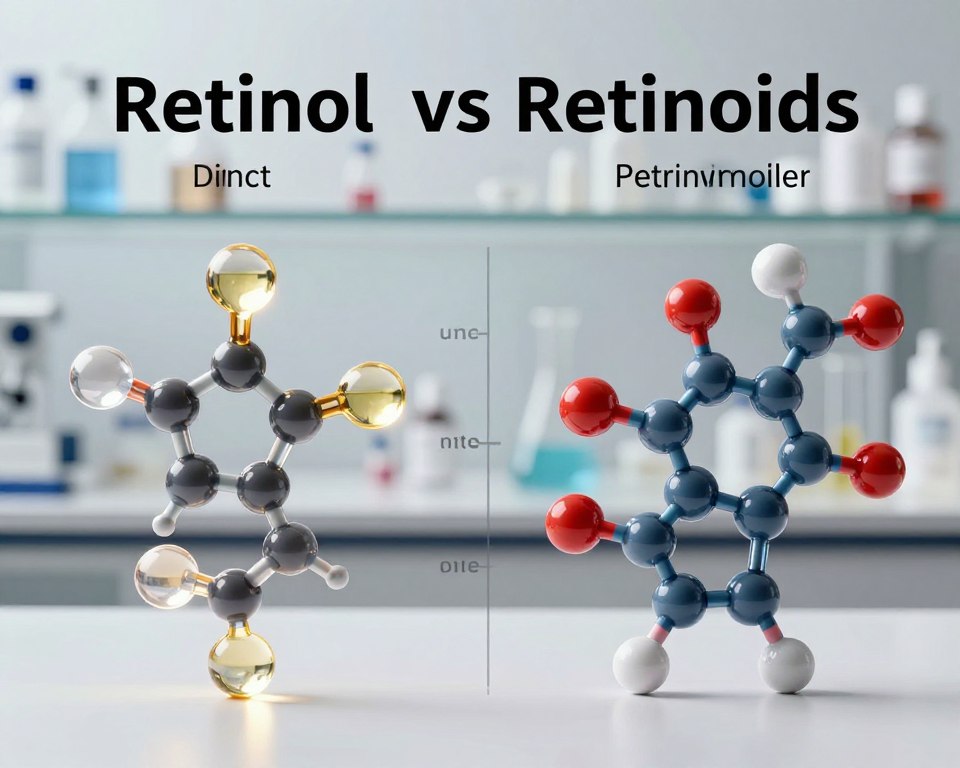
The main difference between retinol vs retinoids is how fast they work on your skin. Both are part of the vitamin A family. But they don’t act the same way when you apply them.
For a substance to work, it must become retinoic acid. Prescription-strength retinoids are already in this form. They can directly connect with skin cells. On the other hand, retinol needs a two-step process in the skin to become active.
This extra step makes retinol slower than retinoids. It’s why prescription products often work faster and better. They don’t have to wait for conversion.
“The efficacy of a topical vitamin A derivative is dictated by its proximity to the final active metabolite, retinoic acid.”
Think of retinol vs retinoids effectiveness as a race. Retinoids start at the finish line. Retinol has to run a long way before it can start working on your skin.
| Compound | Conversion Steps | Relative Potency |
|---|---|---|
| Retinoic Acid | Zero (Active) | Highest |
| Retinaldehyde | One Step | High |
| Retinol | Two Steps | Moderate |
Knowing how these molecular mechanics work helps set realistic goals for your skincare. If you pick a product that needs more steps, you’ll see changes slower. This strategic patience is key for those who care more about long-term skin health than quick fixes.
Clinical Efficacy: Retinol vs Retinoids for Anti-Aging
When looking at anti-aging treatments, retinol and retinoids are key. They affect your skin in different ways. Knowing how they work helps pick the best one for you.
Prescription-strength retinoids work fast. They connect with skin cells right away. This means they can change the skin’s structure and collagen production quickly.
Retinol, on the other hand, needs time to work. It turns into active retinoic acid in the skin. This makes it less strong than prescription retinoids. But, it’s great for keeping your skin healthy over time.
Choosing between retinol vs retinoids depends on your skin needs. Retinoids are best for deep wrinkles and sun damage. Retinol is good for everyday skin care. A good plan uses both for the best results.
Navigating the Spectrum of Over-the-Counter Retinols
When looking at retinol vs retinoids for skincare, the market has many choices. Each has different strengths and types. You can find good anti-aging products at your local pharmacy without a prescription.
Retinol is a common form of vitamin A in non-prescription products. It turns into retinoic acid in the skin, but this takes time. This makes it less irritating than stronger versions.
Newer products, like Granactive Retinoid, offer results with less irritation. When choosing retinol vs retinoids for skincare, think about your skin’s sensitivity. Start with a low dose to help your skin get used to it over time.
Being consistent is more important than using a strong product right away. Start with a gentle formula to avoid skin problems. Watch how your skin reacts in the first few weeks.
| Vitamin A Type | Conversion Steps | Irritation Potential | Best For |
|---|---|---|---|
| Retinyl Palmitate | Three steps | Very Low | Sensitive Skin |
| Retinol | Two steps | Moderate | General Anti-Aging |
| Granactive Retinoid | Direct binding | Low | Sensitive/New Users |
| Retinaldehyde | One step | High | Advanced Users |
Prescription-Strength Retinoids: When and Why They Are Necessary
As a pharmacist, I tell patients there’s a point where over-the-counter products don’t cut it anymore. If your current skincare doesn’t tackle deep wrinkles or severe sun damage, it’s time to think about prescription-strength retinoids. These products mark a shift from just looking good to actually fixing your skin.
The big difference is in how strong they are and how they work on your skin. Cosmetic products are great for preventing problems, but they can’t fix deep issues. Prescription retinoids are stronger and work faster, but you need a doctor’s help to use them safely.
In dermatology, tretinoin and tazarotene are top choices for serious anti-aging. They speed up skin cell renewal in ways that regular products can’t. Because they’re so strong, you need a doctor’s careful guidance to use them right.
Getting a doctor’s advice is key when starting these strong treatments. They can figure out the right dose and how often to use it. This way, you avoid side effects and get the most out of your medical-grade skincare.
Choosing prescription-strength retinoids should be a doctor’s call. They’ll help you pick the right treatment for your skin. Working with a doctor makes sure your skincare journey is safe and effective.
Common Side Effects and How to Manage Retinization
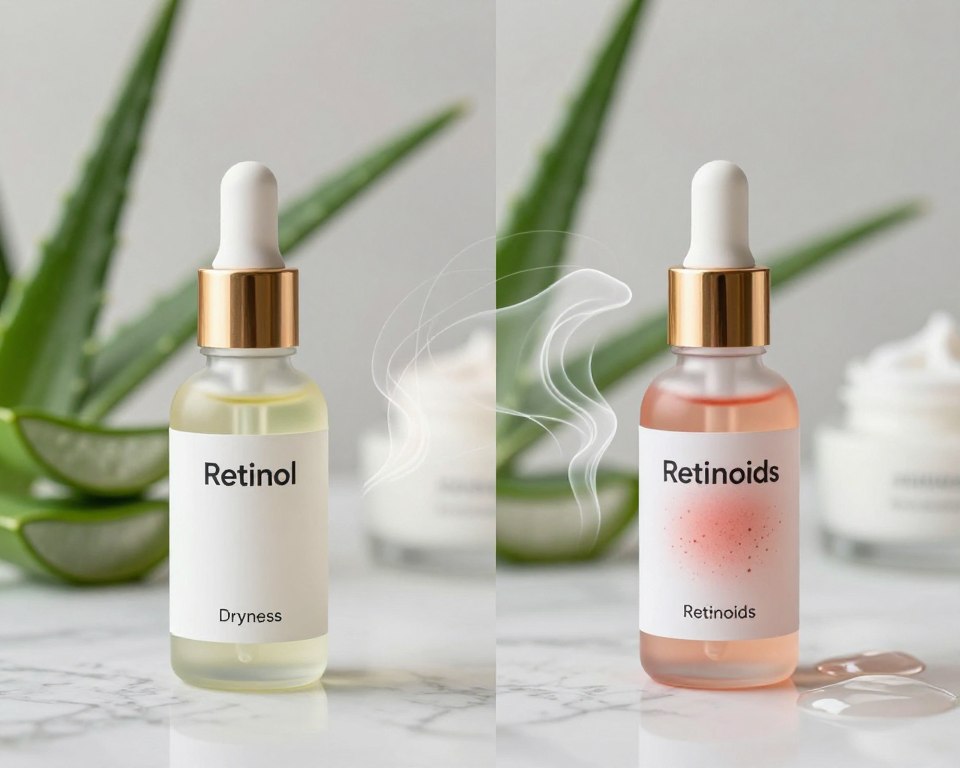
Retinization is a common reaction when your skin gets used to new treatments. It happens when you start using vitamin A derivatives. The skin may feel dry, red, and peel a bit. This is because it’s working hard to renew itself.
These signs mean the product is doing its job. They might be uncomfortable, but they usually go away as your skin gets used to it.
To make it easier, you can change how you apply the product. Check out our guide on retinol side effects to keep your routine safe and effective. Remember, being consistent is important, but not at the expense of your skin’s health.
Here are some tips to help you through the transition:
- Start slowly: Begin by applying the product only two or three times per week to allow your skin to acclimate.
- Use the sandwich method: Apply a thin layer of moisturizer before and after your treatment to buffer the intensity.
- Prioritize hydration: Use a gentle, fragrance-free moisturizer to support the skin barrier and reduce flaking.
- Monitor your progress: If irritation persists, reduce the frequency of use rather than stopping the treatment entirely.
Patience is your greatest asset when using these powerful compounds. Seeing these reactions as part of the adaptation process helps. Most people find that gradually increasing use leads to long-term benefits without too much irritation.
Strategic Application: Building a Tolerance for Long-Term Results
Building skin tolerance to retinoids is a marathon, not a sprint. It takes patience and a smart plan. Many people get irritated because they start too fast with strong vitamin A products. A slow and steady approach to retinoid application helps keep the skin healthy and strong.
When you start a new skincare routine, it’s key to let your skin adjust. This means not rushing the introduction of new products. Using them too often can cause retinization, leading to redness, peeling, and sensitivity. Start with just two times a week to help your skin get used to the changes.
“The key to successful long-term dermatological outcomes lies in the preservation of the skin barrier, which is best achieved through a slow and steady introduction of active ingredients.”
Being consistent is more important than using too much. If your skin looks good after two weeks, you can start using it more often. This smart way helps you see real improvements in your skin’s look and feel without the problems of using too much.
| Week | Frequency | Application Goal |
|---|---|---|
| Week 1-2 | 2 nights per week | Monitor for initial sensitivity |
| Week 3-4 | 3 nights per week | Assess barrier integrity |
| Week 5+ | Every other night | Establish long-term tolerance |
Your journey to better skin health is all about listening to your skin. If you feel stinging or dryness, slow down. Building skin tolerance is a journey, and doing it right will lead to the best results.
Common Myths and Misconceptions in Skincare Marketing
Many people believe in outdated info about vitamin A derivatives. When looking at retinol vs retinoids for anti-aging, they often see scary claims instead of real science. It’s important to know the difference between what people say and what science proves.
One big myth is that using these products for a long time makes your skin thin forever. But studies show they actually make your skin thicker by boosting collagen and cell turnover. The first irritation is just your skin getting used to the treatment.
Another myth is about when to use these products. It’s true that some retinoids can break down in sunlight. But this doesn’t mean they cause sun damage right away. Using them at night helps keep them stable and effective.
“The goal of evidence-based skincare is to move beyond marketing narratives and focus on the physiological interaction between the active ingredient and the skin barrier.”
To clear up these myths, here’s a table that explains how vitamin A derivatives work:
| Common Myth | Scientific Reality | Impact on Results |
|---|---|---|
| Retinoids thin the skin | They thicken the epidermis | Improves structural integrity |
| Sunlight makes them toxic | UV light destabilizes the formula | Reduces product efficacy |
| Higher strength is always better | Consistency matters more than dose | Prevents unnecessary irritation |
| Results appear in days | Requires months of usage | Ensures realistic expectations |
Choosing between retinol vs retinoids for anti-aging should be based on your skin, not trends. Stick to using them every night and ignore the hype. This way, you can see real improvements in your skin’s look and feel.
Safety Considerations and Contraindications for Specific Skin Types
Vitamin A derivatives can change your skin for the better, but they need careful use. Knowing the differences between retinol vs retinoids side effects helps protect your skin. If used wrong, they can cause big problems like inflammation, redness, and peeling.
Some ingredients don’t mix well with vitamin A products. You should not layer them with direct acids like AHAs or BHAs. Also, avoid mixing with copper peptides and direct Vitamin C. These can make your skin too sensitive and ruin your treatment.
If you have certain health issues, talk to a pharmacist before starting any new skincare. This is very important for those who are pregnant or breastfeeding. If you have conditions like rosacea, eczema, or psoriasis, your skin is already sensitive.
Always get professional advice when using strong skincare products. A personalized plan helps you reach your beauty goals safely. By following these guidelines, you can use vitamin A safely and avoid common retinol vs retinoids side effects that scare off beginners.
Integrating Retinoids into a Comprehensive Skincare Routine
Adding a retinoid to your evening skincare is a big step towards better skin. It’s key to be consistent and layer them right. This ensures they soak in well and protect your skin.
When looking at retinol vs retinoids benefits, keeping your skin healthy is the main goal. Use them at night to avoid sunlight damage. Clean your face first, then apply water-based serums. After drying, use a small amount of retinoid all over, except the eyes.
Experts suggest a specific order to avoid irritation. For beginners, try the “sandwich method.” This means applying a thin moisturizer before and after your retinoid. It helps your skin get used to it without losing its power.
“The most effective skincare routine is one that you can sustain consistently over time, prioritizing barrier health above all else.”
Knowing the difference between retinol vs retinoids for skincare means protecting your skin from the sun every day. These products make your skin more sensitive to UV rays. Always use a broad-spectrum SPF of 30 or higher in the morning to keep your skin safe.
| Step | Product Type | Purpose |
|---|---|---|
| 1 | Gentle Cleanser | Remove debris |
| 2 | Water-based Serum | Hydration |
| 3 | Retinoid Treatment | Cellular turnover |
| 4 | Moisturizer | Barrier support |
By sticking to this routine, your skin will slowly get used to it. Patience is your greatest asset when using these strong ingredients. With time, you’ll see your skin get smoother and brighter, leading to a healthier look for years.
Conclusion
Choosing the right vitamin A derivative is key to your skin goals. You might pick an over-the-counter retinol or a stronger retinoid from a doctor. Success comes from being patient and using it every day. This helps avoid irritation.
Stick to evidence-based skincare for the best results. Look for products from trusted brands like SkinCeuticals or La Roche-Posay. They ensure the ingredients are stable and strong. Adding these products to your daily routine carefully helps avoid bad reactions and boosts the treatment’s effects.
Getting advice from a dermatologist is the best way to use these powerful ingredients. They can find the right amount for your skin. Relying on their expertise keeps your skincare safe and effective. Remember, improving your skin is a long-term effort. Focus on making steady progress and making informed choices.
FAQ
What is the fundamental difference between retinol and retinoids?
Retinol and retinoids are both vitamin A derivatives. But, retinol needs to be converted by skin enzymes to work. On the other hand, prescription-strength retinoids like Tretinoin (Retin-A) work right away.
In a retinol vs retinoids comparison, which is better for sensitive skin?
Retinol is better for sensitive skin. It’s slower and more controlled, causing fewer side effects. Products like La Roche-Posay Retinol B3 Serum are made for sensitive skin.
What are the primary retinol vs retinoids benefits for anti-aging?
Both help with anti-aging by speeding up cell turnover and making collagen. This improves skin texture and reduces wrinkles. But, prescription retinoids work better on deep wrinkles.
How should I manage the initial side effects of these products?
The “retinization” period can be dry and irritating. Use the “sandwich method” with moisturizer to help. Start with a low frequency, like twice a week, to build tolerance.
What is the expected timeline for retinol vs retinoids effectiveness?
Be patient with skincare. Prescription-strength retinoids can show results in 6 to 12 weeks. Over-the-counter retinol takes 3 to 6 months for noticeable changes.
Is it true that using these ingredients will thin my skin over time?
No, it’s a myth. Retinoids thin the top layer of skin but thicken the deeper layers. This makes skin firmer, not thinner.
Can I use retinol and vitamin C together in the same routine?
It’s best to use them separately. Apply Vitamin C in the morning for UV protection. Use retinol at night to avoid losing its potency.
Are there specific safety considerations for what is retinol vs retinoids use?
Yes, they’re not safe during pregnancy or breastfeeding. Always use a broad-spectrum SPF 30 or higher every morning. This protects new skin from UV damage.