
Every year, over 250 million pounds of herbicides are used on U.S. crops. One brand, Roundup, is often at the center of talks about chemical exposure. This includes our backyards and the food we eat.
Many people think Roundup is just one chemical. But, it’s actually a brand name with different formulas. Roundup has various active ingredients in its products.
To know if Roundup is safe for home use, we need to look beyond the label. We must understand the difference between glyphosate-based products and newer ones on the market.
The debate between regulators and health advocates can confuse families. We aim to give you evidence-based clarity. This will help you make better choices for your home and pets.
Key Takeaways
- The brand name covers multiple distinct chemical formulations.
- Not every product under this label contains glyphosate.
- Always verify active ingredients by reading the product label.
- Regulatory bodies and health advocates hold differing views on toxicity.
- Understanding specific chemical profiles is essential for consumer safety.
Understanding the Composition of Roundup
Looking into what’s in Roundup helps us understand its effects on health and the environment. Many people only think about the main ingredient. But, the whole mix is more complex. To tackle Roundup safety concerns, we need to see how all parts work together.
The Role of Glyphosate in Modern Agriculture
Glyphosate is the main ingredient in Roundup. It stops plants from making amino acids by blocking the 5-enolpyruvylshikimate 3-phosphate (EPSPS) enzyme. This leads to plant death.
This method is good for killing weeds because it works on most plants but not animals. But, using it so much has raised big questions about its effects on the environment and health. Knowing how it works is key to understanding Roundup safety concerns today.
Surfactants and Adjuvants: The Hidden Ingredients
Roundup also has surfactants and adjuvants, not just the main ingredient. These help the herbicide stick to leaves and get into the plant. Without them, it wouldn’t work as well.
These hidden ingredients are not always harmless. Some research shows they can make the mix more toxic than glyphosate alone. Experts look at several things when checking if these products are safe:
- Chemical synergy: How additives change how the body absorbs the main ingredient.
- Environmental persistence: How long these compounds stay active in the soil.
- Regulatory oversight: The difference between testing the main ingredient versus the whole product.
Because these additives are often secret, they’re not always listed on labels. This makes it hard to do independent safety checks. So, people and scientists keep pushing for more tests of the whole mix used in homes and farms.
The History and Evolution of Roundup
Roundup started in labs and became the top herbicide worldwide. Its journey from farm tool to household item has raised Roundup weed killer dangers concerns. Knowing its history helps us understand synthetic chemicals’ impact today.
Development by Monsanto
In the 1970s, Monsanto created Roundup as a broad-spectrum herbicide for big farms. Glyphosate, its main ingredient, quickly became popular for killing weeds without harming soil. Innovation hit a high in 1996 with “Roundup Ready” seeds.
These seeds could handle Roundup without harm. This allowed farmers to spray fields to kill weeds without damaging crops. This method became more common in the U.S.
Global Adoption and Agricultural Impact
By 2019, glyphosate was used on nearly 300 million acres in the U.S. This made it a key part of our food system.
While it’s efficient, its long-term effects on the environment and health are being studied. Many are concerned about the Roundup weed killer dangers from its widespread use. Here are the major milestones in Roundup’s history.
| Era | Development Phase | Primary Impact |
|---|---|---|
| 1970s | Initial Commercialization | Introduction to industrial farming |
| 1996 | Roundup Ready Launch | Shift to genetically modified crops |
| 2010s | Peak Usage | Widespread adoption in residential settings |
| Present | Regulatory Review | Increased focus on safety and liability |
Is Roundup Safe for Human Health

Looking into whether Roundup is safe for humans means sorting through mixed views from around the world. The main topic is glyphosate health risks. This is because glyphosate is the top herbicide in the U.S. It’s used a lot in farms and homes, so knowing its effects on people is important.
Evaluating Carcinogenicity Claims
There’s a big debate about glyphosate’s safety. The International Agency for Research on Cancer (IARC) says it’s “probably carcinogenic to humans.” They base this on some human studies and strong animal study evidence.
But, many countries’ health agencies see it differently. They say glyphosate is safe if used as the label says. For a full picture, it’s key to look into studies on Roundup’s effects.
Acute Toxicity vs Chronic Exposure
It’s important to know the difference between quick and long-term effects of Roundup safety concerns. Quick effects, like skin or eye irritation, are well-known. They can be avoided with the right gear and handling.
But, long-term exposure might lead to serious health issues over years. Scientific consensus on these risks is growing as more studies are done. Understanding the difference helps people reduce their exposure in daily life.
Regulatory Perspectives on Glyphosate

Understanding herbicide safety means knowing how regulatory bodies check chemicals. Many people want to know about Roundup toxicity levels. But, the truth is, scientists have different views. This is because they look at the chemical’s risk in different ways.
Environmental Protection Agency Stance
The U.S. Environmental Protection Agency (EPA) checks if products are safe for people. They say glyphosate is safe if used as the label says. They look at how much people are exposed and if it could harm them.
The EPA thinks glyphosate is not a cancer risk for people. This helps farmers and home users know it’s safe to use. It shows that Roundup toxicity levels are okay if you follow the rules.
International Agency for Research on Cancer Findings
The International Agency for Research on Cancer (IARC) looks at chemicals differently. They focus on if a chemical could cause harm, not just if it does. This is why their views might seem different from the EPA’s.
The IARC’s work helps find possible dangers. It doesn’t always match what people might actually face. So, people might think it’s more dangerous than it really is.
| Feature | EPA Approach | IARC Approach |
|---|---|---|
| Primary Focus | Risk Assessment | Hazard Identification |
| Context | Real-world usage | Intrinsic properties |
| Outcome | Safety guidelines | Classification of possible |
| Goal | Regulatory compliance | Scientific research |
Environmental Impact and Soil Health

Looking into the environmental impact of Roundup shows how it affects our soil and water. The herbicide is meant to kill weeds, but its chemicals don’t just disappear.
Persistence in Soil and Water Systems
Glyphosate, the main ingredient, doesn’t stay in the air for long. But, it can stick around in soil for months. This depends on the weather and the soil’s pH level.
As it breaks down, it turns into a substance called AMPA. This stays in the environment longer than glyphosate itself. Studies show that AMPA is found in almost 70 streams in the U.S. This raises big worries about Roundup toxicity levels in water.
Effects on Non-Target Plant Species
Using herbicides can lead to drift, where the chemical spreads beyond the target area. This can harm other plants, changing the local plants’ mix.
Native plants exposed to these chemicals may grow and reproduce poorly. Ecological balance is at risk because these plants are key food sources or homes for wildlife. It’s important to watch the environmental impact of Roundup to keep landscapes healthy and diverse.
Soil residues can also affect the long-term health of plants around. Knowing about Roundup toxicity levels helps land managers protect other plants and keep ecosystems strong.
Impact on Biodiversity and Pollinators
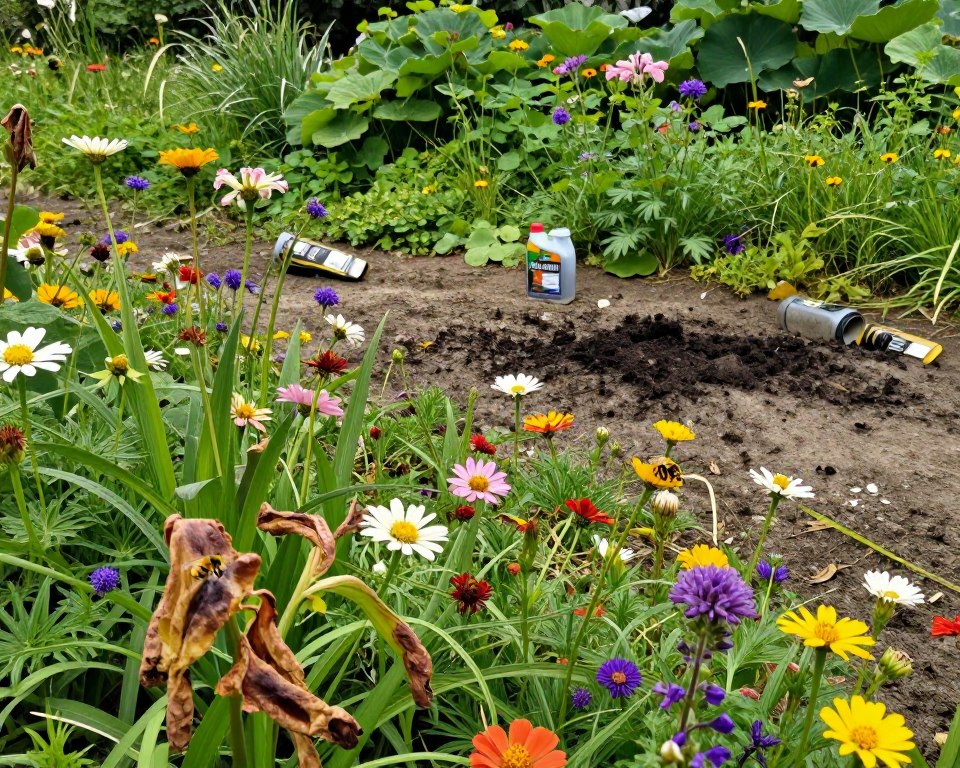
Chemical herbicides can harm more than just weeds. The environmental impact of Roundup goes beyond where it’s applied. It affects species that weren’t meant to be exposed.
Consequences for Bee Populations
Pollinators, like bees, need diverse plants to survive. Herbicides can destroy these plants, creating a floral desert. This makes it hard for bees to get the food they need.
Studies show that less plant diversity means weaker bees. Without many food sources, bees can’t keep their hives strong. This weakens the whole ecosystem.
“The health of our pollinators is inextricably linked to the diversity of the landscapes they inhabit; when we simplify these environments, we jeopardize the very foundation of our food systems.”
Disruption of Local Ecosystems
The Roundup weed killer dangers affect more than just land. Glyphosate is very harmful to some water creatures. These creatures are key to the water food chain.
When glyphosate gets into water, it messes with the water life balance. Losing these key species hurts bigger animals that rely on them.
Keeping our environment healthy needs us to understand how chemicals affect life. By knowing these risks, we can protect our natural world better.
Roundup Exposure Effects in Residential Settings
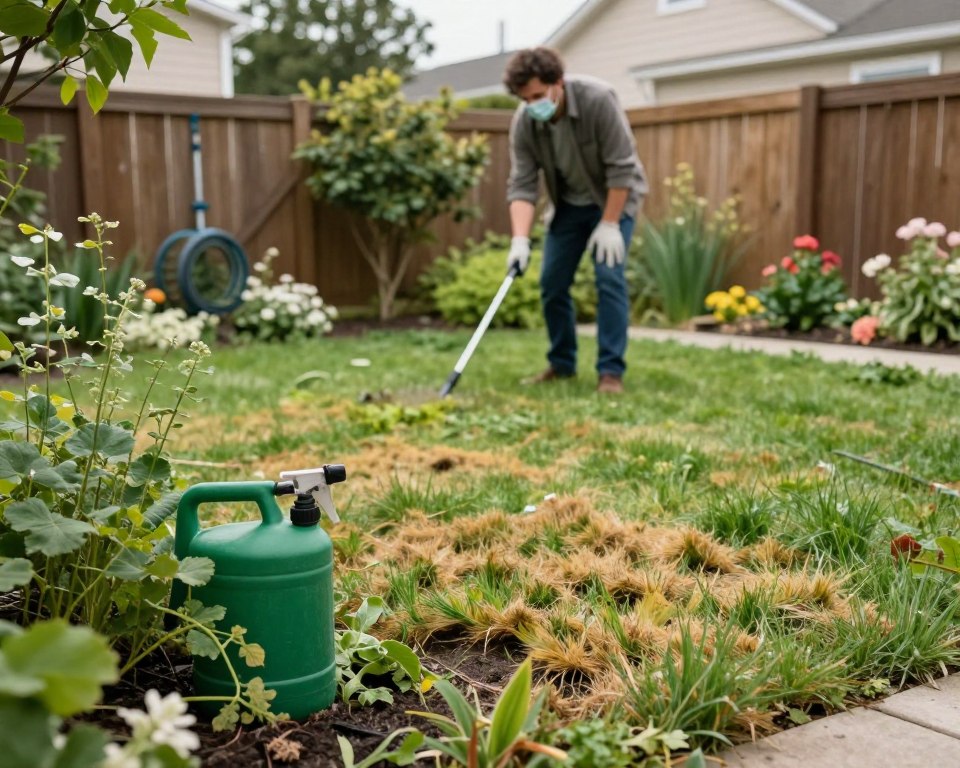
It’s important for gardeners to know about Roundup exposure effects for their family’s health. Agricultural workers use strong safety measures, but home users often don’t. This difference can cause health problems when they work in their yards.
Risks for Home Gardeners
Homeowners face risks when they mix or spray Roundup. It can irritate the eyes, nose, and throat. Breathing in the spray can also cause lung problems.
Knowing the risks of using Roundup at home is key to staying safe. Home gardens are close to where people live, so the chance of getting chemicals on skin or clothes is higher. Being aware of how these chemicals affect the body helps make better lawn care choices.
Safe Handling and Application Practices
Homeowners should be as careful as professionals when using Roundup. Following the label’s instructions is the best way to stay safe. Here are some tips for safe weed control at home:
- Always wear protective clothing, including long sleeves, pants, and chemical-resistant gloves.
- Use eye protection to prevent accidental splashes from reaching sensitive membranes.
- Avoid spraying on windy days to prevent the herbicide from drifting into unintended areas or toward people and pets.
- Wash hands and exposed skin thoroughly with soap and water immediately after finishing the application.
- Store all chemical containers in a secure, locked location away from the reach of children and animals.
By following these simple yet vital steps, gardeners can lower the risk of exposure. Keeping safety in mind when applying lawn care products protects your family’s health.
Glyphosate Health Risks in Occupational Environments

For those in large-scale farming and landscaping, glyphosate health risks are a big concern. They often face higher levels of herbicides than the public. It’s key to focus on safety to keep workers healthy over time.
Agricultural Worker Safety Protocols
When applying herbicides, following strict safety rules is a must. This helps avoid skin and lung problems. Workers need to know how to handle these chemicals safely. Personal Protective Equipment (PPE) is the first defense.
Good safety plans include:
- Wearing gloves, boots, and long clothes that can resist chemicals.
- Using masks when working with strong formulas.
- Keeping equipment in good shape to avoid spills.
- Washing hands and changing clothes right after work.
Long-term Monitoring for Farm Employees
It’s not just about immediate safety. We also need to watch workers’ health over time. This helps catch problems early. It shows how long-term exposure affects people.
Companies should have health programs that last years. These should include:
- Annual health checks to look for signs of exposure.
- Keeping detailed records of who handled what chemicals.
- Having experts in farm chemical safety available.
By using evidence-based practices, we can lower the risks for farm workers. It’s not just about following rules. It’s about taking care of our workers and doing farming right.
Current Roundup Litigation Updates

Understanding the Roundup litigation updates involves knowing about science and law. The legal battle around these products has grown fast. Thousands of cases are being handled in courts across the U.S.
Major Court Rulings and Settlements
Bayer has made big moves to deal with the growing number of lawsuits. They’ve announced a $7.25 billion settlement. This money is meant to settle many lawsuits and help manage future ones.
These lawsuits claim the herbicide causes health problems. The settlements aim to help both Bayer and the claimants. They want to:
- Give financial compensation to those who qualify.
- Lower the number of cases in court.
- Set up ways to handle future legal issues.
The Future of Roundup Liability Claims
Even with big settlements, the future of liability is highly uncertain. Courts are looking at new science and what companies say.
The outcome of these claims depends on how courts and juries see the evidence. New studies could change how these cases are seen. They might also change legal strategies.
The legal system is where health concerns are tested. These lawsuits show the struggle between farming needs and health safety.
Scientific Studies on Herbicide Safety

Looking into herbicide safety can be like trying to find your way through a maze. Scientists have to deal with many variables in their herbicide safety studies. They do this to make sure their results are right and can be repeated.
Peer-Reviewed Research Methodologies
Good research needs strict methodological standards. Scientists check the chemical makeup of products, how long they’re exposed, and what biological pathways they affect.
Different study designs can lead to different results. For example, lab tests might show one thing, while field tests show another. It’s important for researchers to note these differences to give a clear view of risks.
Interpreting Conflicting Data
There’s a big debate about glyphosate and its link to non-Hodgkin lymphoma. This debate is fueled by both industry-funded studies and independent research. These studies might use different testing methods.
Understanding this data takes a careful eye. Experts must look at other factors that might affect the results. They also have to consider how long it takes for chronic diseases to show up.
Keeping up with Roundup litigation updates helps us see how courts handle this conflicting evidence. Legal cases often point out the need for better safety data collection and reporting.
| Study Type | Primary Focus | Reliability Level |
|---|---|---|
| In Vitro | Cellular response | High (Controlled) |
| Epidemiological | Human population trends | Moderate (Observational) |
| Field Trials | Environmental impact | High (Real-world) |
Image Disclosure and Educational Context
Understanding the role of imagery in science is key to keeping education honest. We think visual transparency is essential when sharing complex data. By clearly labeling our images, we make sure you know what’s real and what’s not.
Understanding AI-Generated Visuals
Some images in this article are AI-generated or digitally enhanced. They help us show hard-to-see things clearly. We use this tech to make our educational content clearer.
These images are not photographs of real cases. They are models to help you understand how things work. Our text is always accurate, and our images are just to help you get it.
Purpose of Illustrative Veterinary Concepts
Our goal is to help you understand tough veterinary ideas. These images give you a conceptual framework for how things might affect animals. They are not a replacement for a vet’s advice.
If you’re worried about your pets or livestock, see a vet right away. Our content is meant to help you make informed choices, not replace a vet’s knowledge. Here’s a table showing the difference between our images and real diagnostic tools.
| Feature | Illustrative Visuals | Clinical Diagnostic Tools |
|---|---|---|
| Primary Purpose | Educational clarity | Medical assessment |
| Source | AI or digital rendering | Physical examination/Lab tests |
| Actionable Advice | General information only | Specific treatment plans |
| Reliability | Conceptual representation | Evidence-based medicine |
Alternatives to Glyphosate-Based Herbicides
Dealing with unwanted plants is a delicate task. People often seek safer options, thinking organic or natural means safe. But, herbicide safety studies show that even common items can be dangerous if not used right.
Organic Weed Control Methods
Many turn to horticultural vinegar, soaps, and corn gluten meal as safer choices. These can kill weeds but are not risk-free. Vinegar, for example, is highly corrosive and can burn skin and eyes badly.
Don’t think “natural” means “safe.” Always wear gloves and goggles when using these products. Herbicide safety studies stress that caution is key, even with natural products.
“Integrated weed management relies on a combination of strategies, not just one chemical, for lasting safety.”
Mechanical and Cultural Weed Management
Physical and cultural methods are the best for controlling weeds over time. These methods focus on removing weeds and changing the environment, not using chemicals. Tools like hoes and thick mulch can stop weeds from growing without chemicals.
Cultural methods keep soil healthy and use plants that outcompete weeds. These methods take more work but are safer and better for the environment. Here’s a comparison of different weed control methods.
| Method | Efficacy | Safety Profile | Labor Intensity |
|---|---|---|---|
| Manual Removal | High | Excellent | Very High |
| Mulching | Moderate | Excellent | Moderate |
| Organic Sprays | Moderate | Moderate/Low | Low |
| Synthetic Herbicides | Very High | Variable | Low |
Best Practices for Minimizing Chemical Exposure
To avoid the risks of using Roundup, follow the product label carefully. The label has important sections on safety. These sections are there to keep you safe while using the product.
These guidelines are based on science. They help prevent accidents and exposure. By sticking to them, you lower the chance of harmful contact or breathing in chemicals.
Personal Protective Equipment Requirements
Wearing the right Personal Protective Equipment (PPE) is key. It’s not just for big jobs. Even small tasks at home need these safety steps.
- Gloves: Always wear chemical-resistant gloves to prevent skin absorption.
- Clothing: Wear long-sleeved shirts, long pants, and closed-toe shoes to minimize exposed skin.
- Eye Protection: Use safety goggles if there is any risk of splashing or spray drift.
- Hygiene: Wash your hands and face thoroughly with soap and water immediately after handling the product.
Storage and Disposal Guidelines
Managing chemicals is important after use. To avoid the risks of using Roundup, handle storage and disposal with care.
Always keep the herbicide in its original container with the label. Don’t store it in food or drink containers. This is a big risk for kids and pets.
When you no longer need the product, don’t throw it down the drain. Check with your local waste management to find the right place to dispose of it. This keeps your home and the environment safe.
Public Perception and Media Influence
How safe herbicides are often gets twisted by viral headlines. High-profile legal cases get a lot of attention, but they don’t always tell the whole story. This creates a big gap between what people think and what science says about Roundup exposure effects.
How Information Spreads Regarding Herbicide Safety
News about chemical safety spreads fast on social media and in the news. Often, this information is simplified and scary, but not very detailed. This can cause a lot of confusion, as personal stories get the same weight as big studies.
It’s key to check where your info comes from before you decide if a product is safe. Just like checking if is borax toxic, looking for trusted sources is important. This helps stop false info from spreading and clouds the truth about garden chemicals.
Balancing Scientific Data with Public Concern
It’s hard to match public worries with scientific facts. Health experts rely on long studies to figure out safety levels. But, people often focus on single cases that show possible Roundup exposure effects. This is because personal stories touch us deeply, in a way that numbers can’t.
“The challenge of risk communication lies in translating complex scientific probabilities into information that is both accurate and accessible to the general public.”
To keep things in balance, here are some tips for looking at safety claims:
- Prioritize peer-reviewed research over social media comments.
- Look at what health groups officially say.
- Remember, regulatory standards aim to protect everyone based on solid evidence.
Dealing with worries about Roundup exposure effects needs a focus on facts. By sticking to proven research, we can make choices that keep us safe and healthy in the long run.
The Future of Weed Control Technology
Agriculture is moving away from broad chemical use to more precise, high-tech methods. This change focuses on protecting the environment while keeping food production high. Many think glyphosate’s future will depend on new inventions, not just laws.
Precision Agriculture and Robotics
Precision agriculture uses advanced sensors and AI to apply herbicides more precisely. Instead of covering whole fields, machines now target weeds exactly. This reduces chemical use and protects soil and ecosystems.
Robots are becoming key in big farms. They move through crops to remove weeds or apply treatments. This makes farming more efficient and safer for people.
Biological Control Innovations
Biological control methods are also growing. Scientists are looking at natural predators and microbes to fight weeds. These methods target weeds without harming crops, working with nature.
Using these methods is a big step toward safer farming. While herbicides have been common, new biological and precision tools are emerging. These changes will keep food production safe and sustainable for the future.
Conclusion
To figure out if Roundup is safe, we need to look at what experts say and what science finds. The issue with glyphosate is tricky. It’s about finding a balance between making farming easier and keeping people healthy.
Big agencies usually say Roundup is okay if you follow the instructions. But, the lawsuits and different studies show we should be careful. It’s smart to try to avoid chemicals as much as you can.
Looking for safer ways to deal with weeds is a good idea. There are many ways to fight weeds without using harmful chemicals. This helps keep your garden or yard healthy and safe.
Getting your information from trusted sources is key to staying safe and protecting the planet. You can make choices that keep you and your loved ones safe. Using reliable data helps you make informed decisions.
FAQ
Is Roundup safe for use in home gardens?
The safety of Roundup is a topic of debate. The U.S. Environmental Protection Agency (EPA) says it’s safe when used as directed. But, other groups have raised concerns. To stay safe, always wear gloves and long sleeves when using Roundup.
What are the primary glyphosate health risks identified by scientists?
Scientists have found glyphosate might be linked to cancer. The International Agency for Research on Cancer (IARC) calls it “probably carcinogenic.” This means it could cause cancer in some people, mainly those exposed at work. Knowing this helps you decide if it’s safe to use on your property.
What are the immediate Roundup exposure effects if the chemical touches my skin?
Roundup can cause skin irritation, redness, or a burning feeling. If you breathe it in, it might irritate your nose, throat, and lungs. This could lead to coughing or feeling short of breath. If it touches your skin, wash it off with soap and water right away.
How does the environmental impact of Roundup affect soil and water?
Roundup can stay in soil for months. It can get into groundwater or streams. Studies have found it in many waterways, harming aquatic life and water health.
Are there recent Roundup litigation updates I should be aware of?
Yes, there have been many lawsuits against Bayer, the maker of Roundup. Bayer has agreed to pay billions of dollars in settlements. These cases are about whether Bayer warned people about Roundup’s dangers.
Does Roundup pose a danger to bees and other pollinators?
Roundup can harm bees and other pollinators. It kills plants that bees need for food. Some studies suggest it can also make bees more likely to get sick. This is a big concern for those worried about wildlife.
What are some effective alternatives to avoid the risks of using Roundup?
Instead of Roundup, try mulching, heat weeding, or pulling weeds by hand. Natural sprays like vinegar or salt can also work, but be careful as they can irritate skin and eyes. The best approach is to use a mix of physical barriers and manual care to keep your garden safe.