Studies show that burning incense sticks releases harmful particles, similar to car exhaust. Many people use these sticks to relax, but they don’t think about the chemicals left behind.
It’s important to know what these emissions are made of to keep our air clean. Even if something seems natural, burning it changes its chemical makeup. Clinical evidence shows that breathing in these fumes often can hurt our lungs over time.
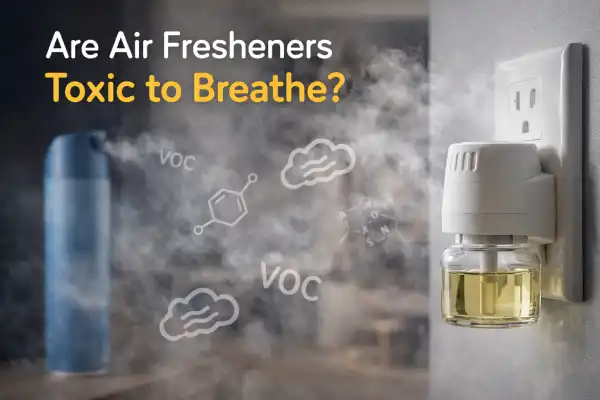
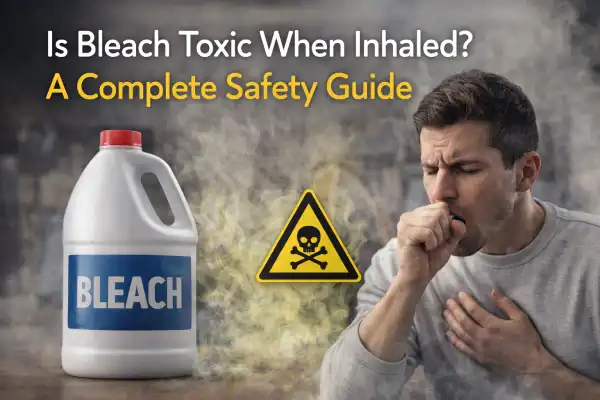
We should look at our habits the same way we do other household chemicals. Just like we wonder if cleaning products are safe to breathe, we should think about incense smoke too. This article aims to give you a clear, science-backed answer to whether incense smoke is harmful.
Key Takeaways
- Burning aromatic sticks generates fine particulate matter that can irritate the respiratory system.
- Chemical byproducts from combustion vary significantly based on the quality and ingredients of the product.
- Indoor air quality is heavily influenced by daily habits, including the use of scented items.
- Clinical research suggests a need for caution regarding long-term, frequent exposure in enclosed spaces.
- Empowered decision-making requires distinguishing between natural origins and the safety of combustion byproducts.
The Chemistry of Incense Combustion
To understand the Incense Health Effects, we must look at the chemical changes when it burns. Lighting an incense stick starts a process that breaks down complex materials into simpler gases and tiny particles.
This isn’t just a simple burn. It’s a complex chemical reaction. As a pharmacist, I see that the mix of ingredients greatly affects the smoke’s chemical makeup.
Understanding the Burning Process
The burning process involves the combustible core and the resinous coatings. Most traditional sticks have a bamboo core, which supports the active ingredients.
As the flame moves along the stick, it vaporizes and oxidizes the organic compounds. This thermal degradation releases volatile organic compounds and tiny particles into the air.
Chemical Byproducts of Organic Materials
An incense stick has 21% herbal and wood powder, 35% fragrance material, 11% adhesive powder, and 33% bamboo stick. These parts affect the smoke’s composition differently.
The fragrance materials and wood powders mainly create the aromatic emissions. The adhesive binders help keep the stick’s shape but also add to the smoke’s particulate matter.
Knowing these basic chemical components is key to understanding the Incense Health Effects. By knowing what’s in the stick, we can guess what’s in the air we breathe.
Is Incense Smoke Toxic to Breathe?
The question of whether is incense smoke toxic to breathe often depends on how often and where you use it. Many people love the smell of incense, but it’s key to know the difference between occasional and constant use. In homes, it’s not just the presence of something that matters, but how much and for how long.
Defining Toxicity in Household Settings
In homes, how well air moves around affects the buildup of smoke particles. Modern homes are often sealed tight to save energy, which can trap smoke inside. When wondering if is incense smoke toxic to breathe, think about these main points that affect your risk:
- Ventilation levels: How fast fresh air comes in to replace old air.
- Burn duration: How long the incense is lit in one go.
- Room volume: The size of the area where incense is burned.
- Product quality: What chemicals are in the incense’s binders and scents.
The Threshold of Harmful Exposure
Studies show incense smoke has more harmful particles than cigarette smoke. Incense releases more than 45 mg/g of particles, while cigarettes release about 10 mg/g. This big difference shows why incense can be more harmful in rooms with little air movement.
Incense isn’t deadly, but breathing in a lot of smoke can be harmful. To keep your home safe, use incense less often and make sure air can move around. By controlling these factors, you can still enjoy your home’s atmosphere while keeping the air cleaner.
Particulate Matter and Respiratory Health
Incense smoke contains tiny particles that can harm our lungs. When incense burns, it releases a mix of solid and liquid particles into the air. It’s important to know how these small pollutants affect our health.
How Fine Particles Enter the Lungs
The biggest worry with incense smoke is the fine particles, or PM2.5. These tiny particles can get past our body’s first defenses, like nasal hairs and mucus. They then reach deep into our lungs.
Once in the lungs, these particles can get into our blood or stay in lung tissue. This is why experts compare them to other harmful airborne substances. For example, they’re similar to those found in dry shampoo aerosol safety discussions. Their ability to evade natural defenses makes them a major concern for indoor air pollution.
Inflammatory Responses in the Airways
When these particles reach our lungs, our body fights back with an inflammatory response. This involves releasing chemicals and white blood cells to fight off the invaders. While this is a natural response, constant exposure to incense smoke can cause ongoing inflammation.
Long-term exposure can worsen conditions like asthma or bronchitis. It can also make our lungs more sensitive to triggers. Knowing the risks of inhaling incense smoke is crucial for protecting our lung health.
Volatile Organic Compounds in Common Incense
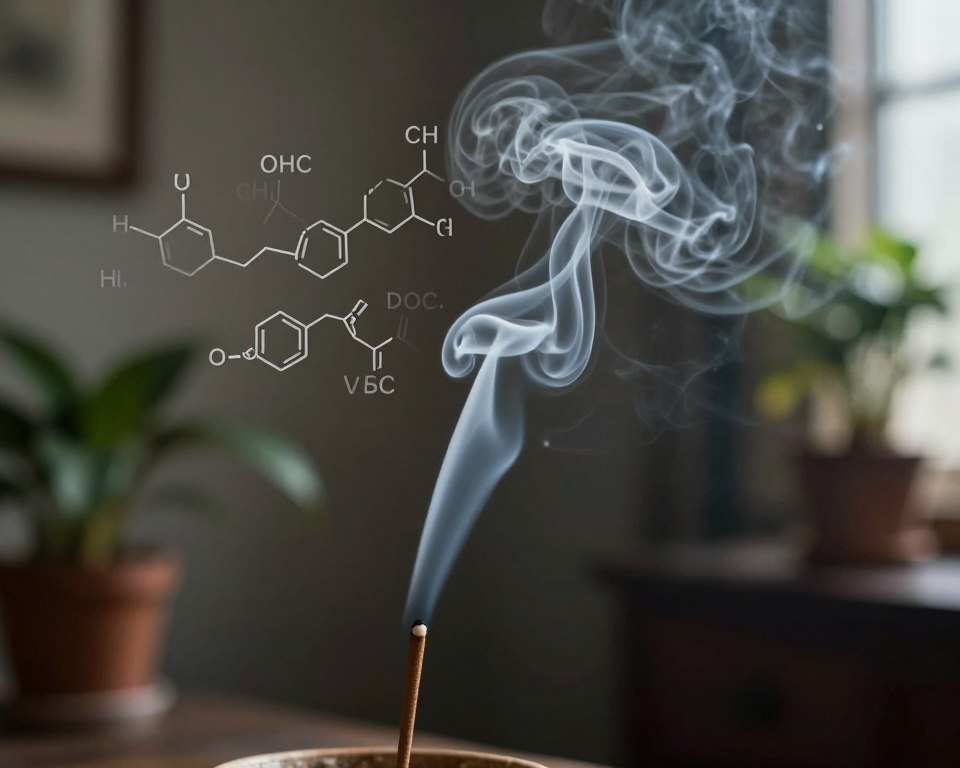
Many people enjoy the smell of incense, but few know about the chemicals it releases. When you light an incense stick, it burns and releases harmful particles into the air. It’s important to understand the dangers of incense smoke to keep your home safe.
Benzene and Formaldehyde Concerns
When organic materials burn, they release harmful substances. Benzene and formaldehyde are two of these, known to irritate the airways. Long-term exposure can cause serious health problems.
These chemicals don’t disappear once the incense is out. They can settle on surfaces or stay in the air. Knowing about the dangers of incense smoke helps keep your home healthy.
The Impact of Synthetic Fragrances
Today’s incense often uses synthetic fragrances for specific smells. While these fragrances make the scent consistent, they add more chemicals to the smoke. Many makers don’t reveal what’s in their products, making it hard for us to know what we’re breathing in.
The table below shows common chemicals found in incense smoke:
| Compound Name | Primary Source | Health Consideration |
|---|---|---|
| Benzene | Combustion byproduct | Known carcinogen |
| Formaldehyde | Synthetic additives | Respiratory irritant |
| Toluene | Organic material breakdown | Neurological impact |
| PAHs | Incomplete combustion | Airway inflammation |
Choosing products with clear labels helps manage the dangers of incense smoke. Making informed choices balances the desire for pleasant smells with the need for clean air.
Comparing Incense Smoke to Secondhand Tobacco Smoke
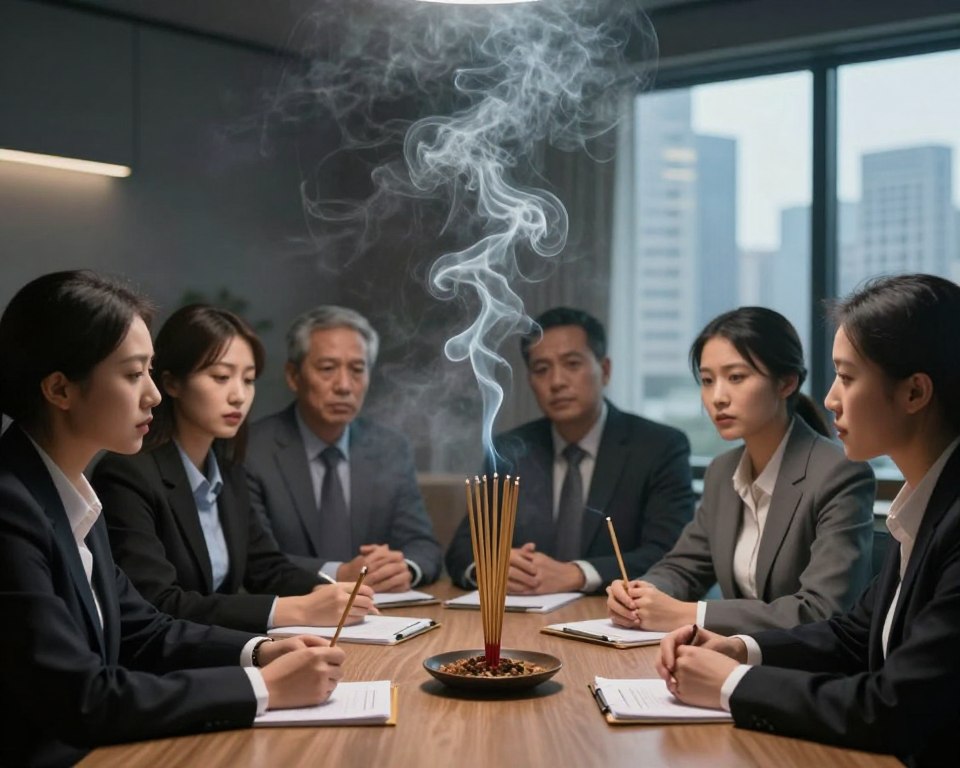
Looking at the health impact of burning incense is easier when we compare it to secondhand tobacco smoke. Both have different cultural uses but share similar combustion chemistry.
Similarities in Combustion Byproducts
Incense and tobacco both burn incompletely, releasing harmful gases and particles. The main worries are polycyclic aromatic hydrocarbons (PAHs) and carbon monoxide (CO).
These substances can irritate the lungs and harm the heart. Here’s a table showing common chemicals in both smoke types:
| Combustion Byproduct | Incense Smoke | Tobacco Smoke |
|---|---|---|
| Carbon Monoxide | Present | Present |
| PAHs | High levels | High levels |
| Particulate Matter | Fine/Ultrafine | Fine/Ultrafine |
Differences in Exposure Patterns
Though both have similar chemicals, the health impact of burning incense varies due to how we’re exposed. Tobacco smoke is often inhaled or breathed in various places. Incense, on the other hand, is usually burned for long periods in homes.
“The risk profile of indoor air pollutants is not just about the chemical composition, but also the duration and concentration of exposure within a confined space.”
Many people burn incense sticks for hours, often in poorly ventilated rooms. This leads to a buildup of pollutants that’s different from the short bursts of secondhand tobacco smoke. Knowing these differences is key for those worried about the long-term health impact of burning incense at home.
Vulnerable Populations and Sensitivity Risks
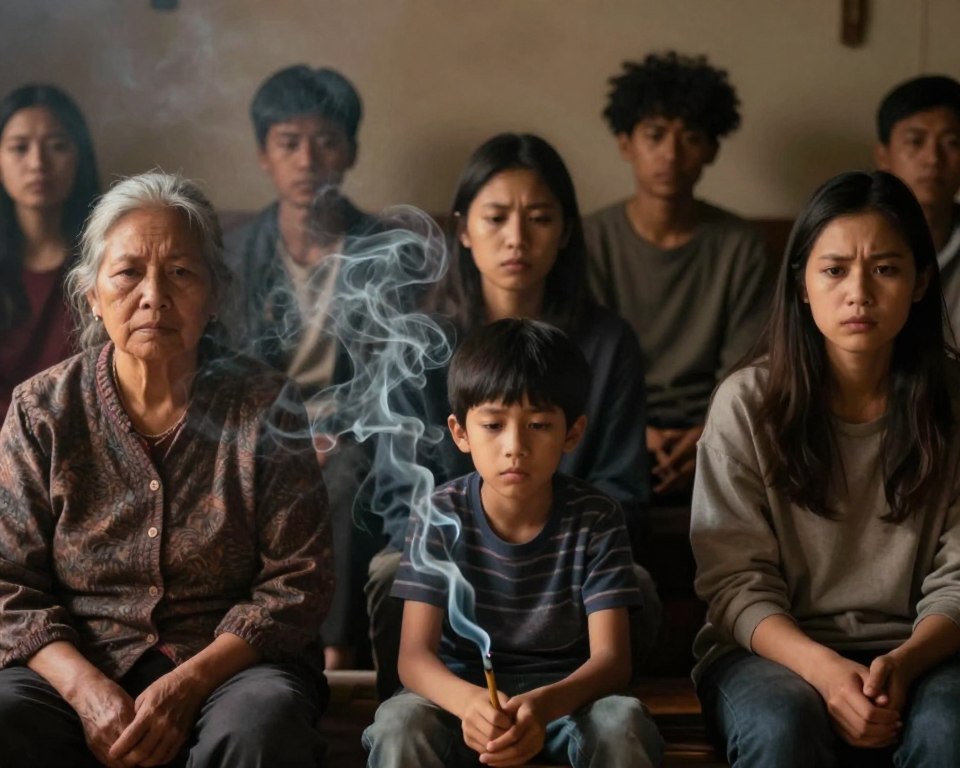
It’s important to know the dangers of incense smoke to protect sensitive people at home. Incense smoke can cause problems for some, even though it smells nice. It’s like checking if cleaning products are safe, but for smoke and lungs.
Learn how smoke affects people’s breathing. This is crucial for keeping everyone safe.
Asthma and Chronic Respiratory Conditions
People with asthma or COPD are more at risk from smoke. Studies show temple workers exposed to incense smoke get sick easily. They often have sore noses, cough, and breathing problems.
Even a little smoke can hurt their lungs. This makes breathing hard, making their health worse.
Risks for Children and the Elderly
Children and the elderly need extra care for air quality. Kids breathe more air than adults, so they get more pollutants. This can harm their lungs for a long time.
The elderly also face big risks. They might not breathe well or fight off sickness easily. Keeping the air clean is key to help them stay healthy.
Special Considerations for Pets in the Home
Pets are often forgotten when talking about air quality. But they are very sensitive. They breathe fast and get sick from toxins quickly.
If you use incense, make sure pets are away from it. This helps keep them safe from smoke problems.
The Role of Indoor Air Quality and Ventilation
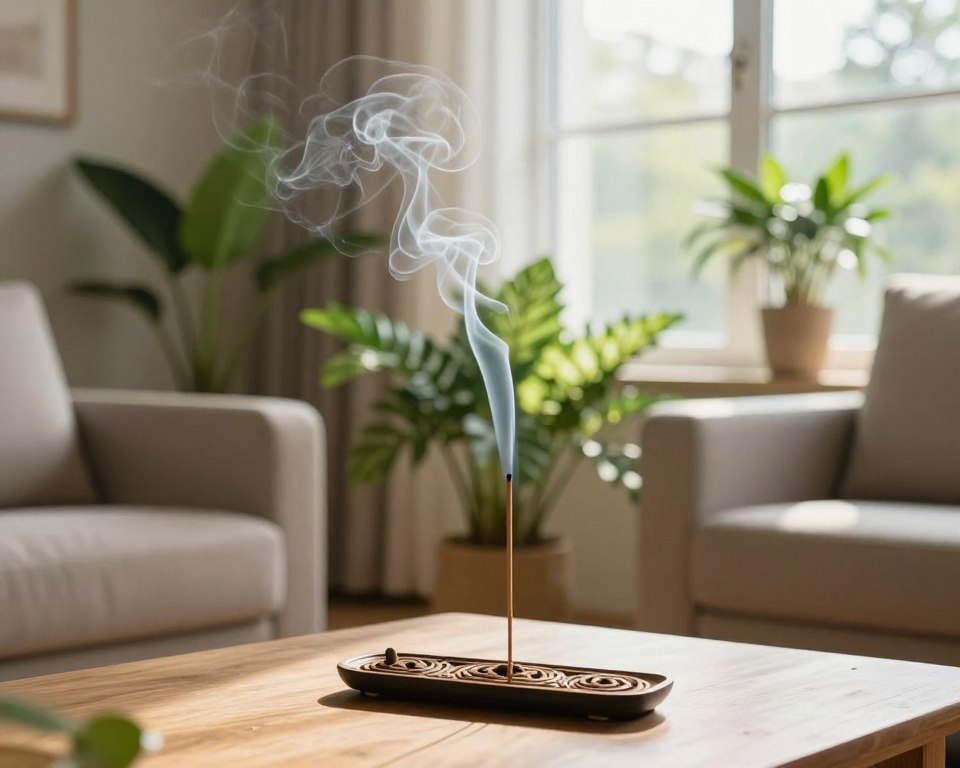
Keeping your home healthy means focusing on incense and indoor air quality. Incense can make your home smell nice, but it also releases harmful particles. It’s important to control these emissions to protect your health.
Air Exchange Rates and Smoke Accumulation
Stagnant air can make pollutants worse in your home. Burning incense in a small space can quickly fill the air with harmful particles. This can cause respiratory irritation.
Opening windows or using fans can help clear out these pollutants. It’s a simple way to improve your air quality.
The type of incense you use also affects how much pollution it creates. Adding calcium carbonate to incense can cut down on harmful particles by 40%. Choosing products with this ingredient can help keep your air cleaner.
The Effectiveness of Air Purifiers
Many people use air purifiers to help with incense pollution. Air purifiers with HEPA filters can catch small particles. But, they should be seen as a backup, not the main solution.
It’s important to remember that air purifiers don’t work as well on gases as they do on solid particles. Using only air purifiers without fresh air can still leave your home unhealthy. A good plan is to use both air purifiers and natural ventilation.
| Strategy | Primary Benefit | Limitation |
|---|---|---|
| Natural Ventilation | Removes gaseous pollutants | Dependent on outdoor weather |
| HEPA Filtration | Captures fine particulates | Limited impact on VOCs |
| Calcium Carbonate | Reduces initial emissions | Requires product selection |
Evaluating Different Types of Incense Materials
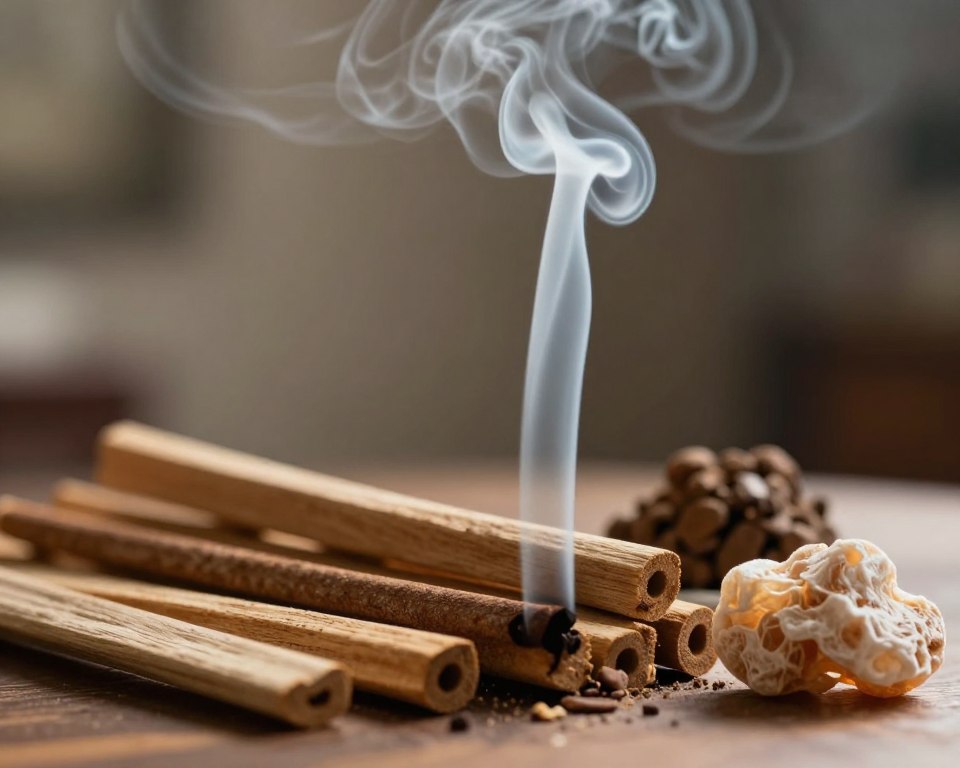
The type of incense you use affects the incense smoke chemicals you breathe in. Many people love the smell of incense, but not all products are safe or of good quality. Knowing what’s in your incense is key to keeping the air in your home clean.
Natural Resins Versus Synthetic Sticks
Traditional incense uses natural materials like sandalwood or frankincense. These tend to produce simpler smoke compared to synthetic sticks. But, burning natural materials still releases particles into the air, which is something to think about when considering if incense is bad for you.
On the other hand, many modern incense sticks use synthetic fragrances and chemicals. They burn slowly and smell strong, but they can release more harmful incense smoke chemicals. It’s wise to choose products that clearly list their ingredients, as hidden additives are often synthetic.
The Role of Binders and Additives
Incense sticks also contain binders to hold everything together and ensure they burn evenly. Often, these binders are chemicals like Diethylphthalate (DEP). DEP is a chemical that might cause cancer and can get into the air when you burn incense.
As a pharmacist, I advise you to pick incense with clear ingredient labels. Stay away from sticks with lots of chemical binders to cut down on harmful incense smoke chemicals. Opting for natural, high-quality incense can help you enjoy the scent without risking your health.
Long-term Health Implications of Frequent Exposure
Studies on incense health effects show that breathing in smoke regularly can harm your lungs. While using incense now and then is usually safe, it’s different when you do it every day in a small, closed space. Knowing how it affects your health is crucial for keeping your home safe.
Chronic Bronchitis and Lung Function
Long-term use of incense smoke can lead to serious lung problems. Doctors say that breathing in smoke can make your airways sore. This can cause chronic bronchitis and lower your lung function over time.
The risks from incense health effects depend on how much and how often you use it. People who burn incense for hours every day in small rooms face bigger risks. If you worry about air quality, think about other products too, like ammonia-based cleaners.
Potential Carcinogenic Risks
Research links long, heavy incense smoke use to health problems, like nasopharyngeal carcinoma. This shows how important it is to have good air flow when using incense indoors. While the risk is low for casual users, scientists keep studying to give better advice.
It’s important to see studies in context. Most research looks at people with very high, constant exposure, not occasional users. By using incense less often, you can still enjoy its scent while protecting your lungs.
Psychological Benefits Versus Physical Risks
The charm of incense is clear, but knowing the health impact of burning incense is key for a safe home. For ages, people used incense to hide bad smells, make sacred places, and help with meditation. Today, it’s still used to lower stress and bring calm into our lives.
The Role of Aromatherapy in Stress Reduction
Aromatherapy uses smells to change mood and feelings. Certain scents can reach the brain’s emotional center, leading to a subjective feeling of relaxation and clear thinking.
Many find lighting incense a calming ritual. It marks the end of a busy day and the start of rest. Yet, these mental benefits must not ignore the physical risks of breathing in smoke.
Balancing Mental Well-being with Air Quality
Finding a balance between feeling good and breathing clean air is crucial. You can enjoy the health impact of burning incense by using it less and keeping the air fresh. Open windows or use air purifiers to cut down on harmful particles.
Opt for natural, high-quality incense over synthetic ones. This choice can help keep your space peaceful without harming your health in the long run.
| Factor | Psychological Benefit | Physical Risk |
|---|---|---|
| Aromatic Stimulation | Stress reduction | Airway irritation |
| Ritualistic Use | Improved focus | Particulate inhalation |
| Environmental Impact | Enhanced mood | Indoor air pollution |
| Overall Assessment | Mental well-being | Health impact of burning incense |
Regulatory Standards and Product Safety Labeling
It’s hard to know what’s in your incense because there are no strict rules. Unlike food or medicine, incense isn’t closely watched. This means Incense Smoke Chemicals might not be safe before you use them.
Lack of Universal Safety Standards
There’s no single group that checks incense makers. So, they don’t have to tell you what’s in their products. Many people think “natural” means safe, but that’s not always true.
“True consumer protection in the home fragrance market relies on transparency, yet current labeling practices often obscure the very ingredients that impact indoor air quality.”
Some companies might use harmful stuff in their incense. If you care about clean air, check out other things too. Like fabric refresher spray, which can also pollute your home.
How to Read Product Ingredients
To stay safe, learn to read labels well. Look for products that list what’s inside. Being open is your best shield against bad Incense Smoke Chemicals.
When picking a product, look for signs of quality and safety. The table below helps you spot good labels from bad ones.
| Label Feature | Transparent Brand | Risky Product |
|---|---|---|
| Ingredient List | Full disclosure of resins/oils | Vague “fragrance” or “perfume” |
| Binder Type | Natural wood powder/gum | Synthetic chemical glues |
| Safety Certifications | Third-party lab tested | No safety information provided |
| Scent Source | Essential oils/botanicals | Artificial chemical compounds |
Choose brands that show what’s in their incense. Look for safety checks too. Knowing this helps keep your home air clean.
Practical Strategies for Safer Incense Use
It’s possible to lower the health risks of incense smoke with simple steps. Many enjoy the scents from aromatherapy, but it’s key to know the risks of inhaling incense smoke. Making a few changes in how and when you use incense can help keep your home healthier.
Limiting Duration and Frequency
I tell patients to see incense as a special treat, not a daily thing. Burning it too often can fill your home with harmful particles. Short sessions mean less smoke and better air quality.
Concerned about the impact on your home? Check if scented products are safe for your space. Setting a routine to limit exposure is a smart move for better breathing. Consistency in moderation helps avoid long-term health issues.
Optimizing Room Placement
The spot where you burn incense is key for clean air. Pick a spot with good airflow, like near a window or high ceilings. Stay away from small, closed areas like bathrooms or closets.
Good air flow is crucial to avoid breathing problems. Make sure the incense is on a safe, heat-proof surface, away from flammable things. Also, keep it away from where you sit or sleep to avoid breathing in too much smoke.
| Safety Strategy | Action Required | Primary Benefit |
|---|---|---|
| Duration Control | Burn for under 30 minutes | Reduces particulate buildup |
| Ventilation | Open windows or use fans | Dilutes harmful VOCs |
| Placement | High-ceiling, open areas | Prevents smoke stagnation |
| Frequency | Limit to occasional use | Lowers cumulative respiratory risk |
Image Disclosure and Educational Context
We use AI-generated images to show the dangers of household air pollutants. These pictures help explain how Breathing In Incense Smoke can affect your home.
Purpose of AI-Generated Illustrations
We created these images to make complex health topics easier to understand. They help break down information about air quality and how particles move.
Remember, these images are for illustrative purposes only. They don’t show real medical findings or lab tests.
Limitations of Visual Representations in Veterinary and Health Contexts
These images should not be seen as a substitute for expert advice. If you’re worried about Breathing In Incense Smoke and your health or pets, talk to a professional.
We aim to give you reliable, expert-checked info. These graphics are meant to support learning, not as proof of anything.
Expert Perspectives on Indoor Air Pollution
Understanding the link between incense and indoor air quality is key. Scientists are studying how our daily habits affect the air we breathe. They aim to help us keep our homes healthy.
Current Scientific Consensus
Scientists have made big steps in checking if aromatic materials are safe. The biggest study looked at 61,000 people over time. It found that moderate, occasional use of incense is mostly safe for healthy folks.
“Evidence-based safety is the cornerstone of public health, ensuring that traditional practices can coexist with modern standards of air purity.”
The main worry isn’t the product itself, but how often and how much we use it. Light use of incense and indoor air quality is usually okay for most people.
Future Research Directions
Next, scientists want to learn more about the chemicals in incense. They’ll look at how different ingredients affect us over years. This is crucial for spotting risks that might not show up right away.
They also plan to create better tests for products. This will help the industry be more open. It will let us make better choices for our homes.
Conclusion
Managing indoor air quality is key to a healthy home. Breathing in incense smoke can harm sensitive people. Knowing these risks helps us live better.
Good ventilation is the best defense. Open windows or use air purifiers to keep air clean. Choose natural resins over synthetic ones to avoid harmful additives.
Enjoying incense safely means using it in moderation. Limit how long and how often you burn it. This keeps air pollution low and protects your health.
Know what’s in the products you buy. Look for brands that are open about their ingredients. Making smart choices keeps your home safe and healthy for all.
Expert Perspectives on Indoor Air Pollution
The Threshold of Harmful Exposure
Household toxicity depends on concentration and time, not just presence. Incense has been used for centuries, but modern homes often lack good ventilation. This makes it hard to clear out smoke particles.
We compare smoke emissions to air quality standards to find harm thresholds. While incense isn’t deadly, it’s still risky in poorly ventilated spaces.
Inflammatory Responses in the Airways
PM2.5 is the main concern with incense smoke. These tiny particles can get deep into the lungs. They cause inflammation and can worsen breathing problems.
This section explains how these particles affect the lungs and airways.
The Impact of Synthetic Fragrances
Incense smoke contains harmful VOCs. Benzene and formaldehyde are common, raising health concerns. We look at how these chemicals affect indoor air and health risks.
This section stresses the need for clear incense ingredient lists to protect health.
Differences in Exposure Patterns
Incense smoke and tobacco smoke share some risks. Both have PAHs and carbon monoxide, which harm health. But, incense is often burned for longer in homes.
This section compares the two to help understand incense risks better.
Risks for Children and the Elderly
Some groups, like kids, the elderly, and those with breathing issues, face more risks from indoor pollutants. Pets are also more sensitive. This section explains why these groups need to be careful around incense.
We offer tips to protect them from smoke.
The Effectiveness of Air Purifiers
Good ventilation is key to avoiding incense smoke risks. High air flow prevents smoke buildup. Air purifiers can help, but can’t replace fresh air.
This section gives tips on improving air flow to keep homes healthier.
The Role of Binders and Additives
Incense quality and safety vary by material. Traditional resins are safer than synthetic sticks. As a pharmacist, I advise choosing products with clear ingredients to avoid harmful additives.
This section helps you choose safer incense options.
Potential Carcinogenic Risks
Long-term incense use can lead to health problems like chronic bronchitis. It may also increase cancer risks. While risks are low for occasional users, daily exposure is more concerning.
This section reviews the health risks of regular incense use.
Balancing Mental Well-being with Air Quality
Incense can reduce stress and create a calm atmosphere. But, it also pollutes indoor air. This section explores how to enjoy incense without harming your health.
We suggest ways to balance mental benefits with air quality.
How to Read Product Ingredients
The incense market lacks standard safety labels. Consumers must research brands to avoid harmful additives. This section guides on reading product labels and making safe choices.
We empower consumers to make informed decisions.
Optimizing Room Placement
Using incense safely involves limiting burn time and choosing well-ventilated areas. I advise treating incense as an occasional luxury to reduce health risks. This section offers practical tips for safer incense use.
Future Research Directions
Scientists study indoor air pollution’s effects on health. While some studies show risks, moderate incense use is unlikely to harm most people. Future research will focus on incense’s chemical makeup and long-term health effects.
This section summarizes expert views and offers reassuring conclusions.