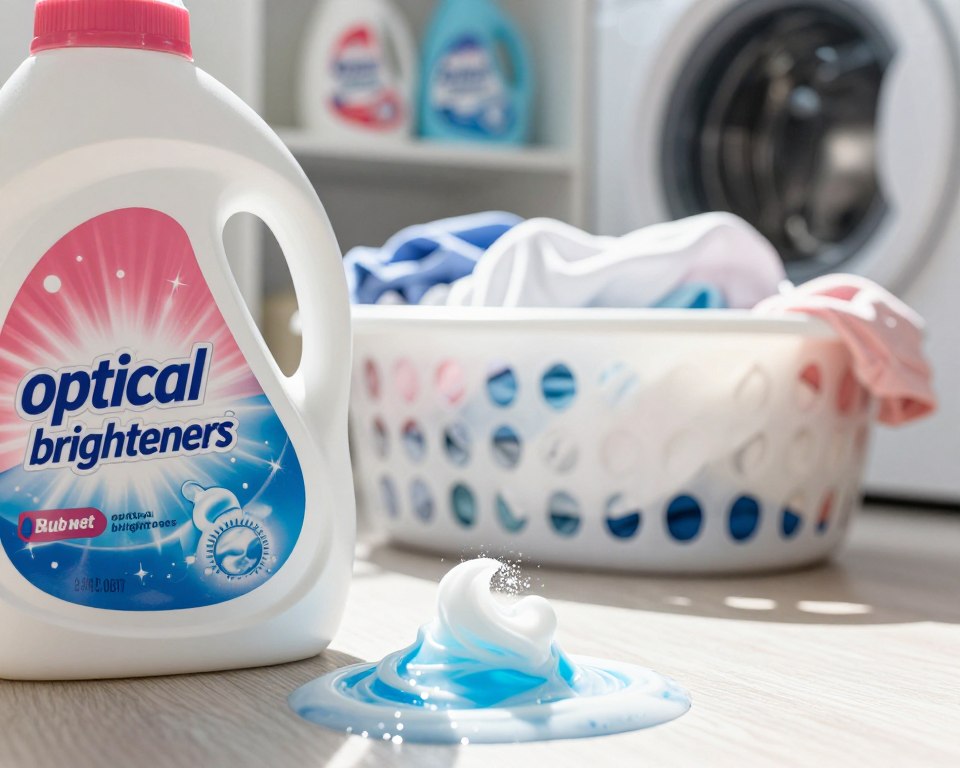
Did you know that almost 90% of liquid laundry detergents in the US have synthetic additives? These are called optical brighteners. They don’t clean your clothes. Instead, they absorb ultraviolet light and send out blue light to make things look whiter.
Many people are confused about these chemicals. You might be wondering if they’re safe for your skin or the environment. As a pharmacist, I want to give you the facts. I aim to help you understand what’s in your laundry products.
This guide will give you a clear look at how these substances work in your home. By knowing the science, you can make informed decisions about your family’s laundry safety.
Key Takeaways
- Most laundry detergents use additives to create a visual illusion of cleanliness.
- These agents work by reflecting light, not removing stains.
- Pharmacist-verified data helps clarify skin sensitivity risks.
- Understanding ingredient labels empowers safer household product choices.
- Evidence-based guidance is key for navigating modern laundry chemistry.
Understanding Optical Brighteners and Their Purpose
Ever wondered why your whites seem so bright? It’s likely due to optical brighteners, also known as fluorescent whitening agents. These additives are found in many household items. Understanding optical brighteners is key for those interested in laundry product chemistry.

The Chemistry Behind Fluorescence
These compounds work by absorbing ultraviolet light, which we can’t see. They then release this energy as blue light that we can see. This makes fabrics appear whiter than they really are.
This blue light makes the fabric look clean and bright. You can learn more about how these compounds work by knowing how optical brighteners work to enhance visual perception. It’s an optical illusion, not a real cleaning action.
Why Manufacturers Add Brighteners to Detergents
Manufacturers add Optical Brighteners in Laundry Detergent to meet consumer expectations. People often think bright clothes are cleaner. Even clean clothes can look dull over time.
These agents keep clothes looking new after many washes. They don’t clean, but they’re a marketing tool for better-looking clothes. Optical Brighteners in Laundry Detergent meet the demand for visually appealing results.
How Optical Brighteners Work on Fabric
The look of clean clothes often comes from a chemical trick, not deep cleaning. These additives do not remove stains or clean. They stay on fabric fibers after washing.
To understand how optical brighteners work, we need to see how chemistry and light interact. They are fluorescent dyes that stick to fabric. This makes old clothes look new by hiding their natural dullness.

The Mechanism of Light Reflection
Optical brighteners work by catching UV light, which we can’t see. They then send out this light as blue light. This is called fluorescence.
The fabric then reflects more blue light than it absorbs. This makes the fabric look whiter and more vibrant. It balances the color spectrum, making the fabric seem cleaner.
Visual Perception and the Illusion of Whiteness
Our brains think more blue light means the fabric is super clean. We link bright whites with purity, even if they’re not. This creates a strong optical illusion that focuses on looks over cleanliness.
It’s important to know the difference between clean clothes and bright ones. The brightness is just a surface change. It might make you think your clothes are cleaner than they are.
The Truth About Optical Brighteners in Modern Laundry
The desire for brighter, whiter clothes has changed laundry detergents in the US. To meet these new standards, makers use special additives. Learning about The Truth About Optical Brighteners shows how they work in our wash cycles.
Evolution of Brightening Agents in the US Market
Older laundry detergents mainly cleaned off dirt and stains. But, in recent years, the US market moved towards making clothes look “brighter than new.” This change brought fluorescent whitening agents into everyday detergents.
Now, these agents are common in many well-known brands. They don’t clean like traditional detergents but are great at hiding fabric yellowing. For more details, check out The Truth About Optical Brighteners for better laundry choices.
Distinguishing Between Bleach and Optical Brighteners
Many people mix up optical brighteners with bleach. It’s key to know they work differently. Bleach breaks down stains through oxidation.
On the other hand, optical brighteners stay on clothes after washing. They catch UV light and send out blue light. This makes clothes seem whiter and cleaner than they are. Knowing this helps us pick the right laundry products.
Common Myths About Optical Brighteners
Many people worry about the safety of laundry additives. But common myths about optical brighteners often confuse the truth. Online, false information spreads, causing worry for those with sensitive skin. Looking at the science, we can clear up these myths.
Debunking Claims of Immediate Skin Toxicity
Some believe optical brighteners cause skin problems right away. But, studies show this isn’t true. Most optical brighteners stay on fabric and don’t get into the skin.
Tests show these molecules don’t easily get absorbed through the skin. When used as directed, they’re safe for most people. Thorough safety tests prove they’re safe at the levels found in laundry.
Addressing Misconceptions Regarding Fabric Degradation
Many think optical brighteners weaken fabric over time. But, this is a common myth without scientific backing. These agents work by reflecting blue light, not by breaking down fibers.
They don’t change the fabric’s structure. Unlike harsh bleaches, they just make clothes look brighter. Your clothes stay the same quality, even with these additives.
Benefits of Optical Brighteners for Consumer Textiles
Fluorescent whitening agents in detergents make household textiles look better. They absorb UV light and shine it back as blue light. This makes white and light-colored clothes look cleaner and brighter by hiding the yellowing that happens over time.
Maintaining the Appearance of New Clothing
Optical brighteners keep clothes looking new even after many washes. As clothes get older, they lose their shine. These agents help keep them looking fresh and new for longer.
These additives make clothes seem brighter. They work best on synthetic fibers and cotton blends. This helps clothes look sharp for longer, without needing to be replaced often.
Economic Advantages of Extending Garment Lifespan
Using these additives saves money by making clothes last longer. Clothes that look good are less likely to be thrown away. This means you spend less on new clothes.
These agents don’t fix damaged fibers, but they make clothes seem more valuable. This helps clothes last longer in your closet. Here’s how they compare to regular cleaning methods.
| Feature | Standard Detergent | Detergent with Brighteners |
|---|---|---|
| Visual Brightness | Baseline | Enhanced |
| Yellowing Control | Minimal | High |
| Garment Lifespan | Standard | Extended Perception |
| Fabric Feel | Neutral | Neutral |
Choosing to use these agents depends on what you value most. Knowing the benefits of optical brighteners helps you make a better choice when buying laundry supplies in the United States.
Safety of Optical Brighteners and Human Health
As a pharmacist, I often get asked if laundry detergent chemicals are harmful to our skin. Understanding optical brighteners is key for making smart choices about household items. These agents make clothes look brighter, but how they affect our bodies is a big concern.

Pharmacist Perspectives on Dermal Absorption
From a medical view, the main worry is how much of these chemicals get into our skin. Most laundry products stick to clothes, not our skin. Minimal absorption happens because the molecules are too big to get through our skin easily.
Wearing clothes washed in these detergents usually doesn’t leave much residue on us. The safety of optical brighteners is backed by their design to not be absorbed by our bodies. But, people with skin conditions like eczema might react differently.
Potential for Skin Irritation and Sensitization
Even though these chemicals are generally safe, some people might have mild reactions. Sensitization is rare, but it can cause contact dermatitis in sensitive people. It’s important to know the difference between an allergic reaction and irritation from fabric.
The table below shows what can affect how your skin reacts to laundry residue:
| Factor | Impact on Skin | Risk Level |
|---|---|---|
| Skin Barrier Integrity | High permeability | Moderate |
| Residue Concentration | Direct contact exposure | Low |
| Individual Sensitivity | Immune response | Low to Moderate |
| Fabric Type | Fiber absorption rate | Minimal |
While these additives are not essential for cleaning, they don’t pose a big health risk to most people. By understanding optical brighteners and their limited skin interaction, you can choose laundry products with confidence. Watch your skin for any changes if you think you might be sensitive to certain detergents.
Environmental Impact of Optical Brighteners
The environmental impact of optical brighteners is a big deal for those who care about the planet. These agents make fabrics look better, but their chemicals need a closer look. How they affect the environment is important.

Biodegradability and Aquatic Toxicity Concerns
Many optical brighteners are made from synthetic materials. They don’t break down quickly in nature. Their molecular structure is stable, which makes them hard to degrade in water.
Studies show that these substances can harm aquatic life if they get too concentrated. Scientists keep an eye on them to make sure they don’t harm fish and other water creatures.
“The challenge with many synthetic laundry additives lies in their inherent resistance to natural degradation processes, which can lead to accumulation in sensitive ecosystems.”
Persistence in Wastewater Treatment Systems
Wastewater treatment plants do a great job at removing pollutants. But, they struggle with optical brighteners. These chemicals stick to sewage sludge, not getting fully broken down.
This means the environmental impact of optical brighteners is linked to wastewater management. Even though most of these compounds are caught, some can stay in rivers and streams.
It’s important to keep studying how these leftovers affect the environment. For those who care about the planet, knowing this helps make better choices for laundry.
Regulatory Landscape in the United States
It’s important for people to know about the laws on laundry additives. This is because many think all detergent ingredients are checked by one agency. But, the truth is, there are many steps to make sure chemicals are safe.
FDA and EPA Oversight of Laundry Additives
In the U.S., the Environmental Protection Agency (EPA) and the Food and Drug Administration (FDA) watch over chemicals. But, they do different things. The EPA looks at chemicals that might harm water and animals.
The FDA checks products that touch our skin, like soaps. Laundry detergents are seen as cleaning products, not cosmetics. This means they might not be as closely watched for skin safety. Knowing this is key to understanding the safety of optical brighteners.
Labeling Requirements and Consumer Transparency
Right now, laws don’t require listing every chemical in detergents. This makes it hard for people to know what’s in their laundry.
Some companies do list all their ingredients, but it’s not common. People want to know more, which is pushing for clearer labels. But, knowing what “fragrance” or “brightening agents” really are is important. These terms can hide many chemicals.
Identifying Optical Brighteners on Detergent Labels
Looking at laundry detergent labels can be tricky. Brands often highlight their cleaning power but hide the additives that change how things look. Knowing what’s in your detergent is key to making smart choices about Optical Brighteners in Laundry Detergent.
Common Chemical Names to Look For
Manufacturers don’t usually say “optical brightener” on the label. Instead, they list these chemicals by their technical names. These are usually fluorescent whitening agents.
When you look at the back of your detergent, watch for these names:
- Disodium Distyrylbiphenyl Disulfonate (a common stilbene derivative)
- Fluorescent Brightener 71
- Diaminostilbene Disulfonic Acid derivatives
- Coumarin derivatives
How to Read Ingredient Lists Effectively
Reading labels can be hard because of all the chemical names. Focus on the active ingredient list instead of the marketing. If a brand doesn’t list everything on the bottle, check their website.
Here’s how to find Optical Brighteners in Laundry Detergent when you shop:
- Check the “Ingredients” section: Look for the chemical names mentioned above.
- Use digital resources: Search online databases to see if products have synthetic brighteners.
- Prioritize transparency: Pick brands that say “free from optical brighteners” on their labels.
By following these steps, you can control what touches your skin and clothes. Being an informed shopper helps you avoid unwanted additives.
Comparing Popular US Laundry Detergent Brands
Choosing a laundry detergent is about finding the right balance. It’s important to consider how well it cleans, its impact on health, and the environment. Many popular brands use certain chemicals to make clothes look cleaner. Knowing about the Environmental Impact of Optical Brighteners helps those who care about the planet and their clothes.
Analysis of Tide and Gain Formulations
Tide and Gain are well-known in the US laundry market. They use optical brighteners to make whites look whiter and colors brighter. These chemicals absorb UV light and emit blue light, making fabrics look newer.
These formulas are great at removing stains. But, they might not be the best for people with sensitive skin. Luckily, Tide and Gain offer special lines for those with skin concerns. For example, Tide Free & Gentle is made without dyes, perfumes, or optical brighteners, making it safer for sensitive skin.
Evaluating Eco-Friendly Alternatives Like Seventh Generation
Eco-friendly brands like Seventh Generation take a different path. They use plant-based ingredients and avoid synthetic additives. This approach helps protect our waterways from the Environmental Impact of Optical Brighteners. These detergents clean clothes effectively without using optical brighteners.
For those who want clean clothes without harsh chemicals, there are good options. Arm & Hammer Sensitive Skin Free & Clear is another brand that avoids these additives. Choosing these products helps keep clothes clean while reducing chemical waste in our water systems.
| Detergent Brand | Contains Brighteners | Best For |
|---|---|---|
| Standard Tide/Gain | Yes | Maximum Brightness |
| Tide Free & Gentle | No | Sensitive Skin |
| Seventh Generation | No | Eco-Conscious |
Choosing the Best Optical Brightener-Free Options
Choosing the best optical brightener-free detergent is a smart move for a cleaner home. These additives are common but not needed for clean laundry. By choosing wisely, you keep your home clean and avoid synthetic chemicals.
Criteria for Selecting Sensitive Skin Detergents
When picking the best optical brightener-free option, look for “free and clear” labels. These products avoid dyes, fragrances, and brighteners that can cause skin issues. Always check the ingredient list on the packaging.
Choose brands that list all ingredients on their websites. If a brand doesn’t list everything, pick a different one. A good detergent uses surfactants and enzymes to clean, not just make things look bright.
“True cleanliness is found in the removal of soil, not in the chemical masking of fabric appearance.”
Benefits of Switching to Natural Cleaning Agents
Switching to natural cleaning agents is great for homes with babies or people with sensitive skin. Natural detergents use plant-based surfactants that are kinder to fabrics and skin. They also leave less chemical residue on clothes.
Here are some benefits to think about:
- Reduced Skin Irritation: No synthetic brighteners means fewer allergic reactions.
- Improved Indoor Air Quality: Natural agents don’t have the bad smells found in synthetic fragrances.
- Long-term Fabric Integrity: No harsh chemicals means your clothes last longer.
By picking the best optical brightener-free options, you make your laundry safer and more eco-friendly. This way, your clothes stay clean without harming your health.
Best Practices for Laundry Care and Skin Sensitivity
Looking after your laundry for sensitive skin means being careful about chemicals. Many people worry about what’s in their detergent. But, knowing the truth about Common Myths About Optical Brighteners helps focus on what really counts: the residue left on clothes. By changing how you wash, you can protect your skin better without throwing away your cleaning stuff.
Strategies for Reducing Chemical Exposure
The best way to avoid laundry chemicals is to avoid over-dosing detergent. Makers often say to use more than you need. But, using just enough detergent cuts down on chemicals left in your clothes.
Try liquid detergents if you find powder residue a problem. Powders might not dissolve well in cold water, causing skin irritation. Also, don’t overload your washing machine. This stops water from moving well and rinsing off soap properly.
The Role of Extra Rinse Cycles
For very sensitive skin, an extra rinse cycle is a game-changer. It makes the machine use more fresh water to clean clothes better. This is a proven way to make sure your clothes are as clean as they can be before you wear them.
Many people don’t use this feature, but it’s a top way to handle skin sensitivity. Adding an extra rinse cuts down the amount of stuff left in your clothes. This is great for things like underwear, socks, and bed sheets. Consistency is key for keeping your skin comfortable over time.
The Future of Sustainable Fabric Care
More people want clean laundry without harsh chemicals. The market is changing, moving away from chemical additives. Now, there’s a focus on how optical brighteners work and if they’re really needed.
Innovations in Bio-Based Brightening Agents
Scientists are looking into plant-based alternatives. These new agents aim to look good without harming the environment. They use natural enzymes and plants to clean clothes better and safer.
It’s important to understand the science behind these new products. For more info, check out optical brighteners in textile care. These changes are big steps away from old chemical tricks.
Shifting Consumer Preferences Toward Transparency
Today’s buyers want to know what’s in their laundry. They prefer safe, clear ingredients over just looking at clothes. Big brands are now listing all ingredients on labels.
The move to green laundry care has several key parts:
- Ingredient Disclosure: Full lists of additives for smart choices.
- Environmental Impact: Less harm to water systems.
- Safety Prioritization: Safe formulas for skin.
The future of laundry care is about cleaning well and safely. As we learn more about how optical brighteners work, we’ll see more eco-friendly and safe options.
Balancing Aesthetic Results with Safety Priorities
Choosing how to do laundry is a balance between looks and safety. The benefits of optical brighteners make clothes look better. But, many worry about the chemicals in these additives. It’s up to you to find a balance that meets your cleanliness and safety needs.
Assessing Personal Risk Tolerance
Every family has a different comfort level with chemicals. Some love the bright look of clothes, while others avoid chemicals. Think about your skin and any allergies in your family.
If you react to regular detergents, safety might be more important. But, if you don’t have sensitivities, you might value the bright look more. Look at Gain Flings vs Arm & Hammer to find what works for you.
Making Informed Decisions for Your Household
Developing a laundry plan means looking at what’s in your products. Decide which clothes need to look perfect, like work outfits. You might use different products for these than for casual clothes.
Here’s a simple way to organize your laundry needs:
| Priority Category | Aesthetic Focus | Safety Focus | Recommended Approach |
|---|---|---|---|
| Everyday Wear | Moderate | High | Use fragrance-free, brightener-free options |
| Formal/Work Wear | High | Moderate | Use standard detergents with brighteners |
| Sensitive Skin | Low | Maximum | Use hypoallergenic, natural formulas |
| Household Linens | High | High | Use eco-friendly brighteners if available |
By sorting your laundry, you can control your space better. Remember, brighteners just make clothes look better. Your choice should match your family’s values and health needs.
Conclusion
Modern laundry care is about finding a balance between looks and health. Studies show that these additives are safe for most people. Knowing how optical brighteners work in detergents helps us understand why clothes stay bright.
Choosing the right optical brightener depends on your family’s needs. Some like bright clothes, while others avoid synthetic stuff for health or environmental reasons. Both choices are okay if they’re based on facts, not myths.
Clean clothes are about hygiene, not just how bright they are. You can pick products that match your values. By looking at ingredient labels and understanding how chemicals work, you make your home reflect what’s important to you. Keep looking for reliable information to find the best optical brightener for your family.
FAQ
What is the primary purpose of Understanding Optical Brighteners in my laundry routine?
Optical Brighteners, or FWAs, make clothes look whiter and brighter. They don’t remove dirt or bacteria. Instead, they absorb UV light and emit blue light, making fabrics appear cleaner.
How Optical Brighteners Work to make clothes look cleaner if they don’t remove dirt?
Optical Brighteners work by reflecting blue light. This counteracts the yellowing of fabrics. They don’t clean but make clothes look newer. The actual cleanliness comes from the detergent’s surfactants and enzymes.
What is The Truth About Optical Brighteners versus traditional chlorine bleach?
Optical Brighteners and bleach work differently. Bleach breaks down stains, while brighteners add reflective particles. They don’t clean but change how light hits the fabric.
Are there significant Benefits of Optical Brighteners for the average consumer?
Yes, they save money and keep clothes looking new. They mask yellowing and extend the life of white and bright clothes. This means you don’t need to replace clothes as often.
What are the most Common Myths About Optical Brighteners regarding fabric damage?
One myth is they damage fabric quickly. But they don’t weaken fibers like bleach does. Another myth is they’re toxic. But they’re not a health risk under normal use.
What does the clinical evidence say about the Safety of Optical Brighteners for human skin?
Studies show low dermal absorption. But, they stay on fabric, which can irritate sensitive skin. People with atopic dermatitis or sensitivities should be careful.
Which products typically contain Optical Brighteners in Laundry Detergent, and which do not?
Brands like Tide and Gain use Optical Brighteners. But, “clean” or “sensitive” labels avoid them. Look for “brightening agents” or “fluorescent whiteners” to avoid them.
What is the Environmental Impact of Optical Brighteners once they enter the water system?
Optical Brighteners are not biodegradable. They can harm aquatic life and build up in the environment. This is a concern for water ecosystems.
How should I go about Choosing the Best Optical Brightener-free detergent for my family?
Choose “Free & Clear” formulas. Avoid Disodium Distyrylbiphenyl Disulfonate. Opt for plant-based detergents for sensitive skin, like infants.