A study from the University of Washington found a shocking truth. Common household cleaners are actually sources of indoor air pollution. They release volatile organic compounds through dryer vents, spreading chemicals all over your home.
Many people think that “fresh” or “clean” labels mean something is safe. But, companies often use secret fragrance mixes to cover up bad smells. These hidden ingredients, like Phthalates in Scented Laundry Products, are not listed because they are considered trade secrets.
Knowing how these chemicals get into your home is the first step to making better choices. By looking into the lack of openness in making these products, we can keep our air cleaner and safer from harmful chemicals.
Key Takeaways
- University of Washington research confirms that dryer vents distribute hazardous fragrance chemicals indoors.
- Many synthetic scents contain hidden compounds that are not listed on consumer labels.
- Federal regulations currently allow manufacturers to protect fragrance formulas as trade secrets.
- Indoor air quality is significantly impacted by the regular use of common cleaning supplies.
- Transparency in ingredient disclosure remains a major challenge for health-conscious consumers in the United States.
The Regulatory Loophole Behind Fragrance Secrecy
In the United States, laws about fragrance disclosure often hide the truth from consumers. People expect to know what’s in their favorite detergents. But, federal rules let companies keep harmful chemicals in fragranced detergent secret by using a vague term.
The Fair Packaging and Labeling Act Limitations
The Fair Packaging and Labeling Act (FPLA) aims to help consumers make smart choices. Yet, it has a big loophole. This loophole lets companies keep the exact makeup of their scents a secret.
This loophole means companies don’t have to list what’s in their fragrances. Artificial fragrances can have dozens of hidden ingredients. These can cause sensitivities or health problems.
Trade Secret Protections and Corporate Transparency
Companies often say they can’t reveal fragrance ingredients because they’re trade secrets. They claim it would hurt their business edge.
This rule puts corporate secrets over consumer rights. It makes it hard for people to find out about harmful chemicals in fragranced detergent. Here’s a comparison of how ingredients are listed versus fragrance secrets.
| Ingredient Category | Disclosure Requirement | Consumer Impact |
|---|---|---|
| Surfactants | Mandatory | High transparency |
| Preservatives | Mandatory | High transparency |
| Fragrance Blends | Exempt (Trade Secret) | Low transparency |
| Solvents | Mandatory | High transparency |
The current laws make it hard to ensure safety. Without changes, the dangers of harmful chemicals in fragranced detergent will stay hidden. Families will have to figure out the risks themselves.
Understanding Phthalates in Scented Laundry Products
Modern laundry care uses complex chemicals for lasting freshness. When you use detergent, you’re dealing with surfactants, enzymes, and fragrance stabilizers. Phthalates in Scented Laundry Products are key, but often hidden, in how these formulas work on your clothes.

Chemical Composition and Function in Detergents
At a molecular level, these compounds act as solvents and carriers for synthetic fragrances. They ensure the detergent’s components stay mixed well. This homogenous mixture makes sure every wash cycle smells the same.
These chemicals also help active ingredients reach fabric surfaces. They make sure cleaning agents get to deep stains. This is why they’re common in laundry products.
Why Manufacturers Use Phthalates as Fixatives
These substances are mainly used as fragrance fixatives. Without them, fragrance oils would evaporate fast, leaving clothes smelling neutral. They slow down the scent molecules’ evaporation.
By keeping the fragrance in fabric fibers, these chemicals make scents last longer. This prolonged release is important for many brands. Despite safety concerns, they keep using these compounds for lasting product and customer satisfaction.
The Science of Fragrance Delivery Systems
To understand how scent stays on fabric, we need to look at the tiny technology in modern detergents. Today, makers use advanced engineering to keep fragrance chemicals in laundry soap working for weeks. This is different from old perfumes that quickly disappear during washing.
How Scented Laundry Products Maintain Longevity
The main goal is to keep the scent from fading too fast. Companies use special fixatives to make the scent stick to fabric fibers. This creates a scent reservoir that stays strong even in hot washes.
- Chemical Fixatives: These slow down the scent’s evaporation.
- Fiber Affinity: Special polymers help the scent stick to fabrics.
- Stability Agents: These protect the scent from breaking down in harsh conditions.
Microencapsulation and Chemical Release Mechanisms
The most advanced method is microencapsulation. Here, fragrance oils are wrapped in tiny, protective shells. These tiny spheres keep the scent safe from water and heat during washing.
The fragrance chemicals in laundry soap are released when the capsules break. This can happen in a few ways:
- Mechanical Agitation: Wearing or folding clothes can break the shells.
- Thermal Exposure: Dryer heat can soften the shells, slowly releasing the scent.
- Moisture Interaction: Some capsules release scent when they get wet, like when you sweat.
This technology keeps the scent on fabric long after it’s washed. While it makes clothes smell fresh for a long time, it also means we’re always around strong chemicals.
Health Risks Associated with Phthalate Exposure
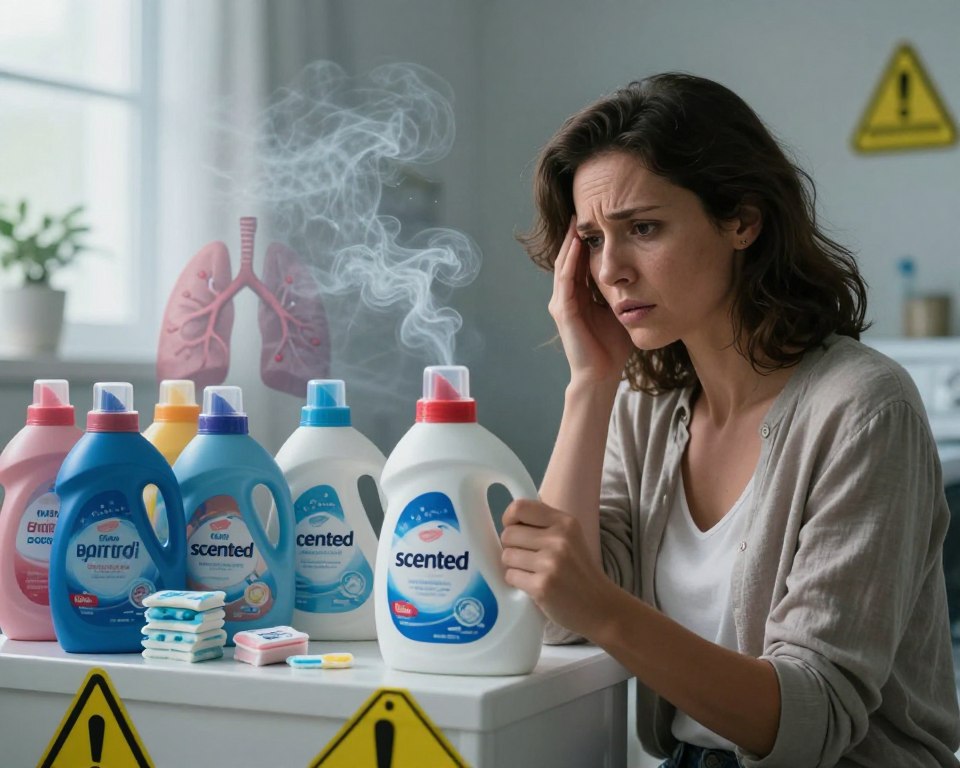
Research shows that using scented laundry products can be risky. These products smell nice but contain chemicals that make smells last longer. These chemicals can get into our bodies through our skin or when we breathe them in.
Endocrine Disruption and Hormonal Imbalance
Phthalates are known to mess with our hormones. They can mimic or interfere with our body’s natural signals. This can cause problems with our reproductive health and how we metabolize food.
The impacts of phthalates on health are serious because they don’t always show symptoms right away. Long-term, low-level exposure can build up over time. This can affect our hormones, thyroid function, and metabolism.
- Alterations in reproductive hormone levels.
- Potential interference with thyroid function.
- Disruption of natural metabolic pathways.
Developmental Concerns for Infants and Children
Infants and children are more at risk from phthalates because their bodies are growing. They are more sensitive to chemicals than adults. Wearing clothes or sleeping on bedding with synthetic fragrances can harm them.
Doctors say that young kids exposed to these chemicals early on can face long-term health issues. Keeping kids away from chemicals is key to their health. Choosing fragrance-free or naturally scented products can help reduce risks at home.
Common Laundry Products Containing Harmful Phthalates
Finding out which laundry products have harmful phthalates is key to a safer home. Many makers hide these chemicals under the term “fragrance” on labels. This makes it hard for people to know if a scent is natural or chemical-based.
Liquid Detergents and Scent Boosters
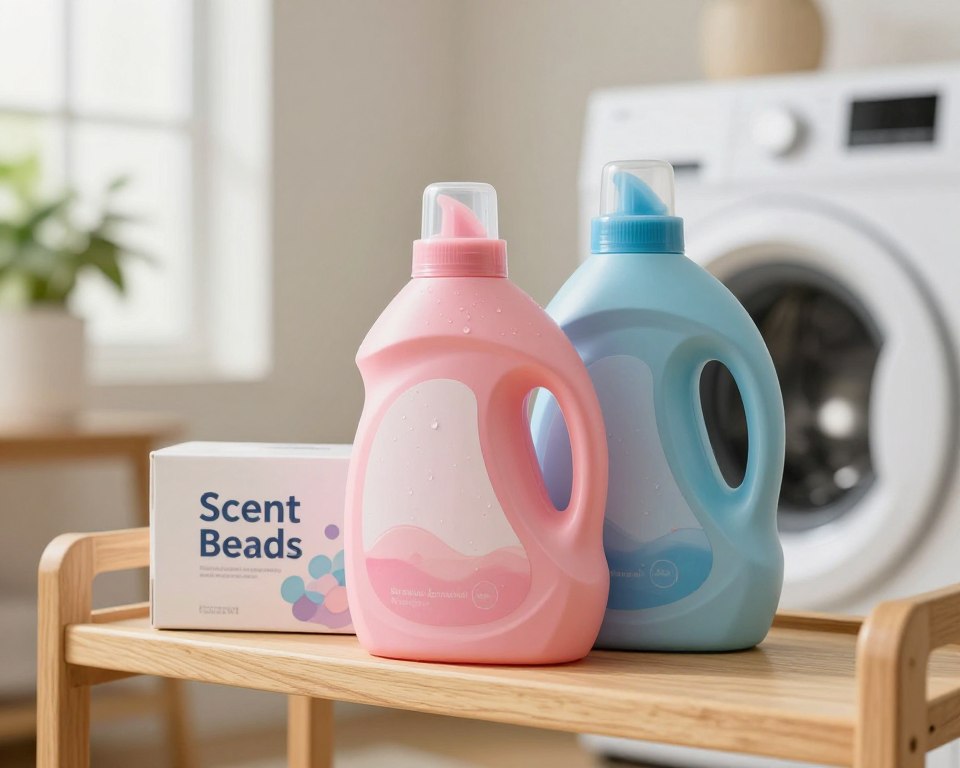
Liquid detergents and scent boosters often have harmful phthalates. They’re made to keep a smell on clothes for a long time. Without chemicals, the smell would fade fast after washing.
Scent boosters use lots of fragrance to keep the smell in clothes during the dryer. Phthalates help keep the scent from fading. This makes clothes smell clean, even though they have chemicals.
Fabric Softeners and Dryer Sheets
The dangers of phthalates in laundry softener and dryer sheets are big. They touch your skin and clothes. This means chemicals stay on your clothes and skin longer.
Dryer sheets are bad because they release chemicals into the air and on clothes. Using them means you’re putting synthetic scents and chemicals on your skin. Choosing safer options can lower your exposure to these hidden dangers.
| Product Category | Primary Function | Phthalate Risk Level |
|---|---|---|
| Liquid Detergents | Cleaning and Scenting | Moderate |
| Scent Boosters | Long-lasting Aroma | High |
| Fabric Softeners | Fiber Conditioning | High |
| Dryer Sheets | Static Reduction | High |
How US Brands Mask Fragrance Chemicals
Behind the promise of “fresh linen” scents lies a regulatory environment that often favors corporate secrecy over consumer safety. Many shoppers assume that if a product is sold on a major retail shelf, its ingredient list is fully transparent. But, the reality is that harmful chemicals in fragranced detergent are often hidden behind broad, non-specific terminology.
The Umbrella Term of Fragrance on Labels
The main tool for this lack of transparency is the word “fragrance” or “parfum.” Companies don’t have to reveal the individual components of a scent. This single word can hide dozens, or even hundreds, of synthetic compounds.
By using this term, manufacturers hide their secret formulas from the public. This makes it hard for consumers to spot specific phthalates or other synthetic fixatives. Without knowing what’s in their detergent, shoppers can’t make informed choices.
Marketing Tactics and Greenwashing in Laundry Care
Brands also use clever marketing to hide the chemical truth of their products. Terms like “natural,” “pure,” or “botanical” are used to make products seem safer. But, these labels often hide harmful chemicals in fragranced detergent, giving buyers a false sense of security.
This marketing trick, called greenwashing, plays on consumers’ desire for healthier options. Brands focus on marketability over transparency. Consumers should be wary of vague marketing and look for brands that disclose all ingredients.
Impacts of Phthalates on Health and Indoor Air Quality
Phthalates affect our health in many ways. They get into our bodies mainly through breathing in particles and touching treated fabrics. These chemicals stay in our homes, leaving a lasting mark.
Respiratory Sensitivities and Allergic Reactions
Using scented laundry products can harm our breathing. Detergents and softeners release gases that can irritate our lungs. This can also cause allergic reactions in some people.
Also, chemicals like formaldehyde are used to keep products fresh longer. Formaldehyde can irritate our eyes, lungs, and breathing system. When it’s released indoors, it can make the air quality worse.
Dermal Absorption Through Clothing Residue
Phthalates in laundry softeners also affect our skin. Clothes, towels, and bedding hold onto chemicals even after washing. Our skin absorbs these chemicals, which can enter our bloodstream.
This is a big concern for people with sensitive skin or allergies. Wearing treated fabrics regularly means we’re exposed to chemicals all the time. Knowing about these chemicals helps us reduce our exposure at home.
| Exposure Pathway | Primary Mechanism | Common Health Effect |
|---|---|---|
| Inhalation | Airborne fragrance particles | Respiratory irritation |
| Dermal Contact | Fabric-to-skin transfer | Dermatitis and rashes |
| Systemic | Bloodstream absorption | Endocrine disruption |
Environmental Consequences of Laundry Chemical Runoff
Every load of laundry adds to a complex chemical stream that ends up in our waterways. The water from our washing machines carries surfactants, fragrances, and stabilizers into sewage systems. These systems try to treat waste but often can’t filter out synthetic compounds in modern laundry products.
Persistence in Aquatic Ecosystems
Chemicals used to keep scents lasting are made to be stable. Unfortunately, this means they don’t break down easily in nature. Once in rivers and lakes, they stay active for a long time. This persistence lets them travel far, affecting water quality over large areas.
The chemicals can upset the balance of life in water. They can slow down the growth of tiny organisms that are key to the food chain. Over time, this can harm the health of entire aquatic ecosystems.
Bioaccumulation and Long-term Ecological Effects
Some laundry chemicals can build up in the bodies of living things. This is called bioaccumulation. Even small amounts in water can become much higher in fish and other wildlife. As these animals are eaten by others, the toxins can increase, causing long-term damage to the environment.
The table below shows the main environmental risks from common laundry chemical runoff:
| Chemical Category | Environmental Impact | Persistence Level | Ecological Risk |
|---|---|---|---|
| Synthetic Fragrances | Endocrine disruption | High | Bioaccumulation |
| Surfactants | Reduced oxygen levels | Moderate | Acute toxicity |
| Phthalate Fixatives | Hormonal imbalance | High | Long-term toxicity |
| Optical Brighteners | Light penetration issues | Moderate | Habitat degradation |
These findings show how important it is to think about the impact of our choices at home. Cutting down on persistent chemicals is key to protecting our water for the future.
Analyzing Major US Laundry Brands and Transparency
Looking at popular laundry detergents shows a big gap between what companies say and what’s really in them. Many say they care about safety, but they don’t always tell us what’s in their fragrances. This makes it hard for people to know if a detergent has harmful chemicals in fragranced detergent.
Companies often add things to make clothes look better. These are called “optical brighteners” or “UV brighteners.” They make clothes seem cleaner by reflecting light. But, these chemicals stay on clothes after washing, which can be a health concern.
Evaluating Procter and Gamble Fragrance Policies
Procter and Gamble, a big US manufacturer, has made some changes. They have an online tool to find out what’s in their products. But, “fragrance” can mean many things, and not all are listed.
“Transparency is not just about listing ingredients; it is about providing the context necessary for consumers to make informed health decisions.”
Even with better online tools, it’s hard to know exactly what’s in their scents and detergents. Many laundry products containing harmful phthalates are out there. It’s tough for people to know if a P&G product is safe.
Assessing Unilever and Church and Dwight Standards
Unilever and Church and Dwight also have their own ways of being open about what’s in their products. They say they want to share more, but they keep their scents secret. They say their fragrances are special and can’t be shared.
When comparing these brands, look for signs of openness:
- Lists of fragrance ingredients that go beyond “fragrance.”
- Plans to remove certain harmful chemicals in fragranced detergent.
- Clear talk about optical brighteners and synthetic fixatives.
Even though big brands are trying to be more open, it’s up to us to check. Relying on what companies say is a good start. But, checking things out yourself is the best way to stay safe.
How to Avoid Phthalates in Scented Laundry Items
Learning to read ingredient labels is key to avoiding synthetic chemicals. Manufacturers often hide specific compounds under “fragrance.” By looking closely at the ingredient list, you can spot dangers like phthalates. Knowing about dangers of phthalates in laundry softener helps make your home safer.
Reading Labels Beyond the Fragrance Listing
When checking a bottle, look for chemical names that show ethoxylated surfactants or synthetic fixatives. These are used to keep scents stable but can hide harmful additives. Learning about these risks helps protect your home. You can find more information on 7 common toxins found in laundry.
Avoid products with vague terms like “parfum” or “fragrance” without full disclosure. If a brand doesn’t list its chemicals, it might contain synthetic fixatives. Choosing brands that list all ingredients is the best way to how to avoid phthalates in scented laundry items.
Identifying Third-Party Certifications for Safety
Third-party certifications offer an unbiased check beyond marketing claims. Look for labels like EPA Safer Choice, ECOLOGO, or Leaping Bunny. These show a product has been thoroughly tested.
These certifications help you avoid greenwashing. A verified seal means a product has been checked for dangers of phthalates in laundry softener and other toxins. Use the table below to see the difference between standard and safer labeling.
| Label Feature | Standard Detergent | Transparent/Safe Brand |
|---|---|---|
| Fragrance Disclosure | Hidden as “Fragrance” | Full Ingredient List |
| Safety Testing | Internal Corporate Policy | Third-Party Certified |
| Chemical Profile | Synthetic Fixatives | Plant-Based/Essential Oils |
| Transparency Level | Low/Opaque | High/Publicly Available |
Natural Alternatives for Fresh-Smelling Laundry
Learning how to avoid phthalates in scented laundry items means choosing better ingredients. Many products use synthetic perfumes that just cover up smells. Plant-based solutions can keep your clothes clean without hidden toxins.
Switching to a non-toxic laundry detergent is good for your family’s health. These options are safe and keep your clothes smelling fresh and feeling soft.
Essential Oils and Plant-Based Fragrances
Brands like Truly Free Home use plant-based fragrances from citrus, herbs, and flowers. These natural scents are pleasant without the use of synthetic perfumes. Unlike synthetic smells, these natural options fade away without leaving chemical residues on your skin.
Vinegar and Baking Soda as Odor Neutralizers
Household items like vinegar and baking soda can outdo chemical cleaners for removing odors. Vinegar softens fabrics and neutralizes smells when added to the rinse cycle. It breaks down mineral deposits and soap buildup that hold onto smells.
Baking soda is great for pre-washing dirty clothes. Adding half a cup helps balance water pH for deep cleaning. These methods are a reliable, cost-effective way to keep laundry smelling fresh without synthetic additives.
| Feature | Synthetic Detergents | Natural Alternatives |
|---|---|---|
| Fragrance Source | Petrochemicals | Plant Extracts |
| Odor Removal | Masking Agents | Neutralization |
| Residue | Chemical Film | None |
| Skin Impact | Potential Irritant | Gentle/Hypoallergenic |
The Role of Consumer Advocacy in Policy Change
Change in the laundry industry starts with people speaking up. When we ask for clear information about our products, companies listen. This push for openness is key to keeping us and our planet safe.
Demanding Ingredient Disclosure from Retailers
Retailers are the first point of contact for us and the makers of our products. By asking for full ingredient lists, we push them to choose brands that are open about what they use. When many of us avoid products with vague labels, stores have to rethink what they sell.
To really make a difference, try these steps:
- Ask customer service about the exact ingredients in fragrances.
- Join in when big stores let you comment on their policies.
- Shop at places that use clean labels and third-party checks.
- Use social media to ask for openness, tagging the brand and store.
Supporting Legislative Efforts for Chemical Reform
While what we buy matters, laws are key for lasting safety. Today’s rules often don’t keep up with science, letting bad chemicals stay on the market. Backing legislative reform is the best way to make safety laws a must, not just a choice.
Groups that push for better laws are very important. They help turn science into laws that help us. By joining these efforts, we can make a big difference. They work on:
- Fixing the Fair Packaging and Labeling Act.
- Requiring all fragrance ingredients to be listed.
- Funding studies on the health effects of synthetic chemicals.
- Getting safer, natural options used in making products.
In the end, making our world safer is up to us. By using our buying power and supporting policy changes, we can make safety the norm, not the exception.
Scientific Studies on Fragrance Chemical Safety
Independent research often challenges the safety claims of big chemical companies. They say their products are safe for daily use. But, studies often find hidden risks that current laws don’t cover.
Peer-Reviewed Findings on Phthalate Toxicity
Studies have shown that phthalates can harm health, acting as endocrine disruptors. They can mess with hormones, leading to problems in growth and reproduction.
Also, 1,4-dioxane, found in some products, is a known carcinogen and neurotoxin. It’s not listed on labels because it’s a byproduct, not an added ingredient. This means people don’t know they’re being exposed.
The Gap Between Industry Safety Standards and Public Health
There’s a big gap between what companies say is safe and what science shows. Companies often test their products to see if they work well and last long. But they don’t always check for long-term health risks.
This lack of openness is a big problem for people who use scented laundry products. Without outside checks, it’s up to the buyer to make sure products are safe. But they can’t see the full list of chemicals in their detergents.
| Assessment Criteria | Industry Standards | Independent Research |
|---|---|---|
| Chemical Disclosure | Limited (Trade Secret) | Comprehensive Analysis |
| Toxicity Focus | Acute Irritation | Chronic/Endocrine Impact |
| Byproduct Monitoring | Minimal/Internal | Rigorous/External |
| Safety Goal | Regulatory Compliance | Public Health Protection |
Navigating the Market for Phthalate-Free Detergents
Finding safe detergents means looking beyond what’s advertised. Many common detergents hide harmful phthalates in secret mixes. By being careful, you can spot brands that put scent over safety.
What to Look for in Transparent Brands
Real transparency isn’t just a “natural” label. Look for brands that list all ingredients online or on the bottle. Here’s what to check:
- Full Ingredient Disclosure: Choose brands that list every ingredient, not just “fragrance.”
- Third-Party Certifications: Look for labels like EPA Safer Choice or Leaping Bunny to ensure safety.
- Fragrance-Free Options: The best way to avoid fragrance chemicals in laundry soap is to pick fragrance-free products.
Wondering if these safer options clean as well? Check out is baby safe laundry detergent really to see the balance between cleanliness and health. Choosing brands that share safety data helps you make better choices for your family.
The Cost-Benefit Analysis of Safer Laundry Options
Some people worry about the cost of safer laundry. But, think of it as an investment in your health. Avoiding harmful chemicals can save you money on medical bills later.
It’s not hard to find phthalate-free laundry items without spending a lot. Many eco-friendly, concentrated detergents last longer than regular ones. By looking at the cost per load, you’ll see the difference is smaller than you think.
Choosing safer products is worth more than saving a few dollars. It’s a step towards a healthier home.
Conclusion
Hidden chemicals in household items need our attention. We often overlook the dangers of endocrine-disrupting substances. These can harm our health over time.
Learning about the toxicities of laundry products is key. It helps us reduce risks for our families.
Choosing wisely can change the market. Opting for fragrance-free items reduces harmful air pollutants. This choice pushes companies to be more open about their products.
Your buying habits have a big impact. They can lead to safer, cleaner products for everyone. This is a powerful way to make a difference.
But it’s not just about laundry. Supporting laws that limit harmful chemicals is also important. This helps keep people safe from unwanted exposure.
Being informed can make a big difference. It can lead to better policies and healthier living spaces. Let’s focus on safety for a better future.
FAQ
What are the primary health risks of using scented laundry products containing phthalates?
Using scented laundry products can harm your health. As a pharmacist, I’ve seen many patients with hormonal imbalances. This is often due to exposure to synthetic chemicals like phthalates.
Phthalates mimic natural hormones, which can disrupt reproductive health and metabolism. They can also cause respiratory problems and skin irritation.
How do phthalates in scented laundry products affect indoor air quality?
Studies show that dryer vents release over 25 harmful chemicals when using scented products. These chemicals can make indoor air quality poor. This can worsen asthma and cause headaches or “brain fog” in some people.
Why don’t manufacturers disclose all fragrance chemicals in laundry soap on the label?
Companies can hide the exact ingredients under the term “fragrance.” This is due to a law that protects “trade secrets.” Big brands like Procter & Gamble and Unilever have started to be more open. But, the full list of chemicals is often not available to consumers.
What specific laundry products containing harmful phthalates should I avoid?
Be careful with products that have lots of fragrance. This includes liquid fabric softeners, dryer sheets, and scent boosters. These products stay on fabrics for weeks, exposing you to harmful chemicals.
How do the impacts of phthalates on health specificially affect infants and children?
Young bodies are more sensitive to chemicals. Exposure to phthalates can slow down development and increase asthma risk. Infants absorb more chemicals through their clothes and bedding. Switching to fragrance-free products is important for their health.
How can I effectively avoid phthalates in scented laundry items when shopping?
Look for “Fragrance-Free” labels instead of “Unscented.” Choose products with the EPA Safer Choice or EWG Verified seals. Check a brand’s website for detailed ingredient lists. This can help you avoid harmful chemicals.
Are there safe, natural alternatives to achieve fresh-smelling laundry without synthetic chemicals?
Yes, there are. Use distilled white vinegar or baking soda to clean and deodorize. These natural options are safer than chemical fragrances. For a natural scent, add organic essential oils to wool dryer balls.
Is there a difference between industry safety standards and independent scientific findings?
Yes, there’s a big difference. Industry groups say these chemicals are safe at low levels. But, independent studies show the dangers of long-term exposure. The “cocktail effect” of using many scented products is often overlooked.